
Chang Soda: Fizzy Billboard

Chang Soda: Fizzy Billboard

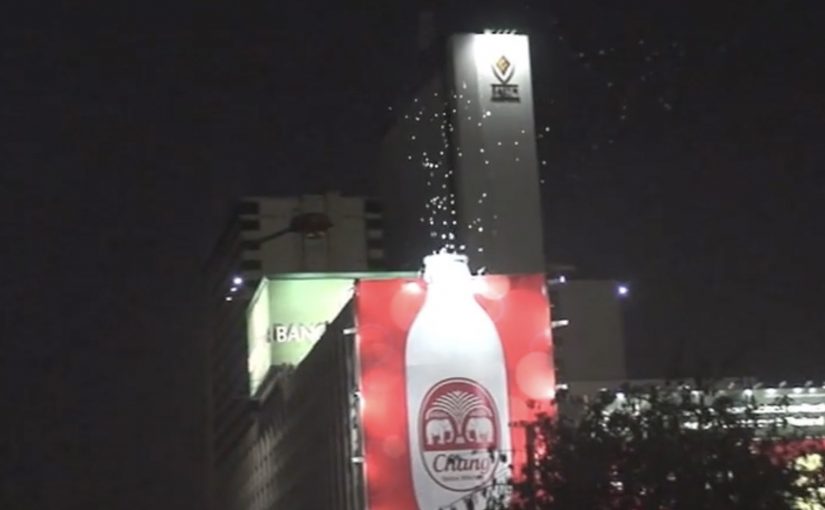
A giant Chang Soda bottle towers over a busy Bangkok shopping area. At the right moment, the cap “pops” and a burst of white balloons shoots out like carbonation escaping from a freshly opened drink.

Seeking new ways to create an impact in today’s sea of daily ad bombardment while taking into account shrinking budgets is quite a challenge. Chang’s Fizzy Billboard did just that, described as a reminder of how effective a great billboard idea can be when it turns a product truth, a single attribute the product can credibly own, into a public spectacle.

This is an outdoor activation that uses a physical effect, balloons released from the bottle, to dramatize “fizz” in a way that can be understood in a single glance.

The mechanism that makes it memorable

The creative leap is not the billboard. It is the “fizz”. Balloons are cheap, visible from far away, and they behave like bubbles in motion. Because of that, the claim becomes tangible even for people who only catch the moment in passing.

In FMCG categories where products are hard to differentiate at shelf, a single unmistakable physical metaphor in public space can outperform a week of polite messaging.

Why it lands as a shareable street moment

The payoff is time-based. People hear that “something happens” and they wait. When the burst comes, it reads instantly and creates a crowd reaction that becomes part of the communication. The effect also photographs well, which helps the idea travel beyond the street.

Extractable takeaway: If you want OOH to earn sharing, build a visible cause-and-effect that people can describe in one sentence, then make the payoff repeatable enough to be worth waiting for.

What the brand is really buying

This is a salience play. The goal is to make “Chang equals fizzy” stick through a short, repeatable spectacle, and to borrow the credibility of a real-world stunt rather than relying on a purely filmed illusion. The real question is whether you can turn one attribute into a repeatable moment people will stop for and retell. If you have to choose, back one literal, repeatable effect instead of spreading budget across polite static placements.

Steal-worthy rules for spectacle OOH

  • Make one product truth physical. Choose the one attribute you want remembered and build the effect around it.
  • Design for distance. If it does not read from across the street, it will not earn attention.
  • Use a predictable moment. A scheduled payoff creates anticipation and word of mouth.
  • Keep the metaphor literal. People should get it before they think about it.

A few fast answers before you act

What is Chang’s “Fizzy Billboard”?

An outdoor activation for Chang Soda where a giant bottle billboard appears to “pop” and release balloons like fizz, turning carbonation into a public spectacle.

Why use balloons for a soda message?

Balloons are inexpensive, highly visible, and they move like bubbles. That makes “fizzy” readable in one second from a distance.

What makes this kind of billboard more effective than a standard print-only OOH?

It creates a moment, not just an image. A time-based spectacle earns attention, crowd reaction, and secondary sharing that static posters rarely trigger.

What business outcome is this designed to influence?

Brand salience and attribute ownership. It aims to make the brand strongly associated with “fizz” versus competitors.

What is the biggest execution risk with spectacle billboards?

If the payoff is unclear or inconsistent, people feel tricked. The effect must be obvious, repeatable, and easy to explain in one sentence.
JavaZone: Java 4-ever Trailer Romance

JavaZone: Java 4-ever Trailer Romance

JavaZone is a conference in Scandinavia where developers meet, listen to talks, and plug into the wider community. The fun part is that the people behind it also know how to market it like a movie.

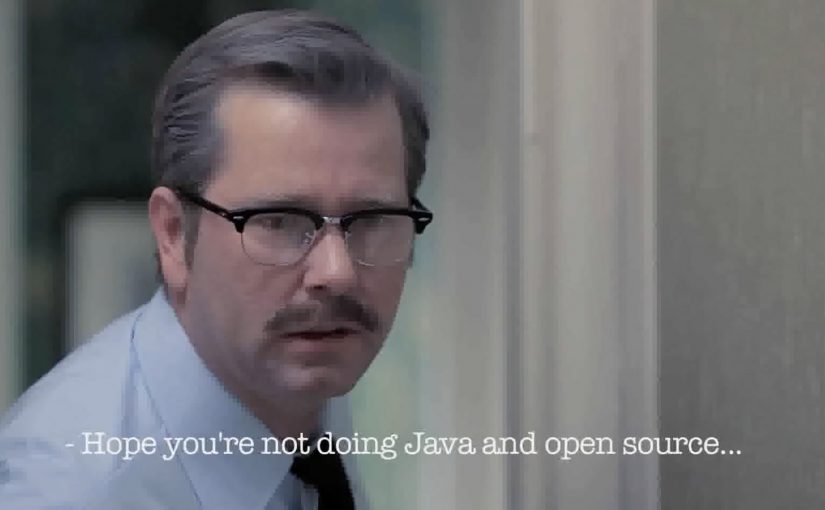
The trailer below is for an imaginary film called Java 4-ever. It is a full-on romance setup, but the forbidden love is not a person. It is a programming language.

A conference trailer that behaves like entertainment

The mechanic is simple. Instead of explaining “why you should attend”, JavaZone ships a piece of content you would watch even if you did not care about the conference. That content then does the job of awareness and persuasion on its own. That works because entertainment lowers resistance, so the conference earns attention before it asks for registration.

In developer communities, the fastest way to build affinity is to show you understand the culture. Then use that understanding to earn attention before you ask for registration.

Why it lands

The craft is not in the jokes alone. It is in how accurately it borrows the language of dramatic trailers. Serious music, tense reveals, disapproving family energy, and the familiar “I cannot hide who I really am” arc. The parody works because it treats tech tribalism, the identity-level loyalty people attach to tools and languages, as real emotion, which is exactly how it feels inside communities.

Extractable takeaway: If your audience is allergic to hype, do not “market” at them. Entertain them with something culture-true, and let the entertainment carry the message.

What the Java 4-ever format achieves

The real question is whether your event marketing feels native to the community you want to gather, or like promotion imported from outside it.

A trailer is short, rewatchable, and instantly shareable. That makes it a high-leverage asset for an event. One video can act as a brand statement, a community signal, and a distribution engine, all without needing a media budget narrative.

For technical events, culture-literate entertainment is stronger than benefit-led promotion when the goal is to earn voluntary attention.

What to steal for your own event

  • Write for the in-jokes, but keep the story universal. People should get it even if they are not in the tribe.
  • Use a familiar format. Trailers, sitcom cold-opens, and “documentary” cuts carry their own viewing habits.
  • Make the asset stand alone. If the content only works after someone knows your event, it will not travel.
  • Let craft be the credibility. In technical audiences, quality signals respect more than claims do.

A few fast answers before you act

What is this video actually doing for JavaZone?

It acts as cultural marketing. A shareable parody signals “this is your kind of community”, and that signal can be stronger than a feature list of talks.

Why choose a movie-trailer format?

Because audiences already know how to watch a trailer. The format compresses story, emotion, and memorability into a minute-scale asset.

What is the key creative insight?

Technical preferences often behave like identity. Treating that identity seriously, through parody, is what makes it feel accurate and funny.

How do you measure success for content like this?

Shares, rewatches, and discussion inside the community. Then correlate spikes in attention with registration momentum and speaker or sponsor interest.

Does this only work for developer audiences?

No. The transferable move is not the coding joke. It is wrapping your message in a format the audience already likes to watch and share.

TyC Sports: Argentinos

TyC Sports: Argentinos

As the 2010 World Cup kicks off, this TyC Sports film by Young & Rubicam Buenos Aires is built to do one thing fast: stir up Argentine fans everywhere with a burst of identity, memory, and belief.

A World Cup rally film is a piece of sports storytelling designed to compress national pride into a repeatable emotional cue. It is less about information and more about turning viewers into a synchronized audience.

A simple mechanism: recognition, then escalation

The structure is familiar and effective. Start with the small details only insiders recognize. Then scale up into a collective “we”. The film keeps pulling the viewer from personal belonging into shared momentum, so the emotion arrives before the rational brain asks what is being sold.

In global sports media and broadcaster marketing, pre-tournament films like this work best when they feel like culture, not advertising.

Why it lands for Argentine fans worldwide

The spot trades on lived cues. The way people speak about football. The intensity. The inevitability of hope. You do not need to explain Argentina’s relationship with the game. You only need to trigger it, and let the audience do the rest. That is also why the film travels. Fans abroad are exactly the audience most hungry for a cultural tether during a tournament, so the message plays as connection as much as hype.

Extractable takeaway: If you can trigger a specific shared-identity cue, the audience will supply the meaning and momentum without you having to over-explain it.

The business intent behind the emotion

For TyC Sports, the goal is not to educate. It is to concentrate attention and loyalty at the moment the tournament starts, when viewing habits and media choices are being formed. The film frames the channel as the emotional home for the campaign, not just the place that carries matches.

The real question is whether you can earn the role of emotional home at kickoff, not just distribute the content.

Steal the rally structure for your next fan-led campaign

  • Build from insider truth. Specificity creates belonging faster than generic patriotism.
  • Make it chantable. The best sports films reduce to a line or feeling people can repeat.
  • Escalate from personal to collective. Start in the individual, end in the crowd.
  • Keep the brand role clean. If you are a broadcaster, act like a rally point, not a sponsor.

A few fast answers before you act

What is this film doing in one sentence?

It rallies Argentine fans worldwide by turning cultural recognition into shared tournament momentum for TyC Sports.

Why do pre-tournament films outperform match promos?

They create emotional commitment before viewing decisions harden. They make people choose a “home” for the tournament.

What makes sports patriotism feel authentic instead of generic?

Specific cultural cues and language that insiders recognize. The more precise the truth, the less it feels like advertising.

Who is the most valuable audience for this type of spot?

Fans who are not physically in the country. They are most likely to share, and most likely to use the film as a cultural tether.

What is the biggest creative risk with rally films?

Drifting into clichés. If the cues are too broad, it becomes interchangeable with any other team’s hype video.