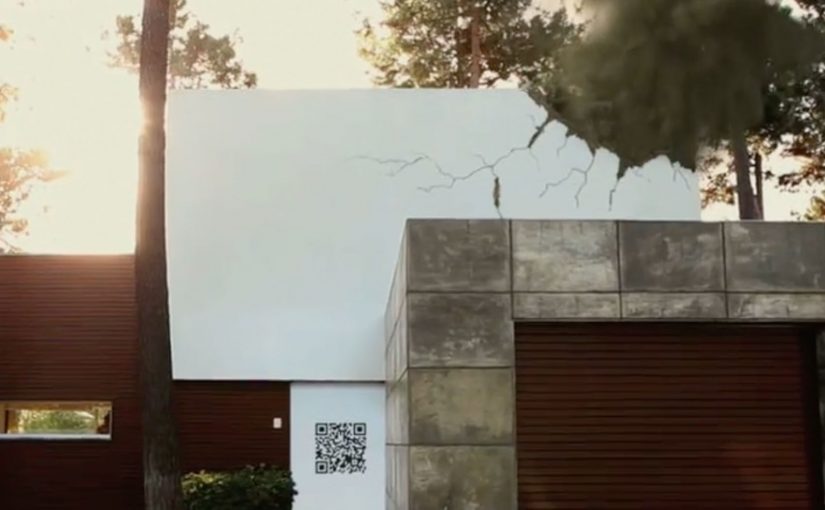
In 2010, AXA was the first insurance company in the market to launch an iPhone application for car insurance. In 2011, AXA took this one step further and developed an iPhone application for fire insurance.
“Mobile Service Home” is described as a first for the Belgian insurance market, so the product was launched with a method designed to feel just as inventive. AXA and ad agency Duval Guillaume Antwerp. Modem developed what they called an i-Mercial, a television spot for viewers to step into.
How the i-Mercial works
The mechanism is a second-screen bridge: the TV spot includes an on-screen code, and the viewer uses an iPhone to scan it. That scan unlocks an extended layer of the story on the phone, so you move from watching the house on TV to exploring what happened inside it on your own screen. Because the scan happens while the spot is still running, the viewer stays in the narrative and experiences the service logic instead of just hearing about it.
In European insurance markets, this kind of second-screen interactivity turns a passive TV spot into a hands-on service demonstration.
The real question is whether the second-screen bridge proves the service promise in the moment, not whether the format feels novel.
Why it lands
It makes “mobile service” tangible. If the promise is speed and guidance in stressful moments, an interactive format is a better proof than a claim.
Extractable takeaway: Interactive advertising works when the phone is used as a second screen to continue the story and demonstrate the service. The TV spot creates the prompt. The mobile interaction delivers the proof.
- It gives the viewer control. The audience is not asked to remember a URL later. The action happens in the moment, and the phone becomes the interface for continuing the narrative.
- It turns a CTA into an experience. Scanning is not a bolt-on gimmick. It is the creative idea, because it lets the viewer literally step into the ad.
Second-screen launch moves
- Design the interaction to be immediate. If the action cannot happen in seconds, most viewers will drop.
- Make the “next layer” worth it. The mobile extension should add narrative, clarity, or utility, not just extra footage.
- Ensure the format matches the product. A mobile service is best launched through a mobile-driven interaction.
A few fast answers before you act
What is an “i-Mercial” in this case?
A TV commercial designed to continue on an iPhone, so the viewer can interact with the ad rather than only watch it.
How does the viewer “step into” the TV spot?
By scanning an on-screen code with an iPhone during the broadcast, which unlocks an extended experience on the phone.
Why is this a smart launch method for an insurance app?
Because it demonstrates mobile-guided service behavior immediately, instead of asking viewers to imagine how the app helps.
What is the main risk with this format?
Link rot. If the scan destination or app flow is no longer maintained, the core mechanic breaks and the campaign loses its point.
What is the most transferable lesson?
When you want people to believe a mobile service, make the first brand interaction mobile, interactive, and simple enough to complete in the moment.