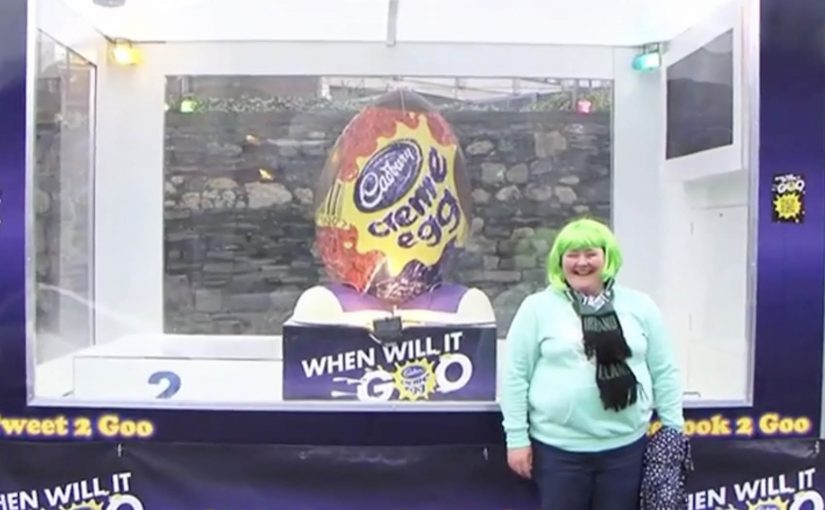
Cadbury, along with agency MCsquared Dublin, created an integrated campaign that enlisted the Irish public to help their giant Creme Egg release its Goo. Here, “Goo” is the campaign’s shorthand for the public release moment.
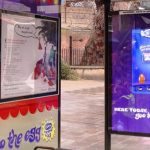
Eight rocking giant eggs, each protected in a transparent case, were placed around Dublin. Fans were asked to tweet “Goo” using #tweet2goo or enter via the campaign Facebook app. Every tweet and Facebook post made the egg get more “egg-cited” until it “egg-sploded”.
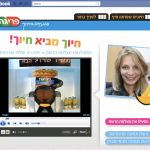
The entire Goo event was broadcast live on the Cadbury Ireland Facebook page, and participants were automatically entered into a draw to win tickets to the London 2012 Olympic Games.
From social input to physical payoff
The mechanic is a simple loop with a strong public proof moment. People post. The installation reacts. The reaction builds suspense. Then the payoff happens in public, with a clear “we did that” feeling for anyone who participated.
In Irish FMCG launches where seasonal products rely on impulse and talk value, turning participation into a shared street spectacle can earn attention that paid media cannot easily buy.
Why it lands
This works because it turns a familiar product truth, the goo, into a shared mission. Because people can see progress building toward a public release, each post feels consequential rather than disposable. The spectacle turns remote social actions into something you can physically witness, and the ticking progress effect gives people a reason to keep posting and to pull friends in. The live broadcast also gives the event a second stage, so even people not in Dublin can follow along and contribute.
Extractable takeaway: If you want social participation at scale, design a public system where every small action visibly moves a shared object toward an inevitable moment. The promise of that moment does the acquisition work.
What the campaign is really buying
It is not just awareness. It is repeat behavior during a short seasonal window. The real question is how to turn a short seasonal sales window into repeat participation instead of one-off attention. The hashtag and the Facebook entry mechanic reward persistence, and the prize draw adds a practical reason to participate even if you are not nearby.
What to steal for seasonal participation campaigns
- Make the participation rule obvious. One hashtag, one word, one job.
- Translate digital actions into physical feedback. That is what creates credibility and excitement.
- Build suspense, not just a reveal. Progress is a stronger engine than surprise.
- Give it two stages. Street spectacle plus a live stream extends the audience.
- Add a lightweight incentive. A draw works best when the core experience is already fun.
A few fast answers before you act
What is “When Will It Goo”?
A Cadbury Creme Egg activation where tweets and Facebook entries drive giant public eggs toward a live “goo-splosion” moment.
Why does the physical installation matter?
It turns online participation into something visible and real, which increases belief, excitement, and sharing.
What is the role of the hashtag?
It is the simplest participation interface. It makes the action easy to repeat and easy to recruit others into.
What is the biggest execution risk?
If the installation feedback is slow, unclear, or unreliable, people stop participating because they cannot see impact.
How can a smaller brand replicate the pattern?
Use one shared object, one simple input, and one visible progress signal. The object can be smaller, but the loop must stay legible.