
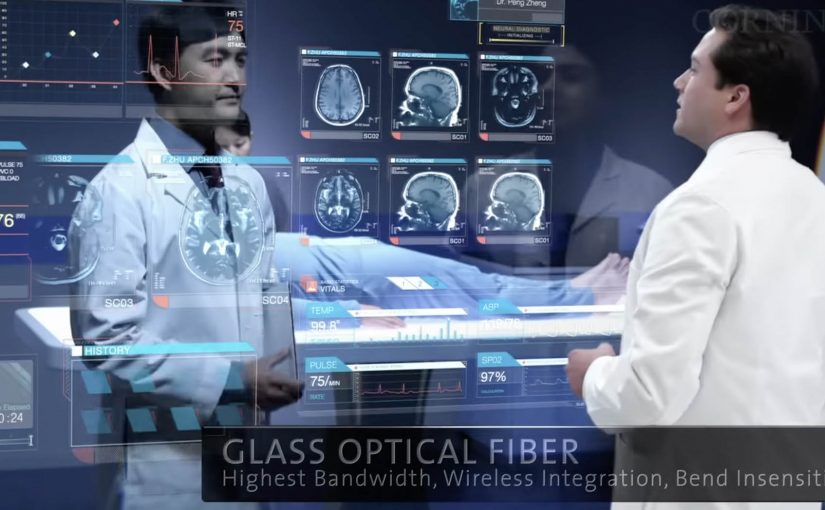
Corning: A Day Made of Glass 2

Corning is best known as a high-tech glass manufacturer. Their Gorilla Glass is used across a huge number of smartphones. In March last year they released “A day made of glass”. A futuristic look at glass technology.

Now they are back with an expanded vision for the future of glass technologies. This video continues the story of how highly engineered glass, with companion technologies, will help shape our world.

What’s new in the expanded vision

The core mechanic stays the same. Glass is no longer a cover. It becomes the interface. The expansion is about reach and density. More environments. More surfaces. More moments where information appears “in place” and responds directly to touch.

In consumer electronics, automotive interiors, and collaborative workplaces, the real shift is treating surfaces as shared touch-first interfaces rather than single-purpose screens.

The interaction pattern underneath the glass

Strip away the material science and you can see a product blueprint. Persistent identity across contexts. Content that follows the user. Direct manipulation as the default. And big surfaces that invite more than one person to participate at the same time.

In global enterprise and consumer-tech product teams, smart-surface visions only pay off when the interaction rules stay coherent across devices and contexts.

Why this vision sticks

It sells immediacy. You touch the thing you mean. You get feedback where your eyes already are. There is less “device ceremony”, meaning fewer unlocks, app switches, and mode changes, and more task flow. Because the interaction is direct and feedback stays in place, the experience feels faster and more trustworthy, which is why these concept films can persuade even before the enabling tech is fully mainstream. These concept films are worth using, but only if you translate them into interaction rules you can actually prototype. The real question is whether you can keep those rules coherent across surfaces once the demo glow fades.

Extractable takeaway: When you are designing a future-facing experience, define the interaction grammar first, meaning the repeatable set of gestures, feedback cues, and handoffs that make the experience feel consistent. If the same gestures, feedback, and handoffs work across two form factors, your concept has legs. If they don’t, the material is just a costume.

Steals from the smart-surface UX model

  • Prototype the handoffs early. Moving from phone to wall to table is where visions usually collapse. Test that seam before you polish anything else.
  • Design for two people, not one. Large surfaces create collaboration by default. Add rules for turn-taking, ownership, and conflict resolution.
  • Keep data anchored to the decision. The strongest moments are when information shows up exactly where action happens, not in a separate dashboard.
  • Make “glanceable” a first-class mode. If the surface is always there, the experience must work in 2-second looks, not only long sessions.

A few fast answers before you act

What is “A Day Made of Glass 2” actually demonstrating?

It demonstrates an interface direction. Glass surfaces behave like interactive displays, so information can appear in place and be manipulated directly by touch.

Is the value here the glass technology or the UX model?

The transferable value is the UX model. Direct manipulation, seamless handoffs, and multi-user surfaces. The materials enable it, but the interaction design makes it believable.

What is the biggest risk in “smart surfaces everywhere” thinking?

Interface overload. If every surface can talk, the environment becomes noisy. The discipline is deciding when to stay quiet and when to surface the one next action.

How do you scope a first prototype so it stays realistic?

Pick one job-to-be-done, two surfaces, and a single handoff. Then enforce a small set of interaction rules so you can observe friction before you add polish.

What is one practical next step after watching the video?

Write down the 6 to 10 interaction rules you believe the film is using. Then build a rough prototype that applies those rules in two contexts, such as phone plus kiosk, or tablet plus meeting room display.
The Folding Car: Hiriko

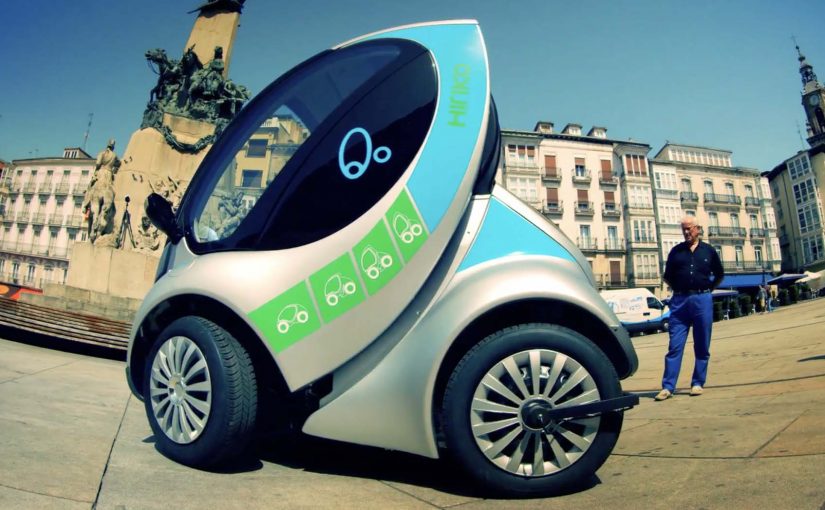
Hiriko is a folding car that has been in the making for the last 5 years. This city car is positioned for mobility services (car sharing) that aim to reduce the congestion generated by automobiles in cities.

The folding car resembles a Smart Car and has the ability to fold itself into an upright, space-saving parking position that feels straight out of a sci-fi novel.

A working model of Hiriko is unveiled in Brussels, and it is described as commercially available in 2013.

At a reported estimated price of around €12,500 (excluding tax), the future of driving feels close.

How the fold-up parking mode works

The core trick is simple: Hiriko can retract into an upright, space-saving parking position, shrinking the footprint it occupies when it is not moving.

In dense European city centers, shared electric city-car concepts live or die on parking efficiency and last-mile convenience.

The real question is whether a dramatic fold-up parking mode delivers enough operational advantage to make shared fleets meaningfully more viable in tight urban cores.

Done well, a fold-up parking mode is worth betting on for shared mobility, because it turns parking from a constraint into a lever for utilization and staging.

Why it lands in dense city fleets

Because the car can retract into a smaller parked footprint, operators can stage more vehicles closer to the places riders actually start and end trips, which reduces pickup friction and dead time.

Extractable takeaway: If your product promise is “better city mobility,” make the benefit visible in one glance, especially at the moment that usually breaks the experience (parking, pickup, handoff).

What it optimizes for

This is framed for car sharing rather than private ownership because the value is operational: higher parking density, easier staging near demand, and better fleet utilization in tight city environments.

What to copy from Hiriko

  • Make the constraint visible: Turn the hard part (parking density) into a concrete before/after moment.
  • Design for staging, not only driving: Optimize where vehicles live between trips, not just how they perform in motion.
  • One-glance differentiation: If you need behavior change, build a benefit people understand without a manual.

A few fast answers before you act

What is Hiriko?

Hiriko is a fold-up two-seat electric city car concept designed for urban mobility services such as car sharing, with a body that retracts to reduce parking footprint.

What problem is the folding mechanism trying to solve?

Parking density. By shrinking its footprint when parked, the car is meant to make it easier to operate shared fleets in tight city environments.

Why is this framed for car sharing rather than private ownership?

Because the core value comes from fleet efficiency: easier parking, easier staging near transit nodes, and higher utilization in dense areas.

What makes the concept feel “sci-fi” in practice?

The upright, compact parked stance changes the familiar silhouette of a car and makes the space-saving benefit immediately visible.

What is the simplest lesson for mobility and product teams?

If your promise is “better city mobility,” make the benefit visible in one glance. A fold-up parking mode is a benefit people can understand without explanation.

Windows of Opportunity: Smart Car Windows

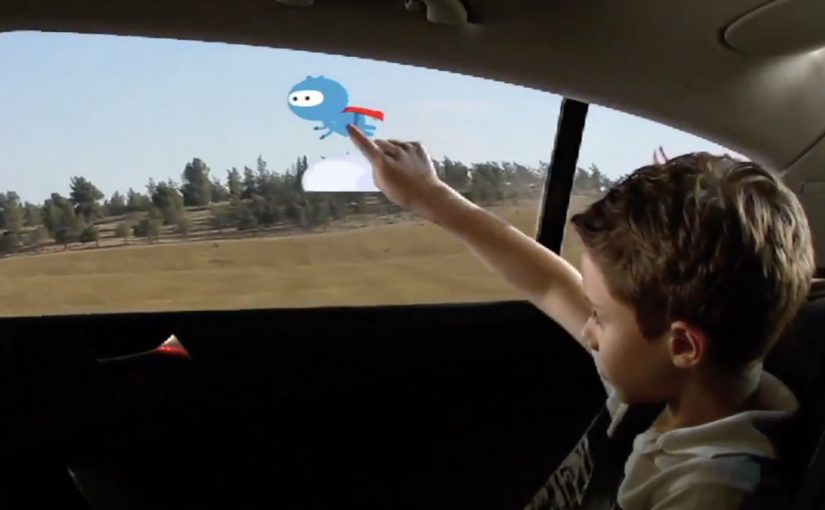
Got backseat boredom? DVD players and Game Boys are so five years ago, but a concept in rear-seat entertainment that uses the windows themselves could replace squirming and snoozing with interactive scribbling, sweeping, and pinching.

General Motors Research and Development put up a challenge to researchers and students from the Future Lab at Bezalel Academy of Art and Design in Israel. The task was to conceptualize new ways to help rear-seat passengers, particularly children, have a richer experience on the road.

The outcome is shown below, even though GM is described as having no immediate plans to put this smart glass technology into vehicles. Here, “smart glass” means the window can act as a display surface and detect touch or gestures.

When the window becomes the interface

The mechanism is simple to grasp. Treat the rear side window as a transparent display surface, then add touch and gesture interaction so passengers can draw, play, and manipulate content directly on the glass while still looking out at the world passing by. Because it is the same surface passengers already look through, the interaction stays outward-facing rather than becoming another head-down screen.

In family car journeys, rear-seat attention is a hard constraint, and experiences that keep kids engaged without isolating them from the ride reduce friction for everyone.

What the brief is really asking for

This is not “more screens”. It is a different relationship between passengers and their surroundings. The concept is described as using the outside view as the canvas. Instead of escaping the trip, you interact with it.

The real question is whether you can turn the outside world into content without disconnecting passengers from the journey.

Why it lands

The idea feels fresh because it upgrades a dead surface into something active without adding another device to hold or another head-down screen to stare at. It also creates a shared backseat dynamic. Multiple passengers can point, draw, and react together, which changes the feel of long trips. This is the right direction for in-car entertainment because it replaces device-based distraction with shared, context-linked play.

Extractable takeaway: The best in-car entertainment does not only distract. It connects passengers to the context they are already in, and makes the journey itself part of the experience.

What GM is buying by running a concept challenge

Even without production intent, the exercise is useful. It expands the idea space around “smart glass” and passenger experience, and it generates prototypes and interaction patterns that can later inform other interfaces, materials, and interior design decisions.

Practical steals for smart-glass passenger UX

  • Use the environment as content. Overlay and interact with what is already outside rather than inventing a separate world.
  • Design for low instruction. If it cannot be understood in seconds, kids will abandon it and parents will ignore it.
  • Favor shared play. Multi-user interactions create calm through engagement, not through isolation.
  • Keep interaction lightweight. Short loops beat long missions in a moving vehicle.
  • Prototype early. Concepts like this live or die on latency, glare, and ergonomics, not on storyboard polish.

A few fast answers before you act

What is “Windows of Opportunity” in one sentence?

It is a GM concept project that turns rear side windows into interactive “smart glass” displays so passengers can draw, play, and explore during the ride.

Why use windows instead of adding more screens?

Because windows are already where passengers look. Turning them interactive can keep attention outward and shared, rather than head-down and isolated.

What makes this feel useful for families?

It targets the real pain point, keeping children engaged on long journeys, while preserving a sense of connection to the trip and to each other.

What are the biggest practical risks?

Glare and readability in daylight, touch accuracy on glass, latency, durability, and avoiding distraction for the driver through reflections or overly bright visuals.

What would you measure in a pilot?

Engagement duration, repeat use, whether it reduces restlessness and conflict, and whether it avoids unintended driver distraction in real driving conditions.