
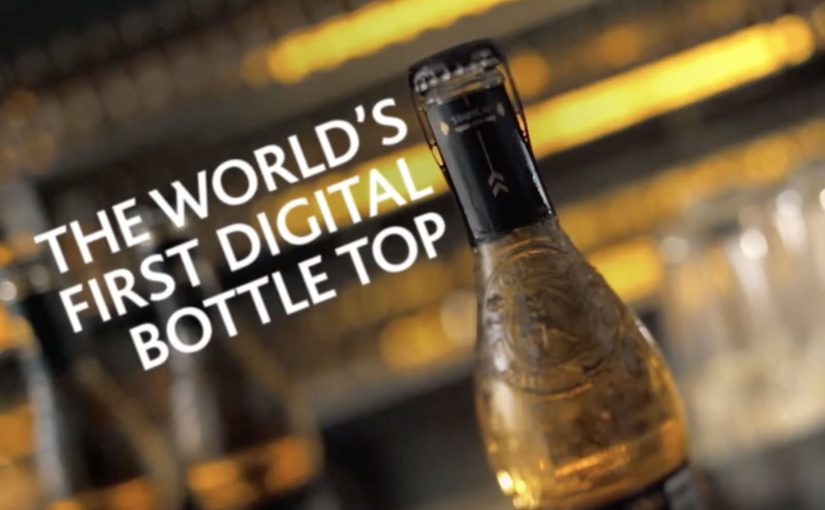
Strongbow Gold: StartCap Bottle Top

Strongbow Gold is testing what is being billed as the world’s first digitally enabled bottle top. Trigger it, and the bottle top activates a surprise designed to make the night feel more refreshing, more unexpected and more exciting.

For its first public appearance, the Strongbow Gold team rigged an entire bar in central Budapest with RFID readers, antennas and wires. Then during the night, StartCap triggered a string of memorable activations.

A bottle that behaves like a remote control

The core mechanism is packaging as a trigger. An RFID element in the cap signals nearby readers when the bottle is opened, and that signal kicks off a pre-set sequence in the environment, lights, music, props, anything the system is wired to control.

In European FMCG brand launches, connected packaging is a direct way to turn a product claim into a lived experience because the consumer action, opening the bottle, becomes the start button for the story.

Why this lands in a bar context

Bars already run on anticipation. People are there for the next moment. StartCap simply makes that “next moment” programmable, and ties it to the brand in a way that feels earned rather than announced.

It also builds social energy without forcing “sharing” prompts. When something unexpected happens in a shared space, people naturally look up, react, and talk. The product becomes the cause of the reaction.

What the brand is really proving

This is less about a new cap and more about a new role for the brand. Strongbow Gold positions itself as the catalyst for a better night out, not just a drink choice. The technology is the proof device that makes that positioning tangible.

What to steal for your next connected-packaging idea

  • Make the trigger unavoidable. Opening, pouring, unwrapping. The action must be natural.
  • Design for surprise, not complexity. One clean signal, one clear payoff, then scale the choreography.
  • Use the environment as media. If the space reacts, you earn attention without buying more screens.
  • Keep it safe and reliable. In live venues, failure is public. Redundancy matters.

A few fast answers before you act

What is StartCap in one sentence?

A digitally connected bottle top that uses RFID to trigger events in the surrounding environment when the bottle is opened.

Why is packaging-triggered tech so effective?

Because it links the brand to a physical action the consumer already performs. The experience starts at the product, not at an ad.

What is the biggest risk with “connected bar” activations?

Operational fragility. If sensors misread, activations lag, or the venue is too noisy to notice outcomes, the magic disappears.

Does this need a smartphone app to work?

Not necessarily. This model can be environment-driven. The venue infrastructure can detect the trigger and run the experience without asking the guest to install anything.

What should be measured to judge success?

Participation rate, repeat triggers per guest, dwell and sentiment in the venue, plus any post-event lift in brand consideration and trial.
The Live Tile Experiment: Oslo Live Tiles

Microsoft has been heavily advertising the new Windows 8, Surface RT and Windows Phone 8 along with their respective features. In Norway, Microsoft partners with Norwegian electro rock band Datarock to bring the experience of Windows 8 and Windows Phone 8 Live Tile functionality to unsuspecting residents of downtown Oslo.

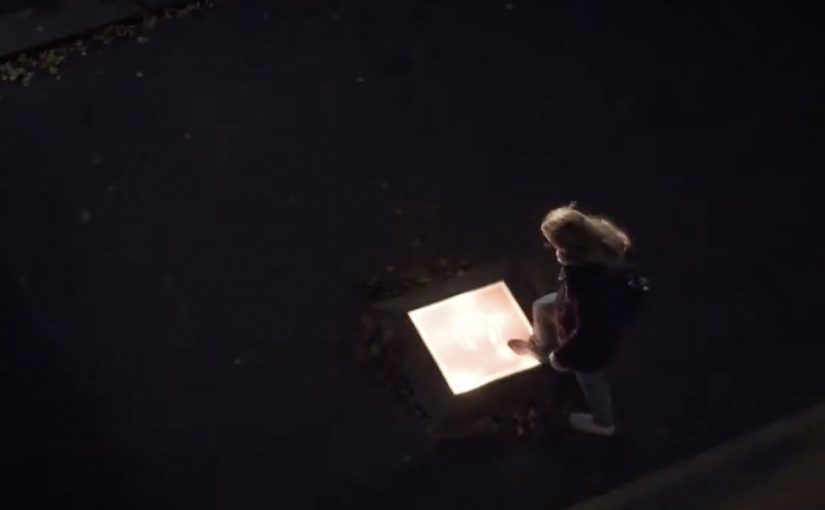
A giant lit-up “tile” appears on the street outside a seemingly closed-off venue. When a passer-by steps onto it, the wall drops and the hidden party spills into the street, with Datarock performing live. The result is an evening to remember.

In European city-center launches, the most effective experiential stunts translate a UI idea into a single physical action people can trigger without instructions.

What the stunt makes you understand about Live Tiles

Live Tiles are designed to feel active, not static. They are not just shortcuts to apps. They are meant to show “something is happening” before you even click. This activation dramatizes that promise by making the tile itself the trigger for real-world content.

Why the surprise mechanic works

The build-up is visible. You hear music, you see a barrier, you notice something glowing at your feet. Curiosity does the recruiting. The moment of commitment is tiny, just stepping onto the tile, but the payoff is oversized, because the environment changes instantly around you.

What Microsoft is really selling here

Specs are not the message. The message is a feeling: Windows looks alive. By turning a UI element into a street-level “switch” that unleashes a live experience, the campaign makes the feature memorable even for people who never touch the product that night.

What to steal for your own feature marketing

  • Convert the feature into a trigger. If the benefit is “real-time,” make the audience activate something in real time.
  • Make the payoff disproportionate. A small action should unlock a big reveal.
  • Stage it for bystanders too. The crowd reaction is part of the content.
  • Keep the story tellable. “I stepped on a tile and a concert exploded” is easy to repeat.

A few fast answers before you act

What is “The Live Tile Experiment”?

It is a street stunt in Oslo that turns the Live Tile concept into a physical trigger. Step on a giant tile and a hidden Datarock performance is revealed as the wall drops.

What product feature does it communicate?

Live Tiles, the Windows 8 and Windows Phone 8 interface element designed to display changing, real-time information and content.

Why use a concert reveal instead of a traditional demo?

A live reveal creates an emotional memory tied to the feature idea. It shows “alive and dynamic” faster than any explanation.

What makes the activation easy for the public to participate in?

The required action is obvious and low effort. People only need to step onto the tile to trigger the outcome.

What is the key lesson for feature launches?

Do not describe the benefit. Stage a moment that behaves like the benefit, so people feel it immediately.

Ring my bell

Shoe brand Aldo in Israel organized a guerilla stunt where passers-by had to stand on a welcome mat, take a picture of their shoes, upload it to Instagram, hashtag #ALDO and add their shoe size. After successfully completing this task they were asked to ring the bell in front of them and wait for 120 seconds. Post which they received a surprise gift. 😉