
Budweiser: Ice Cold Index

Budweiser: Ice Cold Index

Weather obsession turned into a price lever

Few cultural triggers are as universal as the weather. Budweiser used that everyday obsession to turn attention into action at the pub.

Irish people have always been fascinated by the weather, but their interest is set to reach new heights this summer with the launch of the Budweiser Ice Cold Index.

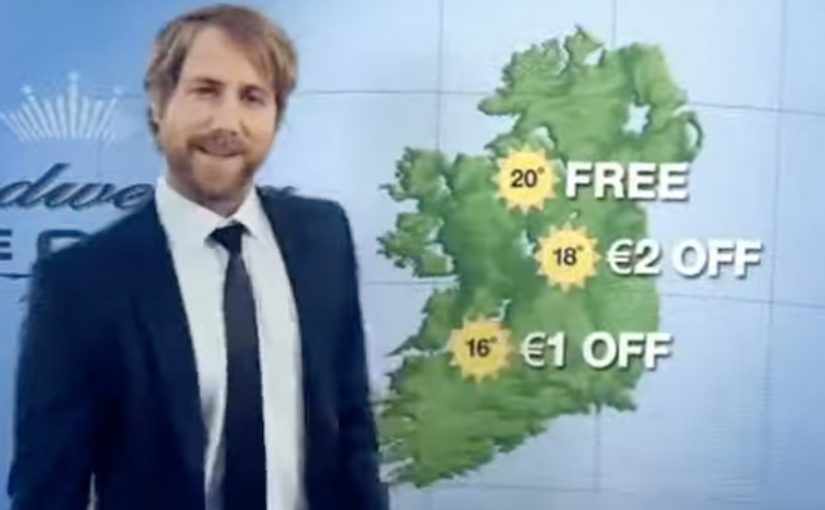
The Budweiser Ice Cold Index app is set to show you the local weather, then spit out redemption codes for free or discounted beer at nearby participating pubs. The higher the temperature, the less you will pay for your pint.

How the Ice Cold Index mechanic worked

The mechanism is simple. Combine three inputs into one immediate reward: location, temperature, and a redeemable code.

The app checks local weather. It then generates a redemption code tied to nearby participating pubs. Price sensitivity is built into the rule set. As temperature rises, the customer’s price drops. This is dynamic pricing in its simplest form: a discount rule that updates automatically based on a measurable condition.

That turns “checking the weather” into “moving into the selling space”.

The real question is how you turn a daily habit check into a measurable step toward purchase without it feeling like a random coupon drop.

Linking price to an external context signal beats arbitrary discounting, because the offer explains itself in one line.

In Irish on-trade activations, weather-linked rules can make a pub choice feel like a natural, talkable next step.

Why the offer feels timely, not forced

It lands because it connects to a real moment of intent. Warm weather increases thirst and increases pub footfall. The offer arrives at exactly the time the customer is already considering a drink.

Extractable takeaway: If you can anchor an incentive to a shared, observable condition, you reduce explanation friction and increase redemption because the context does the persuading.

It also feels fair and transparent. The rule is easy to understand. Hotter day equals cheaper pint. That clarity reduces skepticism and makes the incentive feel like a natural extension of the context.

The business intent behind linking price to temperature

The intent is to convert ambient interest into measurable behavior.

By tying discounts to local conditions, the brand creates a reason to choose a participating pub now, not later. It also encourages repeat checking and repeat visits, which is where loyalty accrues in practice.

This app literally moves people into the selling space, provides refreshment, and so it should gain some loyalty points with customers as well. Too bad it is only in Ireland.

Steal these moves from the Ice Cold Index

  • Attach the incentive to a context signal. Weather is a shared trigger that makes offers feel relevant.
  • Use a rule people can explain in one sentence. Clarity increases trust and redemption.
  • Move people into the selling space. The best mobile incentives reduce distance between intent and purchase.
  • Design for repeat behavior. If the offer updates with conditions, customers have a reason to come back.

A few fast answers before you act

What is the Budweiser Ice Cold Index?

A mobile app concept that shows local weather and generates redemption codes for discounted drinks at nearby participating pubs, with discounts increasing as temperature rises.

What was the core mechanism?

Dynamic pricing driven by weather conditions, delivered through location-aware redemption codes for nearby pubs.

Why does tying price to temperature work?

Because it aligns with real-world demand. When it is warmer, people are more likely to buy a cold drink, and the offer feels timely rather than random.

What business goal does this support?

Driving footfall to participating pubs, increasing redemption rates, and encouraging repeat engagement through an offer that changes with conditions.

What is the transferable takeaway?

Use a shared context trigger to make incentives feel natural, then deliver a simple, redeemable action that moves people into purchase.

Lenovo ThinkPad T420: Enjoy It Responsibly

Lenovo ThinkPad T420: Enjoy It Responsibly

Lenovo, one of the world’s largest laptop brands, developed a series of online viral videos for their then-flagship ThinkPad T420. Across the set, they try to highlight all the extra time one can gain when a laptop promises faster graphics performance, faster boot up, faster wireless connections, faster data transfer, and similar “speed” wins.

However only one of these videos caught my eye. Please enjoy it responsibly.

Speed as a story, not a spec sheet

The mechanism is a simple translation layer. Take performance claims that are usually buried in benchmarks, then turn them into a human currency. Time. The videos do not ask you to care about milliseconds. They ask what you would do if the waiting disappeared.

In global enterprise and prosumer computing categories, performance messaging lands best when it is framed as reclaimed time and reduced friction, not raw technical superiority.

This is the right way to market performance because people respond faster to friction removed than to technical superiority explained.

The real question is how to make speed feel useful before a buyer ever sees the benchmark.

Why it lands

Most performance ads fail because the benefit is abstract. “Faster” only matters when you can picture the moment it saves you. This approach works because it repeatedly converts speed into everyday relief, and then uses humor to make that relief memorable.

Extractable takeaway: If you need to sell performance, convert benchmarks into a repeatable human outcome, then dramatize that outcome with one clear scenario people can retell in a sentence.

Where Lenovo is aiming this set

Lenovo’s emerging marketing team developed the virals for use in Russia, India, Middle East, Eastern Europe, Turkey, South Africa, South East Asia, Hong Kong and Taiwan.

What performance marketers can steal from this

  • Translate tech into time. People buy saved minutes more readily than they buy “20% faster”.
  • Build a series around one promise. Repetition creates recall, especially in multi-market rollouts.
  • Use one standout film as the hook. The sharpest piece pulls attention, the rest does the persuasion work.
  • Keep the claim legible. One benefit per scene beats stacked feature lists.

A few fast answers before you act

What is Lenovo trying to communicate with these T420 virals?

Lenovo is trying to show that performance improvements translate into reclaimed time in daily work, such as faster start-up, faster connectivity, and smoother graphics.

Why use “time saved” instead of performance specs?

Time saved works better because it is universal. Specs require interpretation, but time savings are instantly understood and easier to remember.

What makes one viral stand out in a series?

One viral stands out when it gives the promise a single memorable scenario that people can retell without needing the rest of the campaign for context.

What is the risk of humor in enterprise product marketing?

The risk is that viewers remember the joke but forget the product truth. The humor has to sharpen the benefit, not bury it.

How can other marketers apply this without copying the creative style?

They can keep the same structure. Convert a technical claim into one visible human benefit, then build a simple scene that makes that benefit immediately clear.

Kalles Kaviar: Egg Timer iPhone App

Kalles Kaviar: Egg Timer iPhone App

This egg timer iPhone app was created by CP+B for Swedish sandwich spread Kalles Kaviar.

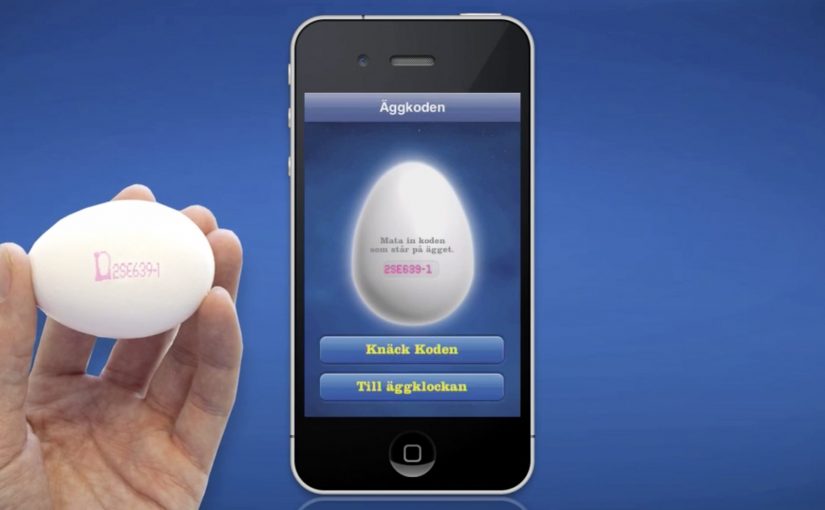
The idea behind the app is to help users boil the perfect egg. It goes further than a simple countdown. It accounts for variables like egg size and how you like it cooked, and it even builds an iTunes playlist where the end of the music means your egg is ready.

The campaign is described as a hit with caviar and egg lovers. It reportedly passed 53,000 unique iPhone downloads and reached number three in Sweden’s iTunes list of the most downloaded free apps.

A breakfast brand that ships something useful

The clever move here is the product logic. Kalles is frequently eaten with sliced boiled egg, so the brand does not start by shouting about taste. It starts by making the egg outcome easier to get right, which makes the pairing more likely to happen again.

How the app turns boiling into a timed soundtrack

  • Input choices. The user selects preferences like softness, and the app adjusts timing accordingly.
  • Playlist as timer. Instead of watching the clock, you listen. When the playlist ends, the egg is done.
  • Extra detail for the obsessed. The experience is described as accounting for factors like altitude, and in some write-ups it is also credited with letting users enter the code printed on Swedish eggs to trace the farm.

In FMCG breakfast categories, small utility tools can turn a habitual pairing into a repeatable ritual and a sales lever.

Why it lands

It respects the moment. People boil eggs while distracted, usually in the morning, and they want confidence without effort. The playlist mechanic is memorable because it is a sensory shortcut, and it also turns waiting time into entertainment.

Extractable takeaway: If your product is most often consumed in a “pairing,” build utility around the pairing step, not around the product claim. Help the ritual succeed, and the product sells itself inside that ritual.

What it is really trying to grow

The real question is whether the utility increases the frequency of the Kalles-plus-egg pairing, not whether the app feels clever.

This is not primarily an “app idea.” It is a demand-shaping idea. By “demand-shaping,” I mean shifting how often the adjacent habit happens, not just which brand wins when it does. If more people boil eggs more often, Kalles has more occasions to be squeezed onto the table. Some coverage also credits the work with lifting egg sales in Sweden, which is a neat reminder that expanding the adjacent habit can be bigger than fighting for share in the core category.

Steal the pairing-first utility play

  • Attach utility to the highest-friction step. Fix the thing people get wrong or avoid.
  • Make the mechanic feel inevitable. A playlist that lasts exactly as long as boiling time is easy to explain and easy to trust.
  • Design for the real context. Morning routines reward hands-free, glance-free interaction.
  • Use delight as reinforcement, not distraction. The music is not decoration. It is the timer.

A few fast answers before you act

What is the Kalles Egg Timer app in one line?

A branded iPhone egg timer that uses your inputs to calculate boiling time and plays a music playlist that ends exactly when the egg is ready.

Why use a playlist instead of a normal countdown?

Because it reduces the need to watch the screen. The soundtrack becomes a passive, low-effort signal that fits cooking behaviour.

What brand problem does this solve?

It makes the product pairing easier to repeat. If the egg step becomes more reliable, the Kalles plus egg habit becomes more frequent.

What makes a branded utility app worth downloading?

It must do a real job better than a generic alternative, and it must fit naturally into a routine people already have.

What should you measure if you run a similar utility idea?

Downloads are not enough. Track repeat usage, time-to-task success, how often the utility is used per week, and whether it correlates with increased occasions for the core product.