
BredaPhoto: Infiltrating Holiday Prints

BredaPhoto: Infiltrating Holiday Prints

BredaPhoto is a photo festival in the Netherlands. In 2010 it ran between September 16 until October 24. During this period, Breda lives and breathes photography. Photographers from all over the world come to show their vision on a present world that feels upside down.

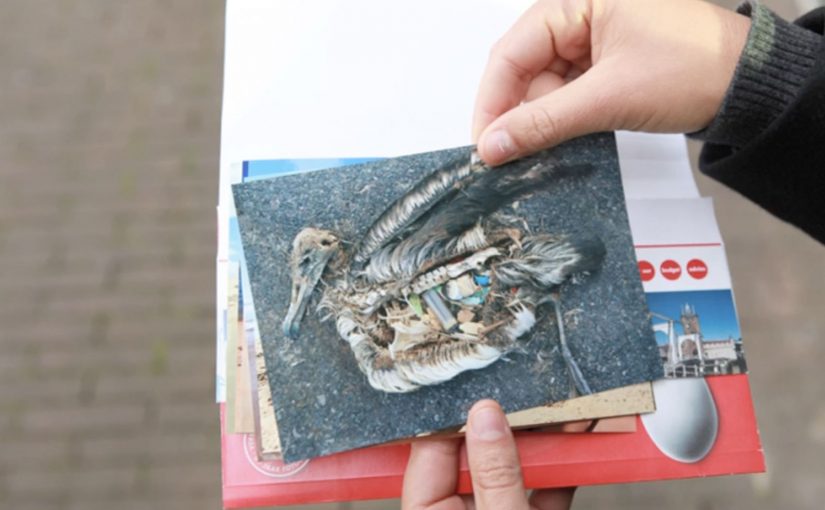
In order to encourage more people from the surrounding areas to visit the festival in 2010, the team used the end of the Dutch holiday season to step directly into the comfort zone of their target group. They tied up with 12 regional photographic shops who, while printing holiday photos, also provided a photo from the BredaPhoto festival.

The contrast between the holiday photos and the festival images was so stark that it is reported to have drawn 55,000 visitors, described as a record for the festival.

Holiday prints as a distribution channel

The insight is almost embarrassingly practical. After holidays, people already walk into photo shops with emotion in hand and a willingness to look at images. BredaPhoto does not try to interrupt that behavior. It inserts itself into it.

The mechanic: a surprise image in the envelope

The “infiltration” is literal. Every time someone picks up their printed holiday photos, they also receive one festival photo. No extra decision. No extra trip. The festival’s work lands in the same stack as the family memories it will be compared against.

In European cultural festivals, partnerships that piggyback on an existing routine like printing holiday photos can outperform broad awareness media because they reach people at a moment of high receptivity.

Why the contrast does the persuasion

Holiday photos are comfort. Festival photography is often confrontation, curiosity, or a sharper point of view. Put them side by side and the festival image does not need a manifesto. The viewer feels the difference instantly, and that feeling creates the urge to see more.

Extractable takeaway: If your product is “new perspective”, deliver one sample at the exact moment people are already consuming the old perspective, then let comparison do the selling.

What this is really optimizing

This is not just reach. It is qualified reach. Anyone printing holiday photos has already self-identified as someone who cares about images, and the distribution happens locally, which reduces the friction between “interesting” and “I could actually go”.

The real question is how to put one credible sample of the festival in front of the right local audience before asking them to commit a visit.

This is a smarter local-growth play than buying broad awareness and hoping interest shows up later.

What event marketers should steal from this

  • Hijack a routine with built-in attention. Choose a behavior where people already expect to look carefully.
  • Make sampling unavoidable but tasteful. Put the sample in the default flow, not behind an opt-in form.
  • Use contrast as your copy. If the product difference is visual, show it next to the audience’s baseline.
  • Localize distribution. When the event is physical, use channels that keep the distance to action short.

A few fast answers before you act

What did BredaPhoto do to attract visitors in 2010?

They partnered with regional photo shops and slipped a festival photo into customers’ holiday print orders, so people encountered the festival work while collecting their own photos.

Why does this work better than a normal poster campaign?

Because it reaches people when they are already engaged with images, and it delivers a concrete sample of the festival’s point of view instead of a promise.

What is the key design principle behind the tactic?

Make the first experience of the product frictionless. One unexpected image in the envelope is enough to trigger curiosity and intent.

Why were photo shops the right channel for this?

Because the audience was already in a visual mindset and already handling printed images, which made the festival sample feel relevant instead of intrusive.

What kind of events should copy this approach?

Events that sell perspective, taste, or discovery. Especially when the audience already has a routine where they consume similar media, like prints, tickets, playlists, or screenings.
XS4ALL: Tonga Time

XS4ALL: Tonga Time

Switching internet providers in the Netherlands is often a time-consuming business, which is exactly why many people prefer not to switch at all.

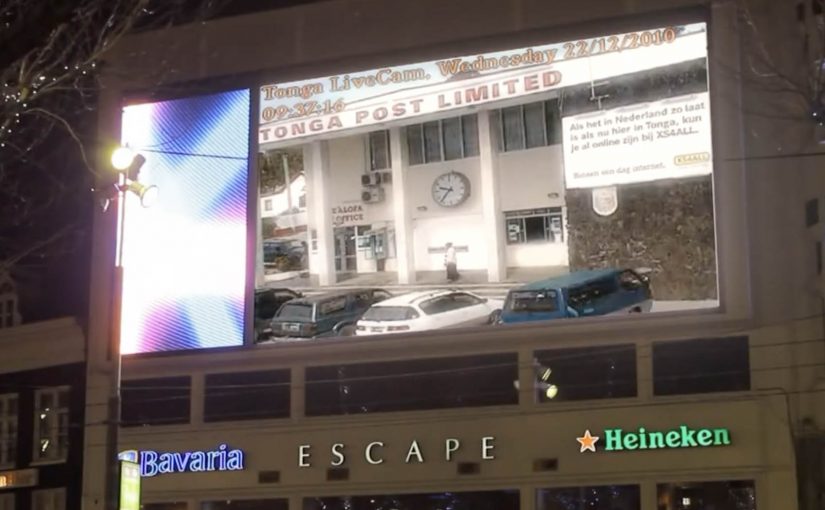
XS4ALL sets out to change that with a promise that sounds almost like a hack. A connection in one day. The campaign idea is framed as “Tonga: Where Time Begins”. Order your connection at 11am Tonga time, and you can have it installed before it is 11am Netherlands time on the same day.

Putting “one day” on a clock

To make the promise tangible, Ogilvy Amsterdam erects a billboard on the Tonga post office. Alongside the billboard, a clock shows the local time in Tonga, described as being about 11 hours ahead of the Netherlands. The clock turns the claim into a visible countdown. Tonga is already “tomorrow”, so the installation can happen “today”.

The real question is not whether XS4ALL can claim speed, but whether it can make that claim feel believable before people experience the service. The strongest move here is turning service logistics into something viewers can verify in one glance.

In telecom markets where switching friction creates inertia, the fastest way to sell speed is to make the time advantage physically visible, not just verbally promised.

Why it lands

The idea works because it uses a real-world fact as the proof mechanism. Time zones are non-negotiable, so the promise borrows credibility from geography, not copywriting. The billboard and the clock also do something important. They take a service promise that feels abstract and make it photographable, retellable, and easy to understand in one glance.

Extractable takeaway: When your differentiator is speed, anchor it to a constraint the audience already trusts, then build a single physical artifact that turns the claim into a visible demonstration.

How to turn speed into visible proof

  • Make the promise measurable. A clock beats a tagline when the benefit is time.
  • Borrow credibility from a fixed reality. Geography, physics, rules, and infrastructure can outperform persuasion.
  • Create a shareable proof object. A single photo should communicate the idea without explanation.
  • Translate operations into a story. “Installed in one day” becomes a narrative people can repeat.

A few fast answers before you act

What is the core idea of “Tonga Time”?

Use Tonga’s head-start time zone to demonstrate that XS4ALL can deliver a new connection within a day, and make that promise tangible with a public clock and billboard.

Why choose Tonga for this message?

Because it is positioned as “where time begins”, so it provides a simple, memorable way to explain how the installation can happen before the Netherlands reaches the same clock time.

What does the clock add that a normal billboard cannot?

It turns a claim into a live reference. People can see the time difference and understand the “within one day” logic immediately.

What is the main risk of using time zones as proof?

If the exact time difference changes seasonally or is reported inconsistently, the concept still holds, but the numeric detail can be challenged.

When is this pattern most useful?

When you are selling speed or responsiveness, and you can tie the benefit to a trusted external constraint that makes the claim feel undeniable.

Jung von Matt: Trojan Art Director

Jung von Matt: Trojan Art Director

Jung von Matt is looking for talent again, this time art directors. Staying true to its creative reputation, the agency devised a cheeky way of recruiting from the same places competitors recruit from.

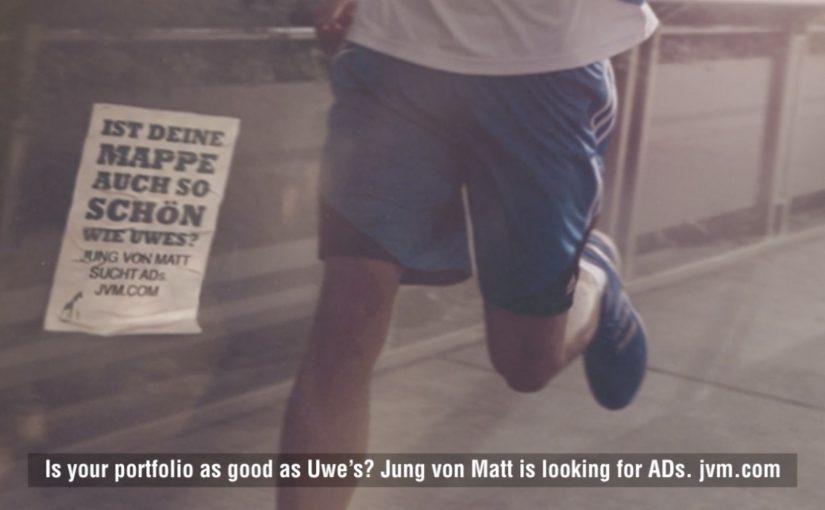
This time the “Trojan horses” were 15 well-known photographers whose work is regularly shown to top creative agencies in Germany. Here, “Trojan horses” means recruitment messages hidden inside portfolio work that creative departments already review. Jung von Matt’s job message was integrated into the photographers’ portfolios. An inscription on a bus. A graffiti on a wall. A stitchery on a pullover. The job ad appears inside the work, right where art directors and creatives are already paying attention.

Recruitment as a stealth placement inside creative culture

The mechanism is elegant. Instead of pushing job ads outward, the agency inserts them into a trusted distribution channel. Photographers’ portfolios are already a legitimate reason to visit creative departments. By embedding the hiring message into those images, the job ad arrives with credibility and surprise built in.

In agency recruitment, the most effective messages often travel through peer-to-peer channels where creative people already look for inspiration.

Why it lands

It respects the audience. Art directors do not want HR language. They want ideas. The recruitment message shows up as an idea. The “spot it” moment also creates a small status game. If you notice it, you feel like an insider, which is exactly the emotion you want associated with joining a top creative shop. This is a smart recruitment idea because it proves the agency’s creative standard in the act of recruiting.

Extractable takeaway: If you recruit creative talent, do not only describe the culture. Deliver the culture as a recruiting experience. The medium should prove the message.

What Jung von Matt is really doing here

Beyond hiring, this is reputation maintenance. The campaign reinforces the belief that the agency thinks differently, even about recruitment. The real question is whether your recruiting message proves the kind of culture and craft the role promises. It also targets a very specific context. The moment when competitors are reviewing portfolios and looking for talent. That is when the message is most likely to be acted on.

What to borrow from this recruitment play

  • Place your message in a trusted channel. Borrow the legitimacy of a format your audience already values.
  • Integrate, do not interrupt. Embedding the ad inside the creative work makes it feel like discovery, not spam.
  • Make the message audience-native. Speak in the language of the craft, not corporate templates.
  • Target the decision moment. Put the offer where hiring intent already exists.
  • Keep it simple. One clear role, one clear next step, no clutter.

A few fast answers before you act

What is the “Trojan Art Director” idea in one sentence?

It is a recruitment tactic where Jung von Matt embeds job messages inside photographers’ portfolio images that are regularly shown to top agencies, reaching art directors in-context.

Why are photographers’ portfolios a powerful distribution channel?

Because they are already viewed by creative departments and talent decision-makers. The audience is qualified and attention is high.

What makes this feel credible rather than gimmicky?

The message is integrated into real creative work and appears in a context where creativity is the currency. That makes the format match the audience expectation.

What is the main risk with stealth recruiting?

It can be perceived as hostile or disrespectful by peers if the tone is too aggressive. The balance is “cheeky” rather than “petty.”

How do you measure success for a recruitment stunt like this?

Qualified applications for the specific role, referral volume from the creative community, and whether employer brand perception improves among the target talent pool.