
A crushed-car prank with a very public punchline
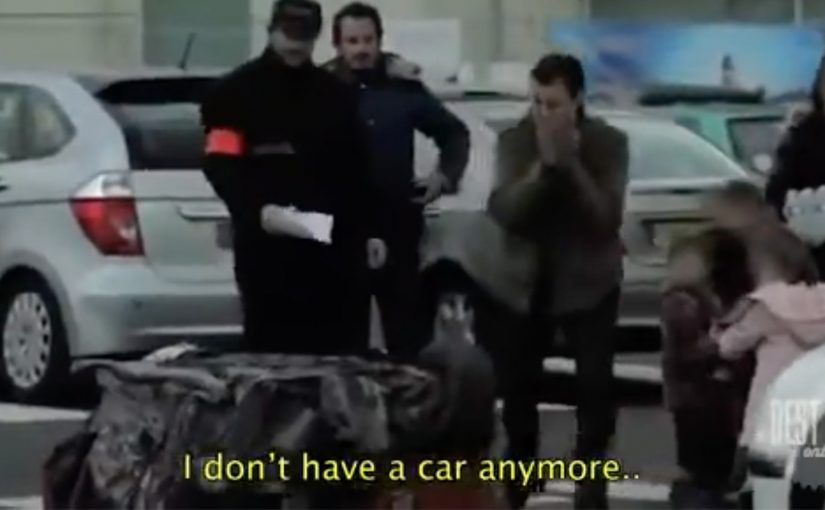
Ogilvy Paris was entrusted to drive acquisition for Europcar’s Auto Liberte, a service that aims to have you rent cars instead of buying them. So, they devised a wicked prank in which they towed away unsuspecting people’s cars, while replacing them with crushed cube cars, and a number to call for help.
The phone number given was of a local radio station that was broadcasting live to everyone in Paris.
The mechanism: make “car ownership pain” impossible to ignore
The stunt works because it hijacks a real ownership fear. Your car is gone. Then it escalates the feeling by replacing it with a cube that looks final, and a phone number that turns the private panic into a public moment. Here, “car ownership pain” means the sudden anxiety, time loss, and hassle that can come with owning and managing a car in a city.
Instead of resolving the situation quietly, the call routes into live radio, so the story instantly becomes shareable content and social proof.
In urban mobility markets, moving people from ownership to access depends on reframing convenience, cost, and hassle in a way that feels personal and immediate.
Why it lands: it turns a product claim into lived experience
Auto Liberté is an alternative to owning a car. The prank makes “owning a car is a headache” feel visceral in seconds, without needing a brochure explanation. It also flips the usual persuasion order. Emotion first. Rationalization second. Once the audience feels the pain, the rental alternative feels like relief.
Extractable takeaway: Make the old habit’s hidden costs felt in seconds, then let the alternative arrive as immediate relief.
The business intent behind the spectacle
This is acquisition marketing dressed as entertainment. The goal is to create talk value at street level, then convert that attention into brand consideration for a service that competes with a deeply ingrained habit.
The real question is whether you can make the old habit feel costly enough that the alternative feels like relief.
Prank marketing like this is worth doing only when the reveal is safe and the resolution is fast.
By integrating radio, the campaign extends the moment beyond the people on the sidewalk to a city-scale audience, while keeping the message anchored to everyday reality.
Four moves for ownership-to-access campaigns
- Attack the habit, not the competitor. The target here is ownership friction, not another rental brand.
- Build a simple reveal. Missing car. Crushed cube. One number to call. Instant comprehension.
- Make the amplification native. Live radio turns reactions into content without needing a separate distribution plan.
- Design the story to travel in one sentence. “They crushed my car and put me live on radio” spreads fast.
A few fast answers before you act
What is Europcar’s “Crush Hour” campaign?
It is a street prank created for Auto Liberté where parked cars were towed away and replaced with crushed cube cars, pushing owners to call a number for help.
How does the prank actually work, step by step?
Remove the real car. Replace it with a visually shocking “final” object. Add a single instruction. Call the number. Then route the call into a live broadcast so the reaction becomes the content.
Why use a crushed cube car instead of a simple “your car was towed” sign?
Because it escalates emotion instantly. It makes the loss feel irreversible and personal, so the audience experiences “ownership pain” before they ever hear the service pitch.
How does the live radio element change the impact?
It turns a private moment into a public story. The call becomes instant broadcast content, which amplifies reach and makes the message feel socially real, not just advertised.
What is the campaign trying to persuade people to do?
It positions Auto Liberté as an alternative to car ownership, using a high-drama metaphor to make ownership feel stressful and renting feel like relief.
What should brands be careful about with prank marketing?
Intensity and consent. If the “moment of truth” feels unsafe, humiliating, or too punitive, the brand can lose trust even if the stunt earns attention.

