
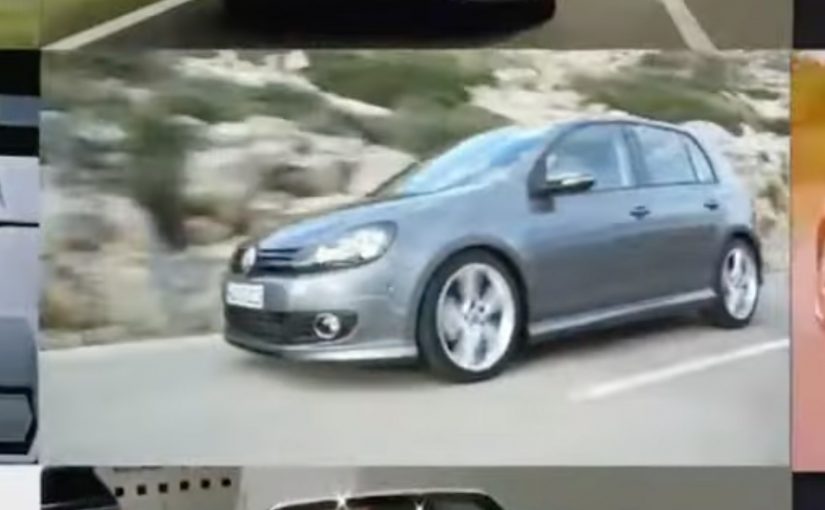
Volkswagen: The Fun Theory

Volkswagen: The Fun Theory

I am sure some of you may have already heard of the “The Fun Theory” campaign by Volkswagen that just recently won the Cannes 2010 Cyber Grand Prix for a digitally led integrated campaign. Here, “digitally led” means the digital layer does the heavy lifting for discovery, sharing, and participation, not just for amplification.

For those who have not heard of the campaign, The Fun Theory was all about generating interest in Volkswagen’s Blue Motion technologies that deliver the same great car performance with reduced environmental impact, and to do this, they found an insight around how “fun” could change human behavior for the better, and this formed The Fun Theory, a campaign that spawned over 700 user generated Fun Theory initiatives along with a number of big viral hits that generated over 20 million YouTube views, with one rushing past 12 million views alone!

What makes this digitally led (without overcomplicating it)

This is one of those campaigns where the “digital” part is not a layer added at the end. It is the distribution engine. It is how the idea travels, how participation scales, and how a single insight turns into hundreds of initiatives people want to copy, remix, and share. The real question is whether your idea can travel without you pushing it. A campaign is not digitally led unless the channels are the mechanic that makes it repeatable.

Extractable takeaway: If you want integrated work to scale, design the participation loop and the sharing loop into the idea itself. Otherwise “digital” stays a bolt-on and the campaign stays one-off.

The strategic insight that carries the whole idea

The Fun Theory is built on a simple behavioral observation. If you make the better choice fun, more people will do it. That is the core. Everything else is execution.

  • One clear behavior frame. “Fun changes behavior for the better.”
  • A product story that benefits. Blue Motion technologies. Same performance, reduced impact.
  • A scalable content model. Big hits create attention, then user generated initiatives extend the lifespan.

In large brand organizations, integrated work scales when the behavior mechanic and the distribution loop are designed together.

What to take from this if you are building integrated work

  1. Lead with a human mechanism, not a message. People share mechanisms they can repeat.
  2. Let distribution be part of the design. If it does not travel, it does not scale.
  3. Create a format others can copy. The strongest campaigns spawn “versions.”
  4. Keep the brand role credible. The idea must connect back to a real product promise.

A few fast answers before you act

What is Volkswagen’s “The Fun Theory” in one sentence?

It is a digitally led integrated campaign built on the idea that making the better choice fun can change human behavior for the better, while building interest in Volkswagen’s Blue Motion technologies.

Why did this campaign matter beyond a single viral video?

Because it scaled into participation. It spawned hundreds of user generated initiatives, not just one-off attention.

What is the link to Blue Motion technologies?

The campaign positioned Blue Motion as delivering the same great car performance with reduced environmental impact, then used “fun” as the behavioral hook to earn attention and sharing.

What is the transferable lesson for digital and brand leaders?

If you can pair a simple behavioral mechanism with a credible product story, digital channels can turn one idea into a repeatable format that communities propagate for you.

How do you know when a “digitally led” idea is strong enough?

If people can describe it quickly, repeat it without you, and share it with minimal friction, it is built to scale.
The North Face: Red Flags in China

The North Face: Red Flags in China

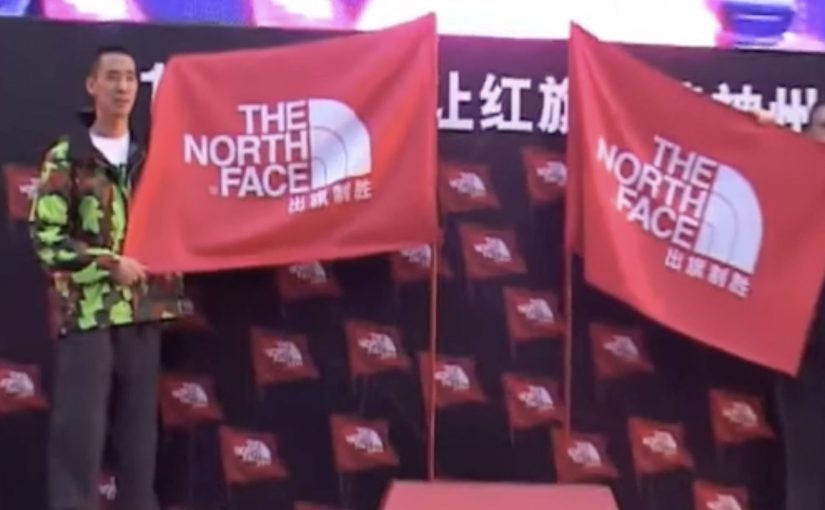
The North Face in China turns a simple outdoor ritual into a phone-powered race. You “plant” a virtual red flag to claim a location. You get the bragging rights of being first. Then you try to out-plant everyone else.

A modern take on the oldest explorer move in the book

Planting a flag is a universally understood symbol. It’s the shorthand for “I was here first.” This campaign borrows that instinct and digitizes it, so the only equipment you need is a mobile phone.

The mechanic: claim a place, then defend your status

At the heart of the idea is a competitive map. Participants place virtual red flags on locations they discover, and the campaign keeps score so “firsts” become collectible. It’s a light-touch way to make exploration feel like a game you can win, not just a virtue you should aspire to.

In fast-growing outdoor markets where many people are still taking their first steps into hiking culture, this kind of social competition is an effective on-ramp.

Why it lands: it converts curiosity into a scoreboard

Outdoor positioning often sounds lofty. “Explore more.” “Get outside.” The problem is that those ideas are hard to act on today, especially in cities where “nature” is not a default habit.

Extractable takeaway: If you want behavior change, give people a visible “progress signal” they can earn quickly. A simple status marker (first, top 10, streak, champion) turns vague aspiration into a repeatable loop.

Red flags work because they’re instantly legible. You don’t need instructions to understand what it means to claim something, and you don’t need a long explanation to feel the urge to beat someone else to the next spot.

The real question is how do you turn exploration from a brand line into a repeatable action people want to perform?

The business intent: make “Never Stop Exploring” measurable

This is a smart brand move because it makes “Never Stop Exploring” visible as behavior instead of leaving it as a slogan.

Case-study write-ups describe this as an integrated push that blends mobile participation with on-ground visibility and retail activation. The core goal is to move the brand from “admired” to “acted on”, by making exploration something people can start immediately, then repeat.

What brand teams can steal from Red Flags

  • Use a symbol people already understand: flags, stamps, passports, badges. Familiar metaphors reduce friction.
  • Turn progress into a public artifact: a claimed location or visible marker is more motivating than a private point total.
  • Design for repeat loops: one action should naturally suggest the next one.
  • Make competition optional but obvious: the scoreboard should be there for people who want it, without blocking casual participation.
  • Reward “first steps”: the earliest wins matter most when you’re trying to create a new habit.

A few fast answers before you act

What is the Red Flags idea in one sentence?

The Red Flags idea is a mobile competition where people plant virtual red flags to claim places and earn status for being first, encouraging more exploration through a simple scoreboard.

Why does “claiming a location” work so well?

Claiming a location works because it makes exploration feel personal and scarce. Once a place is “yours”, you feel ownership, and ownership increases repeat behavior.

Is this gamification or location-based marketing?

Red Flags is both gamification and location-based marketing. The location is the proof of action, and the game layer, claims, status, and competition, supplies motivation and repeatability.

What’s the main risk in copying this mechanic?

The main risk in copying this mechanic is overcomplicating it. If placing the first marker takes too long or requires too many steps, you lose the impulse that makes the idea work.

What’s a modern equivalent if you don’t want maps?

A modern equivalent without maps is any “claimable” unit: completing a route, checking in at partner venues, finishing a micro-challenge, or earning a time-bound “first” in a shared feed.

Share Happy Ice Cream Machine

Share Happy Ice Cream Machine

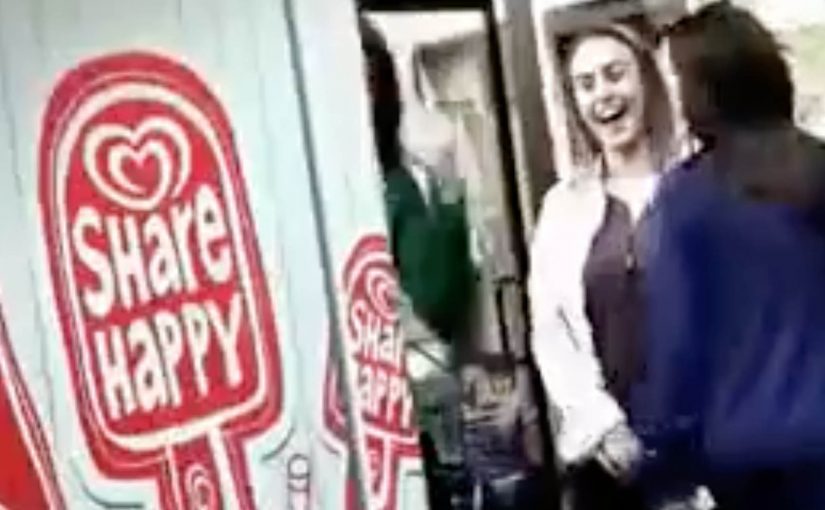
You approach an ice cream machine that refuses to work for a solo person. It only dispenses when two people participate together. The reward is simple. Free ice cream. The behaviour it creates is even simpler. Ask someone nearby to join you.

The idea. Turn a freebie into a shared ritual

Most giveaway machines are built for speed. Press, receive, leave. Share flips the script. The machine makes cooperation the trigger, so the brand message is performed in public rather than stated on a poster.

Why this mechanic works

It removes awkwardness. People have a reason to talk to strangers, and the machine becomes the icebreaker. The shared reward also creates a shared story, which is why these activations often travel well on social. Here, the mechanic is simply the rule people must follow to unlock the reward.

Extractable takeaway: When the reward depends on two people, the brand turns participation itself into proof of the idea.

Buy interaction, not just sampling

In crowded retail and event environments, the hard part is not handing out samples, but giving strangers a reason to interact in public.

The real question is not whether a free ice cream can attract attention. It is whether the brand can turn that attention into a memorable social behaviour.

Share gets that right, because the interaction is the media, not just the reward.

Steal this from the teamwork mechanic

  • Make the rule obvious before people arrive. People should understand from a distance that this only works together.
  • Keep the action physical and quick. The longer the interaction takes, the more the social energy drops.
  • Make the reward immediate. Fast payoff is what turns a small interaction into a satisfying public moment.
  • Judge success by interactions, not just giveaways. The stronger metric is how many micro-connections the brand creates between people.

A few fast answers before you act

What is the Happy Ice Cream Machine?

It is a vending-machine-style activation that dispenses free ice cream only when people participate together, so the reward is tied to cooperation.

Why require two people?

Because it forces a social moment. The brand message becomes a behaviour. Sharing is not a slogan. It is the unlock mechanism.

What makes this kind of activation spread?

It is easy to understand on video. Two strangers team up, the machine responds, and the payoff is instant. That simplicity travels.

Where does this work best?

It works best in places with natural foot traffic and a low barrier to joining in, such as retail zones, festivals, campuses, and public events.

What should you measure?

Participation pairs per hour, average dwell time, repeat attempts, and the share rate of user-generated clips during the activation window.