
ASICS: Race Ryan Hall at Columbus Circle

ASICS: Race Ryan Hall at Columbus Circle

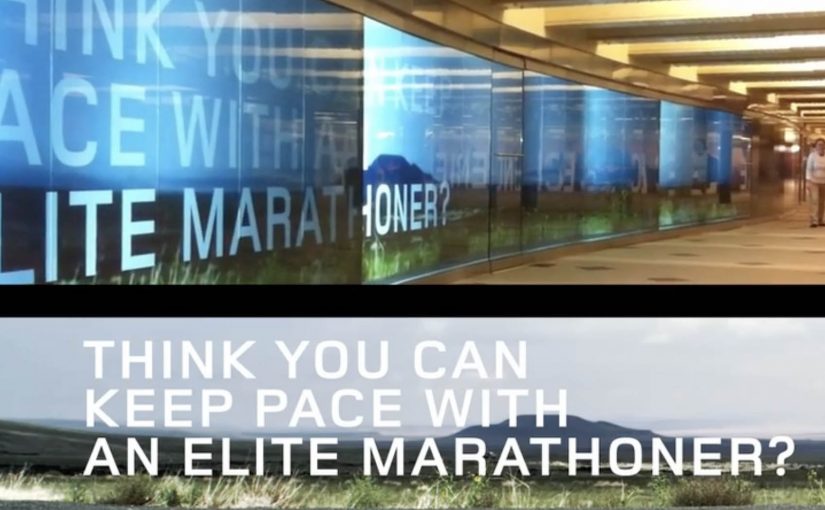
ASICS wants to level up physical interaction with their brand. So around this year’s ING New York City Marathon, they built a 60-foot video wall in the Columbus Circle subway station and challenged passersby to race U.S. marathon runner Ryan Hall.

The wall plays life-sized footage of Hall running at marathon pace, turning a commute corridor into a short, sweaty benchmark. You do not “watch” the message. You try to keep up with it.

Why a race works better than a slogan

In high-traffic urban transit environments, the fastest way to make a performance claim believable is to let people feel it with their own body, not just read it. Most sports sponsorship visibility lives on banners and logos. This flips the value. It gives the audience a direct comparison: your pace versus elite pace. Because the wall sets an elite pace as a moving yardstick, that comparison makes the brand message tangible in seconds, and it creates a story people can retell immediately.

Extractable takeaway: If you need credibility fast, turn the claim into a simple physical test that anyone can try without setup.

The craft move: frictionless participation

No sign-up. No app download. No instruction manual. The interaction is instinctive. See runner. Run next to runner. That simplicity matters because subway audiences have short attention windows and low patience for setup.

What ASICS is really doing with this build

On the surface it is a fun stunt. Underneath it is a credibility transfer, meaning the elite standard makes the sponsor’s performance story feel earned when people experience the comparison firsthand. The real question is whether your brand promise holds up when people can compare themselves to an elite benchmark in public. This is a stronger sponsorship play than more logo visibility because it produces felt proof, not just awareness. By letting everyday runners test themselves against a real benchmark, ASICS positions itself closer to serious performance culture, not just event sponsorship.

Big-event activation moves to copy

  • Turn a claim into a test. If the audience can try it, they will believe it.
  • Make participation obvious. The interaction should be understood without reading instructions.
  • Place it where behavior already fits. A corridor invites motion. Use spaces that support the action.
  • Design for one-sentence retell. “I raced Ryan Hall in the subway” is the whole message.

A few fast answers before you act

What is the core mechanic of this activation?

A long-form video wall shows Ryan Hall running at marathon pace, inviting passersby to physically race alongside the footage.

Why does transit placement matter here?

Transit corridors create natural “run lanes” and constant foot traffic, so the activation gets high exposure and the behavior feels socially plausible.

What makes this more effective than a normal video billboard?

It turns viewers into participants. The message is experienced as effort and pace, not as information.

What is the biggest execution risk?

If the wall is hard to notice, the corridor is too crowded to move, or the interaction cues are unclear, people default back to walking and the idea collapses.

How would you measure success?

Dwell time, participation rate, repeat attempts, social sharing volume, and any lift in event-area brand consideration versus baseline sponsorship exposure.
Chevrolet: Then & Now

Chevrolet: Then & Now

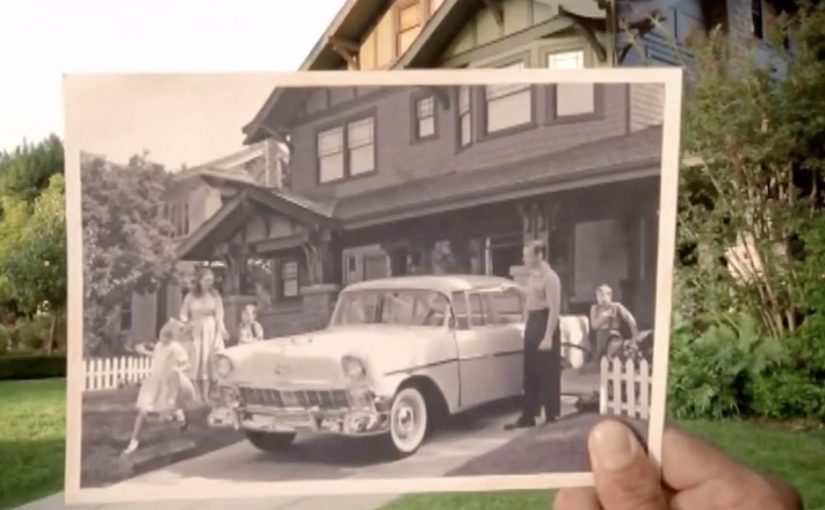
As a way to celebrate turning 100, Chevy creates a spot titled “Then & Now” that shows people staying connected to iconic moments, locations, and Chevrolet vehicles as if those moments are with them right there, right now.

A simple device that does the heavy lifting

The mechanism is beautifully restrained: vintage photographs of Chevrolets and the people around them are held up to the camera in the exact same locations today, aligning past and present into a single frame.

In automotive heritage storytelling, the fastest way to communicate longevity is to make time visible with a device that needs almost no explanation.

In heritage-heavy categories, anniversary storytelling lands best when it helps the audience locate their own memories in the present, not when it asks them to admire the brand.

Why it lands emotionally

The film does not argue that the brand matters. It shows that memory matters, and lets the vehicles sit naturally inside that truth. The hand-held photos are the emotional bridge. They make nostalgia feel personal, not corporate.

Extractable takeaway: If you can make time visible with one repeatable in-scene device, you can earn nostalgia without turning the work into a corporate victory lap.

The business intent behind the sentiment

A centennial can easily become self-congratulation. This avoids that trap by focusing on the audience’s continuity. The brand is the thread that runs through people’s lives, places, and rituals, rather than the subject demanding applause. The real question is whether your anniversary work makes the audience feel time passing in their own life, not whether it proves you have been around. Anniversary work should prioritize the audience’s continuity over brand self-congratulation.

Transferable moves for anniversary work

  • Choose one visual metaphor and commit. One repeatable device beats a collage of “greatest hits”.
  • Let people be the hero. Heritage feels earned when the customer’s life is the storyline.
  • Use restraint as a quality signal. Minimal copy and slow pacing can make the work feel more truthful.
  • Anchor the past in the present. Showing the same place now keeps nostalgia from drifting into museum mode.

A few fast answers before you act

What is “Then & Now” in one line?

A centennial film that aligns vintage Chevrolet photos with the same real-world locations today to show continuity across generations.

What is the core creative mechanism?

Hand-held historical photographs matched precisely to present-day scenes, creating a single frame that contains both time periods.

Why does this approach work for anniversary advertising?

It makes time visible instantly, and it ties the brand to lived memory rather than to corporate milestones.

What should you avoid in centennial storytelling?

Avoid making the milestone the hero. If the audience cannot see their own continuity in the work, the film risks reading like self-congratulation.

What is the most transferable takeaway?

If you can show the passage of time with one simple, repeatable device, you can tell a heritage story without overexplaining it.

Jimmy Kimmel: Halloween Candy Prank 2011

Jimmy Kimmel: Halloween Candy Prank 2011

Here’s to starting a new week with a smile.

Talk show host Jimmy Kimmel challenged parents across America to tell their kids they ate all their Halloween candy, then videotape the reactions. Parents were asked to upload the clips to YouTube under the heading “Hey Jimmy Kimmel I told my kid I ate all their Halloween candy.”

Daring moms and dads followed through. The frenzied responses are then pieced together into a fast, best-of montage that does the work of a full segment in a few minutes.

A prank with a built-in distribution engine

The mechanism is almost frictionless: one simple prompt, one easy filming setup, one obvious upload destination, and one consistent label so submissions can be found and compiled. The audience creates the raw material. The show supplies the edit and the punchline timing.

In US broadcast entertainment, repeatable viewer challenges turn a one-way show into a repeatable participation cycle that grows through sharing.

Why it lands

It compresses a big emotional range into a tight format. Tears, outrage, bargaining, moral lectures, and sudden forgiveness all land fast. Because the viewer understands the setup in seconds and gets a fresh emotional spike every few beats, the montage keeps attention high without needing extra explanation.

Extractable takeaway. User-generated segments travel when the prompt is easy to replicate, the emotional payoff is immediate, and the brand’s role is ruthless curation, not overproduction.

It is instantly understandable. You do not need context, a premise explainer, or a character intro. Candy, kids, and betrayal are enough.

It makes the audience feel like the cast. Parents are not just watching a bit, they are contributing to it. The real question is not whether one prank is funny, but whether the format reliably turns viewers into contributors and contributors into distribution.

This is stronger as a participation system than as a one-off TV gag.

What to steal from participatory prank formats

  • Make participation a recipe. One action, one prompt, one deliverable, one naming convention.
  • Design for phone-grade production. The lower the setup cost, the higher the submission volume.
  • Optimize the edit for momentum. A “best-of” is not a dump of clips. It is pacing, contrast, and escalation.
  • Build a title that people can copy exactly. Consistent labeling is the quiet infrastructure behind scalable user-generated content.

A few fast answers before you act

What is the core mechanic of this Jimmy Kimmel segment?

A single prank prompt is sent to viewers. Viewers film reactions and upload clips. The show compiles the best moments into a montage.

Why does it work so well on YouTube?

The setup is universal and the payoff is fast. Each clip delivers a clear emotional beat that is easy to share without explanation.

Is this a “campaign” or just a TV gag?

It behaves like a campaign because it has a repeatable participation brief and a distribution loop. It is also a comedy bit because the final product is the edit.

What makes the montage feel addictive?

Pacing and variety. The edit jumps between different reactions before any single moment stalls, which keeps attention locked.

What is the transferable lesson for marketers?

If you want scale, simplify the instruction, standardize the submission label, and invest your effort in curation so the best entries become the marketing.