
XS4ALL: Tonga Time

Switching internet providers in the Netherlands is often a time-consuming business, which is exactly why many people prefer not to switch at all.

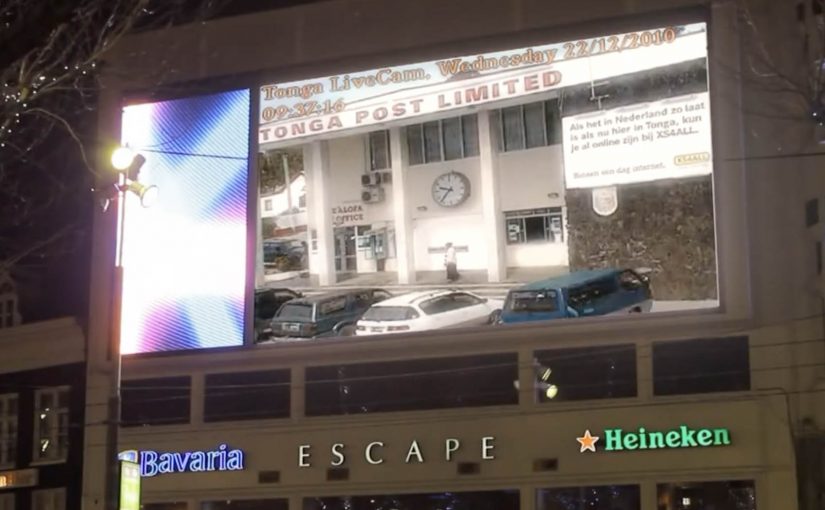
XS4ALL sets out to change that with a promise that sounds almost like a hack. A connection in one day. The campaign idea is framed as “Tonga: Where Time Begins”. Order your connection at 11am Tonga time, and you can have it installed before it is 11am Netherlands time on the same day.

Putting “one day” on a clock

To make the promise tangible, Ogilvy Amsterdam erects a billboard on the Tonga post office. Alongside the billboard, a clock shows the local time in Tonga, described as being about 11 hours ahead of the Netherlands. The clock turns the claim into a visible countdown. Tonga is already “tomorrow”, so the installation can happen “today”.

The real question is not whether XS4ALL can claim speed, but whether it can make that claim feel believable before people experience the service. The strongest move here is turning service logistics into something viewers can verify in one glance.

In telecom markets where switching friction creates inertia, the fastest way to sell speed is to make the time advantage physically visible, not just verbally promised.

Why it lands

The idea works because it uses a real-world fact as the proof mechanism. Time zones are non-negotiable, so the promise borrows credibility from geography, not copywriting. The billboard and the clock also do something important. They take a service promise that feels abstract and make it photographable, retellable, and easy to understand in one glance.

Extractable takeaway: When your differentiator is speed, anchor it to a constraint the audience already trusts, then build a single physical artifact that turns the claim into a visible demonstration.

How to turn speed into visible proof

  • Make the promise measurable. A clock beats a tagline when the benefit is time.
  • Borrow credibility from a fixed reality. Geography, physics, rules, and infrastructure can outperform persuasion.
  • Create a shareable proof object. A single photo should communicate the idea without explanation.
  • Translate operations into a story. “Installed in one day” becomes a narrative people can repeat.

A few fast answers before you act

What is the core idea of “Tonga Time”?

Use Tonga’s head-start time zone to demonstrate that XS4ALL can deliver a new connection within a day, and make that promise tangible with a public clock and billboard.

Why choose Tonga for this message?

Because it is positioned as “where time begins”, so it provides a simple, memorable way to explain how the installation can happen before the Netherlands reaches the same clock time.

What does the clock add that a normal billboard cannot?

It turns a claim into a live reference. People can see the time difference and understand the “within one day” logic immediately.

What is the main risk of using time zones as proof?

If the exact time difference changes seasonally or is reported inconsistently, the concept still holds, but the numeric detail can be challenged.

When is this pattern most useful?

When you are selling speed or responsiveness, and you can tie the benefit to a trusted external constraint that makes the claim feel undeniable.

M&M’s: Space Heroes Bookmarklet

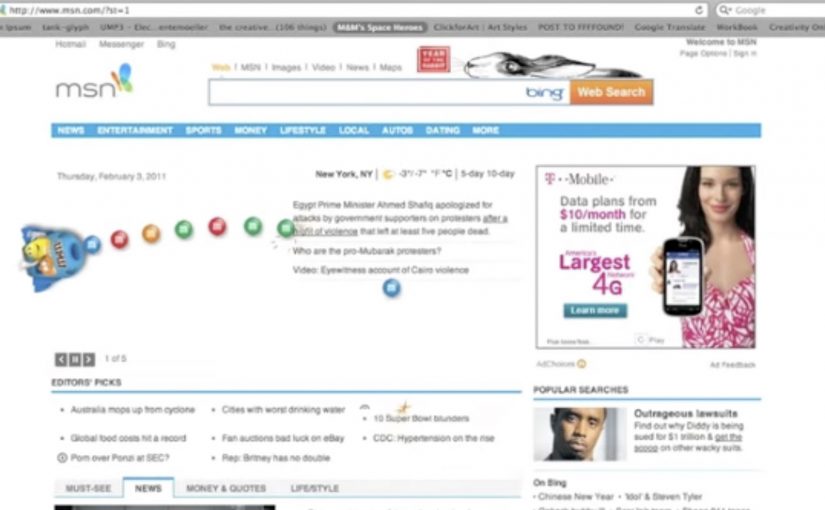
BBDO Denmark created a fun bookmarklet for M&M’s Space Heroes. You drag a little spaceship into your bookmarks bar, then visit any website and start blasting the page content with M&M’s.

A bookmarklet is a small script saved as a browser bookmark, so it can “overlay” an experience on top of whatever page you are currently viewing.

A tiny install that turns the whole web into a playground

The mechanic is deliberately low-friction. No sign-up, no download, no destination site required after setup. The “media” is any page you are already on, and the brand turns up as an interactive layer you can trigger on demand.

In consumer digital marketing, lightweight browser mechanics can create disproportionate delight because they hijack familiar environments without asking people to change habits.

Why this lands

This works because it feels like you discovered a secret feature of the internet. The brand is not interrupting your attention. It is giving you a tool you can deploy when you want, which makes it read as play rather than advertising. The real question is how to make branded play feel user-invited instead of ad-delivered.

Extractable takeaway: If you want interactivity to spread, reduce setup to a single gesture, then let people apply the experience to their own context so every use feels personal and share-worthy.

What the brand is really doing

M&M’s is associating itself with quick, mischievous fun. This is a stronger engagement model than a one-and-done microsite because the user decides when the brand shows up. The bookmarklet format also extends session time without demanding it. People keep it around and trigger it repeatedly, which creates a very different relationship than a one-time campaign visit.

What to borrow from this bookmarklet pattern

  • Make activation instant. One simple action to start the experience beats a long funnel.
  • Let people choose the stage. “Any website” turns the audience into co-creators.
  • Keep it visibly harmless. Stress relief works when it feels playful, not destructive.
  • Offer a clear entry point. A single URL that explains and delivers the tool removes hesitation.

A few fast answers before you act

What is M&M’s Space Heroes?

It’s a bookmarklet-based browser toy that lets you overlay a simple “shooting” interaction on top of any webpage, themed around M&M’s Space Heroes.

How do you use a bookmarklet like this?

You drag the provided item into your bookmarks bar, then click it while viewing any website to launch the experience on that page.

Why does this format work for advertising?

It feels optional and playful. People choose to activate it, which reduces resistance and increases repeat use.

What’s the main risk if you copy this pattern?

Browser support and security perceptions. If the setup feels confusing or sketchy, people will not install it.

How do you measure success for a bookmarklet campaign?

Installs, repeat activations per user, average session time, sharing or screen-recording volume, and downstream brand lift.

Jung von Matt: Trojan Art Director

Jung von Matt is looking for talent again, this time art directors. Staying true to its creative reputation, the agency devised a cheeky way of recruiting from the same places competitors recruit from.

This time the “Trojan horses” were 15 well-known photographers whose work is regularly shown to top creative agencies in Germany. Here, “Trojan horses” means recruitment messages hidden inside portfolio work that creative departments already review. Jung von Matt’s job message was integrated into the photographers’ portfolios. An inscription on a bus. A graffiti on a wall. A stitchery on a pullover. The job ad appears inside the work, right where art directors and creatives are already paying attention.

Recruitment as a stealth placement inside creative culture

The mechanism is elegant. Instead of pushing job ads outward, the agency inserts them into a trusted distribution channel. Photographers’ portfolios are already a legitimate reason to visit creative departments. By embedding the hiring message into those images, the job ad arrives with credibility and surprise built in.

In agency recruitment, the most effective messages often travel through peer-to-peer channels where creative people already look for inspiration.

Why it lands

It respects the audience. Art directors do not want HR language. They want ideas. The recruitment message shows up as an idea. The “spot it” moment also creates a small status game. If you notice it, you feel like an insider, which is exactly the emotion you want associated with joining a top creative shop. This is a smart recruitment idea because it proves the agency’s creative standard in the act of recruiting.

Extractable takeaway: If you recruit creative talent, do not only describe the culture. Deliver the culture as a recruiting experience. The medium should prove the message.

What Jung von Matt is really doing here

Beyond hiring, this is reputation maintenance. The campaign reinforces the belief that the agency thinks differently, even about recruitment. The real question is whether your recruiting message proves the kind of culture and craft the role promises. It also targets a very specific context. The moment when competitors are reviewing portfolios and looking for talent. That is when the message is most likely to be acted on.

What to borrow from this recruitment play

  • Place your message in a trusted channel. Borrow the legitimacy of a format your audience already values.
  • Integrate, do not interrupt. Embedding the ad inside the creative work makes it feel like discovery, not spam.
  • Make the message audience-native. Speak in the language of the craft, not corporate templates.
  • Target the decision moment. Put the offer where hiring intent already exists.
  • Keep it simple. One clear role, one clear next step, no clutter.

A few fast answers before you act

What is the “Trojan Art Director” idea in one sentence?

It is a recruitment tactic where Jung von Matt embeds job messages inside photographers’ portfolio images that are regularly shown to top agencies, reaching art directors in-context.

Why are photographers’ portfolios a powerful distribution channel?

Because they are already viewed by creative departments and talent decision-makers. The audience is qualified and attention is high.

What makes this feel credible rather than gimmicky?

The message is integrated into real creative work and appears in a context where creativity is the currency. That makes the format match the audience expectation.

What is the main risk with stealth recruiting?

It can be perceived as hostile or disrespectful by peers if the tone is too aggressive. The balance is “cheeky” rather than “petty.”

How do you measure success for a recruitment stunt like this?

Qualified applications for the specific role, referral volume from the creative community, and whether employer brand perception improves among the target talent pool.