

Helium in Chewing Gum: The Jumping Bubble

Helium in Chewing Gum: The Jumping Bubble

A few guys run a hilariously simple experiment: they add helium gas into chewing gum and see what happens when the gum turns into a bubble.

Why this idea is even a question

The underlying thought is basic physics. Helium is lighter than air, so if you can trap enough of it inside a bubble, buoyancy starts to matter. Chewing gum adds weight and resistance, so the “will it float” question becomes a practical one, not a theoretical one.

In global consumer marketing teams and creator studios, simple, repeatable experiments often outperform polished productions when the payoff is instantly visible.

The real question is whether the helium adds enough lift to visibly change the bubble’s behavior before the gum’s weight and leakage win.

In a world where small experiments travel faster than polished productions, a clean visual question plus a simple setup is often enough to create shareable entertainment.

What makes it watchable

It is instantly legible. You do not need context, subtitles, or a long explanation. You just want to see whether the gum bubble behaves differently, and whether it turns into something that looks like “jumping” rather than floating. Here, “jumping” means a short, bobbing lift that reads like a hop on camera, not sustained flight. Because buoyancy is actually in play, the outcome feels uncertain enough to keep you watching.

Extractable takeaway: When the question is instantly understood and the payoff is purely visual, you can win attention without narration or heavy editing.

Borrow the visual-question pattern

  • Start with a one-line premise. “What if we add helium to chewing gum” is a perfect hook.
  • Design a visible outcome. The result has to be obvious on camera, even with the sound off.
  • Keep the runtime tight. Curiosity does the work if the setup is short and the payoff arrives quickly.

This is the kind of micro-experiment I would publish with almost no polish: the premise is clear, the outcome is visible, and the audience does the distribution.

I would not be surprised if “chewing gum jumping” became someone’s next absurd extreme sport.


A few fast answers before you act

Can a helium-filled bubblegum bubble actually float?

A helium-filled bubble can float if the buoyant lift exceeds the total weight of the gum and trapped gas. In practice, the gum’s weight and leakage usually make sustained floating harder than people expect.

Why does the bubble sometimes look like it is “jumping” instead of floating?

The bubble can get small bursts of lift, then lose gas or hit airflow changes. That can create a bobbing, hopping motion rather than a smooth rise.

Why do tiny experiments like this spread online?

Tiny experiments spread because they pose a visual question, deliver a fast payoff, and let viewers answer it for themselves in one watch.

Is it safe to do helium experiments like this?

Handling helium carefully is important. Do not inhale helium. It can cause serious harm by displacing oxygen.

What’s the simplest takeaway from this experiment?

A small change in what’s inside a bubble can change how it behaves, but chewing gum still dominates the outcome because it adds mass and leaks over time.
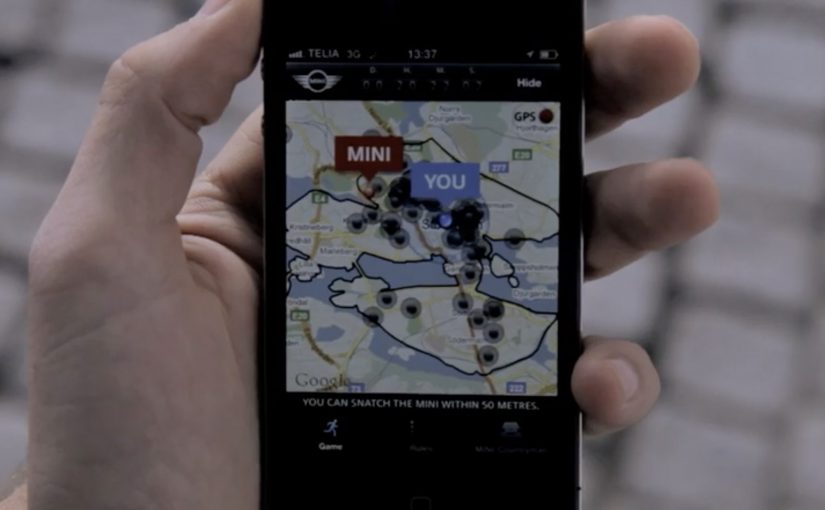
MINI: Getaway Stockholm 2010

MINI: Getaway Stockholm 2010

After their recent Talent Poaching via Facebook Places campaign, Jung von Matt is back with the MINI Getaway Stockholm 2010 campaign.

The premise is a reality game that challenges you to do the impossible: stay at least 50 metres away from everybody else in Stockholm city between October 31st and November 7th 2010. If you succeed, you win the new MINI Countryman.

A city-wide game disguised as a launch

This is not a typical “watch and forget” film. It is a product introduction that behaves like a week-long public challenge, using the city as the playing field and social friction as the difficulty setting. Here, “social friction” means the everyday collisions and proximity of city life that make distance hard to maintain.

The mechanic that makes it feel impossible

Mechanically, the campaign turns distance into drama: the rule is simple, but enforcing it in a dense capital city is the whole point. Every street corner becomes a decision, and every near-miss becomes part of the story players tell afterwards.

In European automotive launches, turning a product message into a participatory public challenge is a reliable way to earn attention without leaning on price or specs.

Why this breaks through

Most launches compete on features. This one competes on behavior. It gives people a clear goal, a clear constraint, and a clear reward, then lets the public generate the content through their attempts to win. Because the rule forces constant micro-decisions in public space, it creates tension that keeps spectators watching and participants talking. A constraint-led public game beats a feature-led launch when you need sustained talk value. The real question is whether your launch can earn attention by making the public do the storytelling.

Extractable takeaway: If you can express your launch as one repeatable rule plus one real-world constraint, you turn passive awareness into a week of attempts, near-misses, and shareable stories.

The business intent behind the play

The obvious headline is the prize, but the deeper intent is talk value and repeated engagement over a full week. By “talk value,” I mean the likelihood people will mention it to others and keep the story alive. A launch that unfolds day by day creates more chances for people to hear about it, join late, or simply follow along as a spectator.

Launch moves worth copying

  • Build one rule people can repeat. If the mechanic fits in a single sentence, it spreads faster.
  • Use a constraint, not just a reward. Difficulty creates stories. Stories create sharing.
  • Make the environment part of the experience. When the city is the stage, the campaign feels larger than the media.
  • Stretch the reveal over days. A week-long cadence beats a one-day spike if you want sustained attention.

A few fast answers before you act

What is MINI Getaway Stockholm 2010 in one line?

A week-long reality game in Stockholm with one simple rule and a real prize: stay 50 metres away from everyone else and win a MINI Countryman.

Why does the “50 metres” rule matter?

It turns a basic challenge into something socially and logistically hard in a busy city, which creates tension, stories, and spectator interest.

What makes this feel less like advertising?

The campaign centers on participation and behavior. People engage with the challenge first, and the brand benefits as the enabler of the experience.

What is the transferable lesson for other brands?

If you want attention without shouting, turn your launch into a simple public game with a constraint that generates stories over time.

How do you adapt this pattern without a big prize?

Keep the single repeatable rule, make the constraint genuinely hard in the real world, and use a reward that feels meaningful enough for people to attempt and for others to follow.

Macedonia Education: Religion Is Knowledge Too

Macedonia Education: Religion Is Knowledge Too

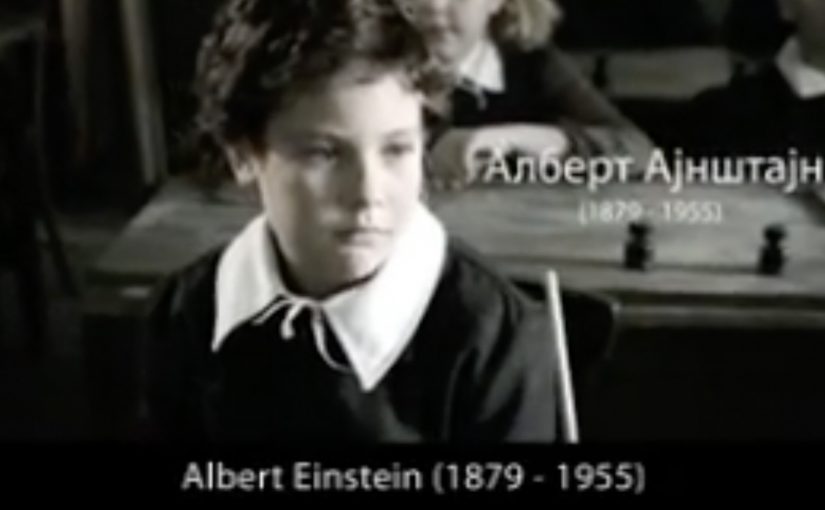
Here is a social campaign aimed at promoting education, created by New Moment New Ideas Company as a TV commercial for the Government of the Republic of Macedonia, Ministry of Education and Science.

The mechanism behind the message

The execution leans on a deliberately provocative framing. It takes a policy-adjacent topic, religion in school, and places it inside a broader “education equals empowerment” argument, using a short, declarative headline structure that is designed to be debated as much as it is watched.

In public-sector education communication, provocation is often used to force attention onto curriculum choices that would otherwise be discussed only in administrative language.

The real question is whether a campaign can use provocation to drive education attention without turning the message into a referendum on belief.

Why it lands

It turns a policy topic into a binary statement. You may agree or disagree, but you are unlikely to ignore it, which is typically the point of a social campaign trying to break through apathy.

Extractable takeaway: Public-interest campaigns win attention by making a curriculum or behavior choice feel like a values choice, but credibility depends on details like accurate attribution, because authority shortcuts can backfire when audiences fact-check.

It borrows authority cues. The line “Knowledge is power” is familiar and often associated with big-name attribution. If the spot leans on an Einstein association, note that this attribution is widely disputed, and misattributed quotes can weaken credibility even when the intent is strong.

It collapses values and education into one frame. By calling religion “knowledge”, it reframes the topic away from belief and toward curriculum, which is a strategic shift even if it remains contentious. Because the framing is blunt and declarative, it triggers instant agreement-or-rebuttal, which expands discussion beyond passive viewing. Provocation can be a valid attention tactic, but only when every credibility cue is defensible.

Borrowable moves for education PSAs

  • Use short headline architecture. A campaign line plus a spot line gives people two levels of meaning to repeat and argue about.
  • Engineer “talk value” intentionally. By “talk value,” mean a message that people can repeat, argue about, and share in one breath.
  • Stress-test credibility signals. Quotes, attributions, and “famous authority” cues should be defensible, or they become the story instead of the issue.

A few fast answers before you act

Who is this commercial for?

It is framed as a public campaign tied to the Government of the Republic of Macedonia, Ministry of Education and Science.

What is the central claim of the spot?

That religion should be treated as a form of knowledge and positioned as part of schooling, under a broader “knowledge equals empowerment” campaign idea.

Why does the campaign use such blunt language?

Because blunt claims create attention and debate quickly, which is often the goal in social messaging where indifference is the main competitor.

What is the main risk with this style of PSA?

Polarization and credibility challenges. If the audience argues about the quote, the messenger, or the framing, the educational intent can get diluted.

What is the transferable lesson for communication leaders?

If you choose provocation as the hook, protect the trust layer. Every supporting detail has to be clean enough to survive scrutiny.