
TwentyThree vs Alex Bogusky: The 1% Ransom

TwentyThree is a new advertising shop out of Tel Aviv, and its first Cannes case film is not built on a traditional client brief. It is built on a provocation aimed directly at Alex Bogusky.

The case story describes a “kidnapped” Facebook presence and a ransom-style video with a single demand. Bogusky should buy 1% of the agency. The stunt then becomes the work.

How the stunt works as a Cannes-ready case

The mechanics are blunt and easy to retell. Insert a famous name, create a public pressure point on a social platform, and package the payoff into a short case video that can travel on its own. A Cannes case film is a short explainer that compresses the idea, the build, and the effect into a judge-friendly narrative.

In global advertising and brand teams, self-promotional stunts like this are often less about the stunt itself and more about converting attention into credibility during award and new-business cycles.

Why it lands

It borrows the logic of “hacking” without requiring the audience to understand any technical detail. A recognisable target and a simple, specific ask make the story sticky. Because the platform is familiar and the ask is weirdly concrete, people can summarise it in one sentence and pass it on.

Extractable takeaway: If you want a self-promotional idea to spread, make the plot summarizable, make the stakes specific, and make the proof portable. Then ensure the case video can explain the whole thing without extra context.

What TwentyThree is really buying

The real currency here is not the 1% demand. It is the borrowed spotlight. By pulling a well-known creative leader into the narrative, the agency effectively rents fame long enough to be noticed, discussed, and remembered, and then uses that momentum to justify a Cannes entry.

The real question is whether borrowed fame creates durable credibility or just a burst of noise. This kind of stunt works best as a visibility lever, not as a substitute for substance.

What to borrow from the 1% ransom

  • Design for retellability. If the idea cannot be repeated cleanly in a sentence, it will not travel far.
  • Make the “ask” tangible. Specific stakes beat vague provocations every time.
  • Ship a proof asset early. A tight case video or demo clip becomes the distribution unit.
  • Separate drama from damage. If your concept relies on impersonation, hijacking, or unauthorised access, the risk profile changes fast.

A few fast answers before you act

What is the core idea in this case?

Turn a self-promotional stunt into a story with a famous named character, then package it as a case film suitable for award consideration.

Why does a “ransom” framing spread so easily?

It creates a clear conflict, a single demand, and a built-in “what happens next” hook. Those are the ingredients people instinctively share.

What makes something feel Cannes-ready even when it is self-promo?

A clean mechanic, visible proof, and a narrative that signals craft and intent. Judges still need clarity on what happened and why it mattered.

Should a self-promotional stunt always involve a famous target?

No. A famous target helps compress the story fast, but the more durable advantage is a recognisable tension people can retell without explanation.

What is the biggest practical risk with this style of stunt?

Anything that resembles hijacking or unauthorised access can trigger platform action, legal exposure, or reputational blowback. The upside is attention. The downside can be permanent.
Uniqlo: The Lucky Switch Banner Campaign

A banner that hijacks the whole page

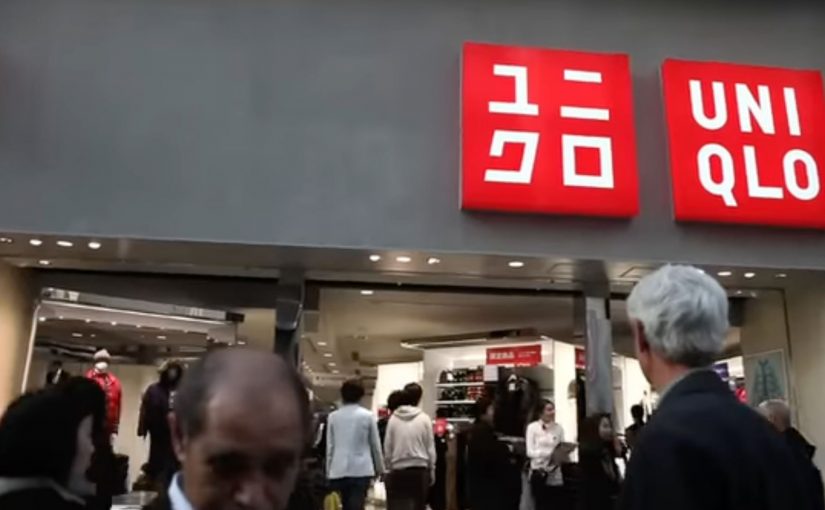
Here is a strong example of a banner campaign that refuses to stay inside the banner frame. For Uniqlo’s end-of-year clearance push, the idea came in two parts. A blog or website widget, a small embeddable code block that adds interactive functionality to a webpage, and a set of banners connected to a competition.

Flip the switch. Every image becomes a ticket

The core mechanic is simple. Embed the widget on a site, press it, and it transforms every image on that page into a Uniqlo “Lucky Ticket” that promotes the sale and the competition.

In this case, it acts like a page-level switch the viewer controls, rather than a passive ad slot.

In Japan’s fast-fashion clearance cycles, speed and novelty matter, and the web is a shortcut to scale.

Results that make the concept concrete

The outcome is the part that makes this more than a clever demo. The widget was voluntarily installed on almost 5,000 blogs and generated over 2.8 million banner clicks.

Why it lands. It feels like a playful hack

A standard banner asks for attention. Lucky Switch gives the user a satisfying action with immediate, visible impact across the entire page.

Because the viewer controls the switch and sees the whole page change instantly, the ad feels like a game mechanic, not a media placement.

It also reframes “click” into “cause”. The click is not a request to leave the site. It is a trigger that changes the environment.

The real question is whether your format earns voluntary distribution by making the first interaction feel like a reward, not a request.

What Uniqlo is really optimising

This campaign is not just chasing CTR. It is building voluntary distribution. Every blogger who installs the widget is effectively turning their own site into Uniqlo media, and every visitor is invited to interact with the brand on someone else’s page.

Extractable takeaway: Lucky Switch is what happens when you treat distribution as the product. Make the interaction so satisfying, and the reward so clear, that other sites choose to carry your campaign for you.

What to steal for your next interactive format

  • Design for “whole-page impact”. If your interaction only affects the ad unit, you are still competing with content. If it affects the page, you become part of the experience.
  • Make the click do something now. Deliver instant feedback before you ask for any deeper action.
  • Use viewer control, not autoplay. The switch metaphor makes participation feel self-directed and repeatable.
  • Reward both the host and the visitor. If you want voluntary installs, give both sides a reason to play.
  • Turn scarcity into a daily rhythm. Limited goods or rotating rewards create a reason to come back, not just click once.

A few fast answers before you act

What is Uniqlo’s “Lucky Switch” in one sentence?

A widget and banner concept that turns every image on a host page into a Uniqlo “Lucky Ticket”, making the whole page behave like the ad.

What is the core mechanism?

A page-level switch the viewer controls. Pressing it transforms the environment immediately, so the click delivers instant visible impact before any deeper action.

Why does this feel more engaging than a normal banner?

Because the user triggers a change across the entire page. The interaction reads like a playful hack, not a boxed-in ad unit competing with content.

What business intent does it serve for fast fashion?

It creates a high-speed, novelty-driven route to scale through voluntary installs, while driving sale awareness and competition participation.

What is the most transferable takeaway?

If you want banners to perform, make the click do something “now” in the user’s environment, not just ask them to leave the page.

TyC Sports: Argentinos

As the 2010 World Cup kicks off, this TyC Sports film by Young & Rubicam Buenos Aires is built to do one thing fast: stir up Argentine fans everywhere with a burst of identity, memory, and belief.

A World Cup rally film is a piece of sports storytelling designed to compress national pride into a repeatable emotional cue. It is less about information and more about turning viewers into a synchronized audience.

A simple mechanism: recognition, then escalation

The structure is familiar and effective. Start with the small details only insiders recognize. Then scale up into a collective “we”. The film keeps pulling the viewer from personal belonging into shared momentum, so the emotion arrives before the rational brain asks what is being sold.

In global sports media and broadcaster marketing, pre-tournament films like this work best when they feel like culture, not advertising.

Why it lands for Argentine fans worldwide

The spot trades on lived cues. The way people speak about football. The intensity. The inevitability of hope. You do not need to explain Argentina’s relationship with the game. You only need to trigger it, and let the audience do the rest. That is also why the film travels. Fans abroad are exactly the audience most hungry for a cultural tether during a tournament, so the message plays as connection as much as hype.

Extractable takeaway: If you can trigger a specific shared-identity cue, the audience will supply the meaning and momentum without you having to over-explain it.

The business intent behind the emotion

For TyC Sports, the goal is not to educate. It is to concentrate attention and loyalty at the moment the tournament starts, when viewing habits and media choices are being formed. The film frames the channel as the emotional home for the campaign, not just the place that carries matches.

The real question is whether you can earn the role of emotional home at kickoff, not just distribute the content.

Steal the rally structure for your next fan-led campaign

  • Build from insider truth. Specificity creates belonging faster than generic patriotism.
  • Make it chantable. The best sports films reduce to a line or feeling people can repeat.
  • Escalate from personal to collective. Start in the individual, end in the crowd.
  • Keep the brand role clean. If you are a broadcaster, act like a rally point, not a sponsor.

A few fast answers before you act

What is this film doing in one sentence?

It rallies Argentine fans worldwide by turning cultural recognition into shared tournament momentum for TyC Sports.

Why do pre-tournament films outperform match promos?

They create emotional commitment before viewing decisions harden. They make people choose a “home” for the tournament.

What makes sports patriotism feel authentic instead of generic?

Specific cultural cues and language that insiders recognize. The more precise the truth, the less it feels like advertising.

Who is the most valuable audience for this type of spot?

Fans who are not physically in the country. They are most likely to share, and most likely to use the film as a cultural tether.

What is the biggest creative risk with rally films?

Drifting into clichés. If the cues are too broad, it becomes interchangeable with any other team’s hype video.