

Crazy Domains: Banned Pamela Anderson Ad

Crazy Domains: Banned Pamela Anderson Ad

A “banned” TV spot that people actively go looking for

An Australian commercial featuring Pamela Anderson was banned from television following viewer complaints. Here is a peek into what all the fuss is about.

The mechanism: controversy as the distribution layer

This is a classic attention play. A provocative creative choice triggers complaints, the “banned” label becomes the headline, and the spot spreads through curiosity and conversation rather than media weight alone.

In global consumer internet services, controversy can generate disproportionate awareness, but it also forces a brand to accept trade-offs in trust and acceptability.

Why it lands: the viewer feels like they are seeing something “forbidden”

The ban is the hook. People do not click because they are shopping for domains. They click because the ad has been framed as something that crossed a line, and they want to judge it for themselves. That dynamic turns the audience into the amplifier. Every share is a comment on the controversy, which extends reach without needing to explain the product category.

Extractable takeaway: “Banned” works as a call-to-curiosity, but it only compounds if the spot quickly reconnects that attention to something the brand wants to be remembered for.

The business intent: stand out in a commoditised market

Web hosting and domain registration are crowded, price-driven categories. The job here is mental availability and brand distinctiveness. By “mental availability”, I mean being the brand people recall first when the category comes up. The real question is whether the awareness spike can be converted into category memory that outlasts the controversy. Provocation is worth using only when the brand can reconnect the attention back to a distinctive point, fast.

How to use a “banned” hook without burning trust

  • Steal the clarity of the hook. People instantly understand why they should watch.
  • Steal the earned-media shape. The story around the spot becomes part of the campaign.
  • Avoid making provocation the only idea. If the brand does not benefit beyond the outrage, the attention decays quickly.
  • Know your tolerance for fallout. Complaints and bans can lift awareness, but they can also damage long-term trust.

A few fast answers before you act

What is the “banned Pamela Anderson” Crazy Domains spot?

An Australian TV commercial featuring Pamela Anderson that was banned following viewer complaints, with the “banned” label becoming part of the distribution story.

What is the core mechanism?

Controversy as the distribution layer. Provocation triggers complaints, “banned” becomes the headline, and curiosity drives viewing and sharing.

Why does “banned” increase viewing?

It creates a forbidden-fruit effect. People click to judge it for themselves, then spread it through commentary rather than product interest.

What is the business trade-off a brand must accept?

Earned awareness can spike, but the brand also inherits the downside of the controversy. Trust, acceptability, and long-term preference can take damage.

What is the most transferable takeaway?

If you use provocation, ensure there is a brand-relevant reason the attention exists, not just outrage. Otherwise the attention decays into noise.
OK Go: This Too Shall Pass

OK Go: This Too Shall Pass

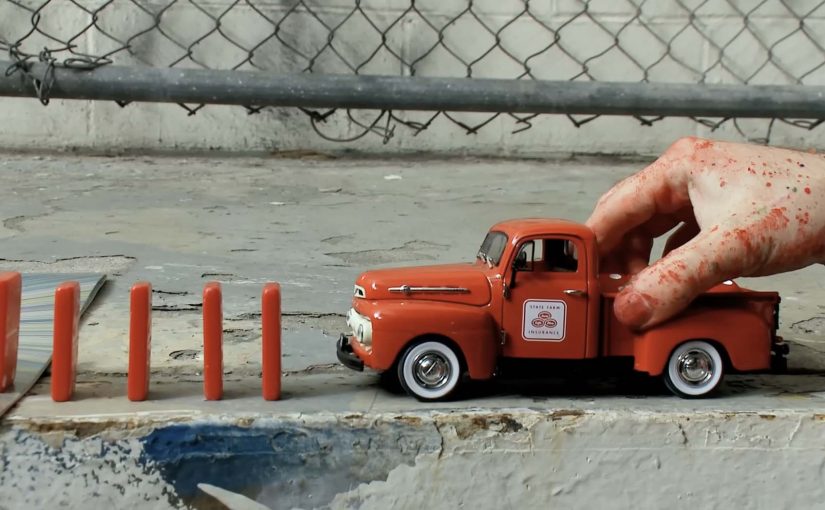
This is the official video for the recorded version of “This Too Shall Pass” off of the album “Of the Blue Colour of the Sky”. The video was filmed in a two story warehouse, in the Echo Park neighborhood of Los Angeles, CA. The “machine” was designed and built by the band, along with members of Syyn Labs over the course of several months.

An incredible video that makes Honda’s “Cog” feel almost like a classroom demo by comparison.

A four-minute chain reaction you can’t fake

The mechanism is the star. OK Go performs alongside a giant, practical Rube Goldberg machine that triggers hundreds of small actions in sequence. The camera tracks the chain reaction as it unfolds, so the satisfaction comes from watching real physics carry the story forward.

In global brand and entertainment culture, Rube Goldberg builds travel because they turn craftsmanship into visible proof of effort.

Why it lands

This works because it is both legible and obsessive. You understand the premise instantly, then you keep watching to see whether it will keep working. The tension is not “what happens next”. It is “will it actually make it all the way”. That makes the piece rewatchable, and it makes every tiny moment feel earned. The real question is whether the mechanism feels trustworthy enough to hold attention all the way through. Practical chain-reaction films are more persuasive than polished spectacle because the visible mechanism becomes the proof.

Extractable takeaway: When you want people to commit attention, give them a single continuous mechanism to follow, and make every beat visibly caused by the one before it.

What to steal from chain-reaction storytelling

  • Build one dominant visual system. A single machine beats a dozen unrelated scenes.
  • Let the craft be the hook. Practical effects earn trust faster than claims.
  • Create “will it work” tension. Reliability becomes suspense when the whole thing is interdependent.
  • Design for rewatching. Layer details so viewers discover something new each pass.

A few fast answers before you act

What makes this “This Too Shall Pass” video special?

It is built around a warehouse-sized practical Rube Goldberg machine that runs in sync with the song, creating a continuous chain reaction that holds attention through pure cause-and-effect.

Who built the machine?

The machine was built by OK Go with Syyn Labs, developed over months as a large-scale practical build.

Was it really done in one take?

The finished film is presented as a single continuous shot. The appeal comes from watching the chain reaction unfold without cutting away.

Why do Rube Goldberg videos get shared so much?

They combine instant comprehension with delayed payoff. You get the idea immediately, then you stay for the satisfaction of completion.

What is the most reusable lesson for marketers?

Give people a mechanism they can follow, not just images they can admire. When each moment visibly causes the next, attention becomes effortless.

KLM: Economy Comfort

KLM: Economy Comfort

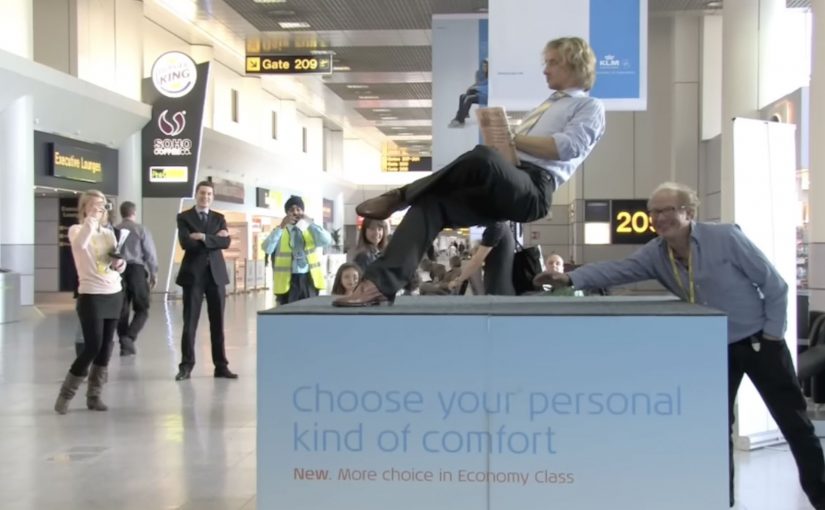
Dutch ad agency Rapp Amstelveen has magician Ramana appear in a European airport, performing his levitation trick to advertise KLM’s comfortable Economy Comfort seats.

A comfort claim made physical

The execution picks a familiar magic trope. Levitation. And places it in a high-friction environment where comfort actually matters. Airports. Waiting. Stress. The stunt is easy to understand even without copy, and the metaphor does the selling: this seat makes the journey feel lighter.

How the mechanism earns attention

Mechanically, it works because it is a live interruption, meaning a real-world moment people witness in person, that behaves like entertainment first and advertising second. People stop because something unusual is happening, then the brand message arrives as the explanation for the spectacle.

In travel and airline marketing, making an abstract benefit feel tangible is often more persuasive than repeating feature lists.

In European travel brands, context-led demonstrations often outperform abstract comfort claims.

Why it lands in an airport context

The location is the multiplier. In an airport, audiences are already thinking about space, fatigue, and the next few hours of their life. A “comfort” message is not a concept. It is an immediate desire. That makes the metaphor feel relevant rather than random.

Extractable takeaway: When the promise is comfort, place the proof where discomfort is already top of mind, so the message lands as a relief, not a claim.

What KLM is really buying with a stunt like this

Beyond awareness, the intent is memorability for a paid upgrade. Economy Comfort is the kind of product that can disappear into pricing tables. A public demonstration gives it a story. The real question is whether your upgrade has a story people will repeat after they leave the airport. And stories travel further than seat specs.

Steal this move for paid upgrades

  • Use a single, legible metaphor. If the audience can “get it” in one second, you win the next ten.
  • Stage it where the benefit is felt. Context turns a claim into a reminder of a real pain point.
  • Let entertainment open the door. Make the first moment about curiosity. Make the second moment about the brand.
  • Turn a feature into a story. Especially for upgrades and add-ons that otherwise live in fine print.

A few fast answers before you act

What is the core idea behind KLM Economy Comfort?

A live levitation stunt in an airport used as a physical metaphor for a more comfortable flight experience.

Why use a magician for a seat upgrade?

Because comfort is hard to “prove” in an ad. A simple spectacle makes the promise feel immediate and memorable.

What role does the airport setting play?

It is where people are already primed to care about comfort, waiting, and travel fatigue. The message meets them at peak relevance.

What is the transferable lesson?

When your benefit is abstract, demonstrate it with a single visual metaphor, in the environment where the benefit matters most.

How can you adapt this if you cannot do a live stunt?

Use a single visual metaphor you can demonstrate in the place where the benefit is felt, then let the brand message arrive as the explanation.