Metro Trains Melbourne: Dumb Ways to Die

Accident rates on the Melbourne Metro were rising due to an increase in risky behavior around trains, and a rail safety message was the last thing people wanted to hear.

So McCann Melbourne turned the message people needed to hear into a message people wanted to hear, by embedding it into a song and an accompanying music video. Dumb Ways to Die.

Entertainment-first safety communication

The mechanism is a deliberate format swap. Replace shock tactics and lecturing with an original song, a playful animated world, and a chorus that makes the safety points memorable enough to repeat.

In large urban public-transport systems, the most effective safety communication often feels like entertainment first, with the message carried by repetition and recall rather than warning language.

Why it lands

It works because it respects audience resistance instead of fighting it. The real question is how you make a safety message travel when the audience does not want to hear a safety message at all. For resistant audiences, entertainment-first is the stronger safety strategy because it earns voluntary attention before it asks for behavior change. People who tune out safety ads will still watch and share a catchy video, and the refrain makes the cautionary points stick through rhythm and humor. The legacy write-up reports that the campaign quickly moved beyond advertising into social currency, with very high sharing in its first month.

Extractable takeaway: When your audience actively avoids the topic, make the format shareable enough that people choose to spread it for the entertainment value, then let repetition do the behavior-change work.

The proof of spread

By using entertainment rather than shock tactics, the message is described as transcending advertising to become something people shared. Here is the case video.

What safety communicators can borrow

  • Start with a format people opt into. If attention is the barrier, do not begin with a PSA tone.
  • Write for recall. A chorus and simple phrasing can outperform “important information” copy.
  • Build a visual system. Distinct characters and repeatable scenes make the idea remixable and memorable.
  • Package the case story separately. A dedicated case video helps the idea travel in marketing circles without diluting the original film.

A few fast answers before you act

What is Dumb Ways to Die?

A rail-safety campaign for Metro Trains Melbourne that delivers the safety message through a catchy song and animated music video instead of traditional PSA warnings.

Why use humor for a serious safety topic?

Because the target audience resists conventional safety messaging. A humorous, musical format earns voluntary attention and repeat viewing, which increases recall.

What made it spread so widely?

A simple hook, a memorable chorus, and highly shareable animation that people could pass along as entertainment, with the safety message embedded inside.

What is the case video for?

It explains the strategy and rollout behind the campaign, and it packages results and rationale for marketers and stakeholders.

What is the main risk with “entertainment-first” safety work?

If the humor overwhelms the behavioral point, the audience remembers the joke but not the safety action you want them to change.
OK Go: This Too Shall Pass

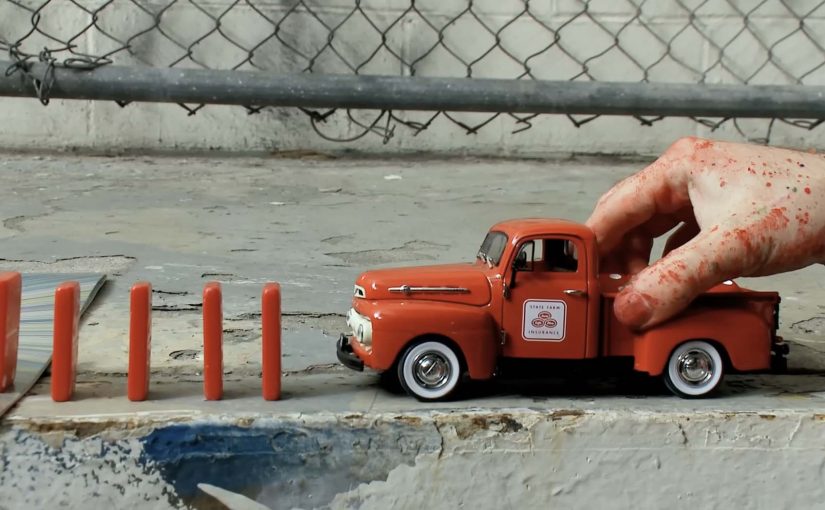
This is the official video for the recorded version of “This Too Shall Pass” off of the album “Of the Blue Colour of the Sky”. The video was filmed in a two story warehouse, in the Echo Park neighborhood of Los Angeles, CA. The “machine” was designed and built by the band, along with members of Syyn Labs over the course of several months.

An incredible video that makes Honda’s “Cog” feel almost like a classroom demo by comparison.

A four-minute chain reaction you can’t fake

The mechanism is the star. OK Go performs alongside a giant, practical Rube Goldberg machine that triggers hundreds of small actions in sequence. The camera tracks the chain reaction as it unfolds, so the satisfaction comes from watching real physics carry the story forward.

In global brand and entertainment culture, Rube Goldberg builds travel because they turn craftsmanship into visible proof of effort.

Why it lands

This works because it is both legible and obsessive. You understand the premise instantly, then you keep watching to see whether it will keep working. The tension is not “what happens next”. It is “will it actually make it all the way”. That makes the piece rewatchable, and it makes every tiny moment feel earned. The real question is whether the mechanism feels trustworthy enough to hold attention all the way through. Practical chain-reaction films are more persuasive than polished spectacle because the visible mechanism becomes the proof.

Extractable takeaway: When you want people to commit attention, give them a single continuous mechanism to follow, and make every beat visibly caused by the one before it.

What to steal from chain-reaction storytelling

  • Build one dominant visual system. A single machine beats a dozen unrelated scenes.
  • Let the craft be the hook. Practical effects earn trust faster than claims.
  • Create “will it work” tension. Reliability becomes suspense when the whole thing is interdependent.
  • Design for rewatching. Layer details so viewers discover something new each pass.

A few fast answers before you act

What makes this “This Too Shall Pass” video special?

It is built around a warehouse-sized practical Rube Goldberg machine that runs in sync with the song, creating a continuous chain reaction that holds attention through pure cause-and-effect.

Who built the machine?

The machine was built by OK Go with Syyn Labs, developed over months as a large-scale practical build.

Was it really done in one take?

The finished film is presented as a single continuous shot. The appeal comes from watching the chain reaction unfold without cutting away.

Why do Rube Goldberg videos get shared so much?

They combine instant comprehension with delayed payoff. You get the idea immediately, then you stay for the satisfaction of completion.

What is the most reusable lesson for marketers?

Give people a mechanism they can follow, not just images they can admire. When each moment visibly causes the next, attention becomes effortless.

Xbox Lips: Jukebox Turns Photos into Videos

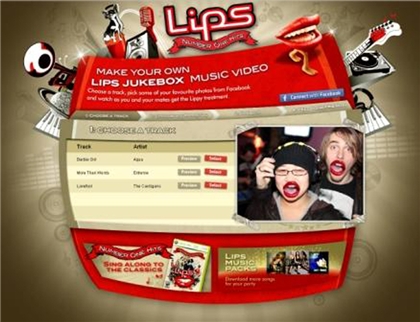
AKQA has taken Xbox Lips digital with the “Lips Jukebox” on Facebook, which enables users to transform their photos into music videos, in a bid to promote the new game “Lips Number One Hits”.

Xbox Lips Digital

The application is hosted at the Xbox website, and uses a combination of facial recognition technology and Facebook Connect functionality to enable people to choose a song and the photos they want to adapt from their profile before adding singing “Lips” to the faces and then creating the animated, personalized music video.

For social experience design, the winning pattern is simple: let people reuse what they already have, then return a share-ready artifact that feels personal without requiring effort.

Why this idea lands

This is a clean example of “personalisation as entertainment”, meaning it turns something people already have, their photos, into something people want to show, a personalised music video.

Extractable takeaway: If the input is already in the user’s profile and the output looks like finished entertainment, participation becomes a default choice rather than a deliberate one.

The real question is whether your experience returns something people are proud to share, not whether the underlying tech is impressive.

  • Low friction input. Your Facebook photos are already there.
  • High novelty output. Seeing faces “sing” creates instant curiosity and share value.
  • Product-fit promotion. A singing video experience naturally aligns with a music game.

Facial recognition as a feature, not a headline

The facial recognition is not presented as “tech for tech’s sake”. It is simply the enabling layer that makes the result feel surprisingly accurate and personal. Because the facial recognition runs behind the scenes, the experience feels effortless and personal, which makes people more likely to finish the flow and share the output.

This is the right way to use facial recognition in marketing: as invisible plumbing that serves the payoff.

In consumer product launches that rely on social sharing, remixing existing profile media into a finished asset is often the fastest path to reach without asking for extra effort.

What to take from this if you build social experiences

  1. Turn existing assets into new value. Users are more likely to participate when they can reuse what they already have.
  2. Make the output share-ready. The “end product” should be something people naturally want to post.
  3. Keep creation steps short. Selection, preview, publish. The loop should feel quick.
  4. Align the experience with the product promise. A music game promoted through a music-video maker feels coherent.

A few fast answers before you act

What is the Xbox Lips Jukebox?

It is a Facebook-connected experience that lets users transform their photos into animated, personalised music videos to promote “Lips Number One Hits”.

What technologies does it use?

It combines facial recognition with Facebook Connect so users can select songs and photos, then apply singing “Lips” to faces and generate a video.

Where is the application hosted?

It is hosted on the Xbox website.

Why does this work as game marketing?

It creates a playful, shareable output that matches the core theme of the game. Music and performance.

What is the transferable lesson?

When you can turn user content into entertainment with minimal effort, you can earn both engagement time and social sharing without heavy persuasion.