
Contrex: The Contrexperience

When diet culture repeats, brands look for a better hook

Contrex looked for a way to make the same truth feel like an experience instead of advice.

Every year, magazines announce new fad diets. And each time, the conclusion is the same. It does not work. To lose weight effectively and permanently, one must adopt a balanced diet, drink water, and do regular exercise.

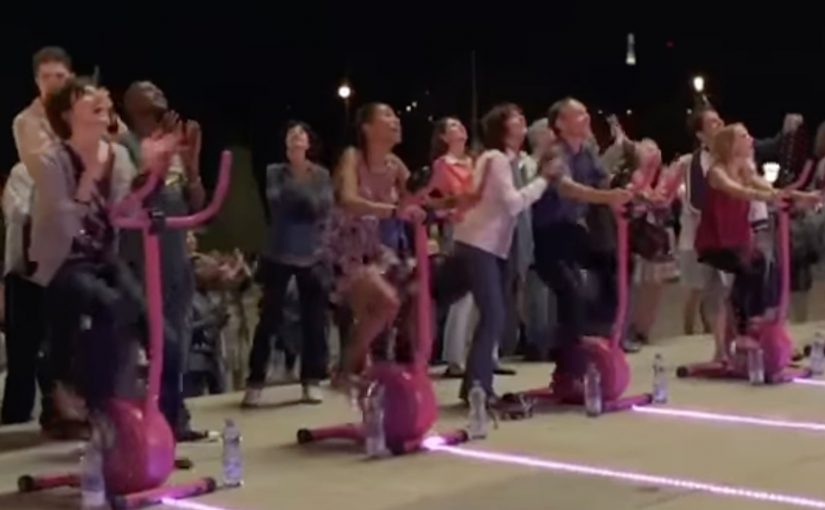
So Contrex, a mineral water brand owned since 1992 by Nestle Waters, decided to create an ambient campaign that showed how losing weight could be fun.

Here, “ambient” means a real-world installation that turns the message into something people do, not something they read.

How the ambient idea turned effort into play

The mechanism was to move the message out of print logic and into physical behavior.

The real question is how to make a wellness behavior feel worth starting now, not merely worth agreeing with.

Rather than telling people to exercise, the campaign created an environment where movement was the point, and where participation delivered a visible, enjoyable payoff. The installation did what most health messaging cannot. It made action feel lighter than intention.

That matters because it turns intention into a felt first step, and felt first steps are easier to repeat.

In European FMCG marketing, “health” messages often fail when they sound like lectures.

Why “fun” can outperform discipline

Fad diets fail for a predictable reason. They demand willpower every day, and they punish slips.

Extractable takeaway: When you need behavior change, design the first step to feel like play, not a test of discipline.

By contrast, play removes friction. When exercise feels like a game, people start without negotiating with themselves. That first step matters because health change is rarely blocked by knowledge. It is blocked by starting.

Contrex used that psychological shift to reframe weight loss from restriction to participation.

The business intent behind making weight loss entertaining

The intent was to connect Contrex with a sustainable, realistic path to wellness, not a temporary fix.

In wellness marketing, lowering the friction to start beats repeating discipline slogans.

By associating the brand with water, movement, and balance, the campaign positioned Contrex as a companion to everyday healthy behavior. In a category where the product is easily interchangeable, that behavioral association is where differentiation lives.

Design moves for your next wellness activation

  • Turn advice into action. If your message is behavioral, build an experience that makes the behavior happen.
  • Design for a low-friction start. The first minute matters more than the perfect plan.
  • Use play as a motivator. Fun can carry people further than discipline messaging.
  • Link brand value to the routine. The brand should feel like part of the habit, not a slogan around it.

A few fast answers before you act

What is Contrexperience?

An ambient campaign by Contrex designed to show that exercise and weight-loss motivation can be fun, not just disciplined.

What problem was Contrex responding to?

Recurring fad-diet cycles that promise quick fixes but do not lead to lasting results.

What was the core mechanism?

Move the health message into a physical, participatory experience that rewards movement and lowers the barrier to starting.

Why does a “fun” approach work in wellness messaging?

Because play reduces friction and gets people moving without requiring constant willpower negotiations.

What is the transferable takeaway for brands?

If your product supports healthy behavior, build experiences that make the behavior feel easy to start and satisfying to repeat.
LavOnline: Tomato Splat

A direct mail piece that dares you to make a mess

In Italy, awareness and penetration of online laundry services is described as low. LavOnline asked DDB Milan to build awareness and engagement by stressing two core benefits. Speed and simplicity.

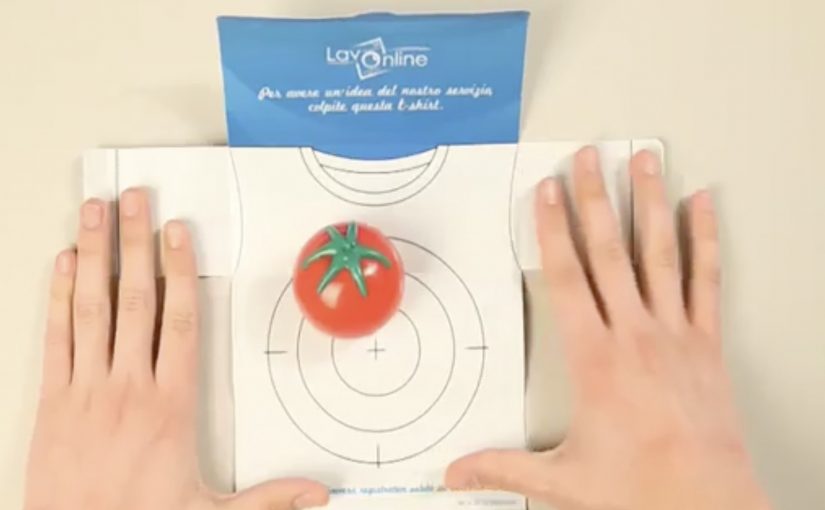
The target was narrowed to young managers and professionals. People who work long hours and struggle to find an open shop after leaving the office. The solution was a playful direct mail pack sent to 1,000 time-strapped recipients that turns “laundry” into an action you can do in seconds.

The mechanic: splat a tomato, watch it spring back

The mailer opens into a white t-shirt shape with a target at the center. Inside is a squishy tomato toy that recipients are encouraged to splat. The toy “splat” moment creates a satisfying mess, then reforms back into a neat tomato, mirroring the promise of a fast, simple service that handles stains without fuss.

Recipients are then pushed to act. If they enjoyed the experience, they are prompted to register on www.lavonline.it, try the service, and tell friends.

In consumer services marketing, interactive direct mail can outperform broad awareness when the physical action demonstrates the product promise faster than a paragraph of copy can.

Why it lands

The idea is built around a smart contradiction. To sell “no hassle laundry,” you briefly invite the audience to create hassle on purpose. That tension makes the piece memorable, and the reset behavior turns the metaphor into proof. It is also office-friendly. It sits on a desk, attracts curiosity, and naturally recruits secondary viewers who want to try the splat for themselves.

Extractable takeaway: If your promise is “simple and fast,” build a physical interaction that creates a tiny problem, then resolves it instantly. The resolution is the message people remember.

What the numbers are trying to prove

Results are reported as unusually strong for a targeted mailer. Within four weeks, 32% of recipients registered, 8% tried the service, and overall site traffic increased by 15%. The bigger point is not the percentages. It is that a single tactile mechanic turned a low-awareness category into a story people wanted to repeat. The real question is how to make an invisible service feel tangible before asking for sign-up. This is a stronger awareness play than a conventional mailer because the interaction makes the service promise feel real.

What to borrow from Tomato Splat

  • Make the benefit physical. Do not describe speed and simplicity. Demonstrate them with an action that resolves fast.
  • Target by daily friction. “No time after work” is a sharper trigger than broad demographics.
  • Design for desk spread. If the object invites a second person to try it, your reach multiplies inside the office.
  • Keep the CTA immediate. One link, one next step, no extra explanation required.

A few fast answers before you act

What is LavOnline’s “Tomato Splat” campaign?

It is an interactive direct mail activation where a mailed pack invites recipients to “splat” a tomato toy on a t-shirt target, then uses that quick reset metaphor to promote a fast, simple online laundry service.

Why use a physical mailer for an online service?

Because the physical interaction creates attention and memory in a category people ignore, then funnels that attention to a single online registration step.

What is the core creative mechanic in one line?

Create a small mess, then instantly restore order. A tactile metaphor for stain removal and convenience.

Why does this work for busy professionals?

The interaction is fast, playful, and office-compatible, and it speaks directly to the “no time after work” friction that blocks traditional laundry trips.

What is the main transferable principle?

When your value proposition is experiential, make the audience perform a micro-version of the experience, then connect it to a frictionless next step.

T-Mobile Netherlands: The Rematch

A tiny final that deserved a real crowd

The strongest brand stories make connectivity feel human: it is not about coverage maps, it is about helping people reconnect what mattered.

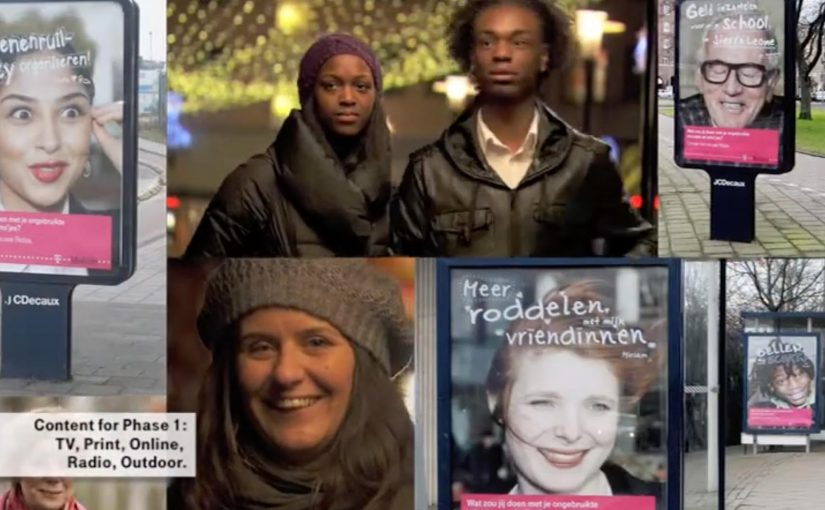
Martijn, a 39-year-old carpenter, attempted to bring back his football team from 1997 for a rematch of a 13-year-old championship final that was then witnessed by a grand crowd of three people.

This time, he wanted his entire village to be there to see him win. A dream enabled by T-Mobile Netherlands.

How the rematch premise worked

The mechanism was classic. Take an unfinished personal story, add a clear goal, then remove the practical barriers that made it impossible before.

Reuniting a team after 13 years is not just a scheduling challenge. It is a social one. Finding people, persuading them, coordinating them, and turning “we should” into “we did.” T-Mobile positioned itself as the enabler that made that coordination real.

By “coordination”, I mean the practical work of finding the right people, aligning dates, and making commitments stick.

That removal of friction is why the payoff feels earned: a real crowd becomes proof the reconnection happened.

In European consumer telcos, stories like this work when connectivity shows up as real-world coordination, not as a network claim.

Why the story lands emotionally

The psychological pull is simple: redemption.

Extractable takeaway: If you want emotion without melodrama, make recognition visible: reunions, witnesses, and shared moments people can point to.

The original match mattered deeply to the people who lived it, but it happened almost unnoticed. Three spectators is not a crowd. It is practically private. The rematch reframed the same sporting moment as something the whole village could witness, validate, and share.

It also taps into identity. A village team is not just sport. It is belonging. Bringing everyone back together turns an individual need into a community event.

The business intent behind enabling the dream

T-Mobile was not selling minutes or data here.

The real question is how a telco earns emotional ownership of reconnection without making itself the hero.

Here, “reconnection” means turning a desire to meet again into a plan people can actually execute.

This kind of brand film works best when the brand enables and stays out of the spotlight.

The intent was to associate the brand with making real-life reconnection possible. Helping people organize, mobilize, and show up. In a category where offers are easy to copy, emotional ownership is the differentiator.

If your category is copyable, the durable edge is removing friction around moments people already care about.

What to steal for your next brand film

  • Start with a concrete, human objective. A rematch with a real stake beats any abstract message.
  • Make the “before” painfully small. Three spectators sets up a powerful contrast for the payoff.
  • Let the brand enable, not star. The hero is the person. The brand removes friction.
  • Scale the moment socially. A private memory becomes a public event. That is where shareability comes from.

A few fast answers before you act

What is T-Mobile Netherlands’ The Rematch about?

A 39-year-old carpenter reunites his 1997 football team for a rematch of a 13-year-old championship final that only three people watched at the time.

What is the core mechanism of the idea?

Identify an unfinished personal story, then use the brand to remove coordination barriers so the dream can happen at scale.

Why does it resonate with viewers?

It is a redemption story with community payoff. The same moment gets the crowd and recognition it never had.

What business goal does this serve for a telco?

Owning the emotional territory of reconnection and coordination, rather than competing only on interchangeable plans and pricing.

What is the main transferable takeaway?

Make the brand the enabler of a human goal, and build the narrative around contrast: what it was then versus what it becomes now.