
Time Out Shanghai: The Stolen Phone Tour

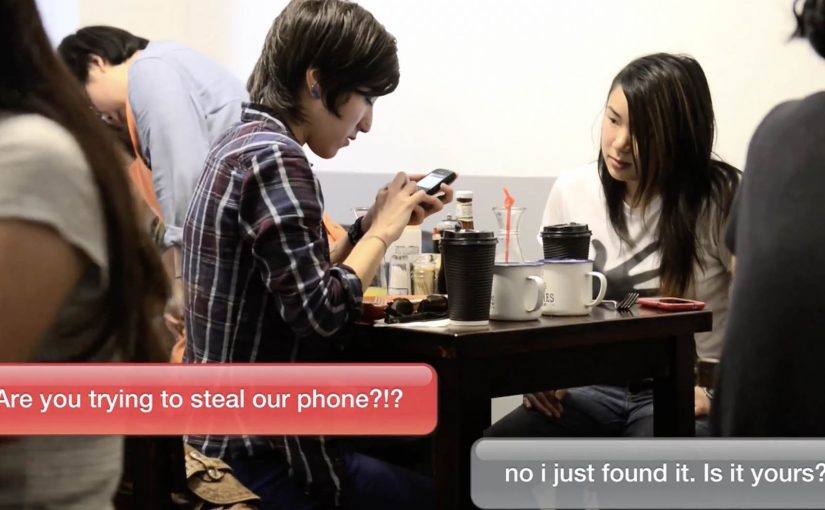
A phone lies abandoned on a Shanghai street. Someone eventually picks it up. Seconds later, the device starts talking back through text messages.

Time Out Shanghai uses that setup to promote its city guide with a stunt built with Energy BBDO Shanghai. The magazine purposely “loses” a phone at random. The moment a passerby takes it, the phone instructs them to “return” it by getting into a London taxi that pulls up right where they are. From there, the finder is driven across the city to a sequence of unexpected stops, guided only by messages on the phone, and captured through hidden cameras.

A guide that proves itself, one pickup at a time

The mechanic mirrors the product promise. Time Out Shanghai claims it digs deeper than obvious tourist checklists. So the campaign turns “discover hidden gems” into a lived tour, with the London cab acting as a moving stage and the phone acting as the guide. Reported write-ups describe stops that range from small local joints to high-concept dining and landmark nightlife, all chosen to signal insider curation rather than generic attraction lists. Here, insider curation means places that feel locally known rather than obviously tourist-facing. Because the participant experiences the recommendations in sequence instead of reading about them, the guide’s editorial promise feels proven rather than claimed.

In global city marketing and publishing, the fastest way to make “insider knowledge” believable is to demonstrate it as a guided experience, not explain it as editorial positioning.

Why the taxi twist works

The stunt manufactures a story that people want to finish. First curiosity, why is the phone messaging me. Then escalation, why is a London taxi here in Shanghai. Then payoff, the city reveals itself through a sequence of places the participant did not plan. The London cab is not just a visual gag. It is a nod to Time Out’s roots and a clear brand signature that makes the footage instantly recognizable.

Extractable takeaway: If your product claim is “we help you discover what you would miss,” build a live proof where the user stumbles into the benefit, then structure the journey so each step reinforces the claim without additional explanation.

What Time Out is really selling

This is less about a single guide edition and more about trust in curation. The real question is whether a city guide can make its curation feel trustworthy before anyone opens an issue. The campaign frames Time Out as an honest, street-level editor. Someone who can take you from random street corner to a surprising itinerary, and do it with confidence. That trust is what makes a city guide worth paying attention to in a market flooded with lists.

What brand-led city guides can copy

  • Turn your promise into a route. A sequence of experiences is more persuasive than a headline claim.
  • Use one unmistakable brand asset. The London cab functions as a moving logo without feeling like a logo.
  • Let the audience be the protagonist. The finder’s reactions do the selling more credibly than narration.
  • Design for retellability. “They lost a phone, then a cab picked you up” is a one-sentence hook that travels.

A few fast answers before you act

What is “The Stolen Phone Tour”?

A Time Out Shanghai stunt where a purposely “lost” phone guides the person who picks it up into a London taxi and across a curated set of city stops, filmed via hidden cameras.

Why use a phone as the guide mechanic?

Because it matches real behavior. People already rely on phones to navigate cities. The campaign turns that habit into a story engine that delivers location-by-location discovery.

What does the London taxi add beyond novelty?

It provides a distinctive brand signature and a clear narrative device. A taxi arriving to “retrieve” the phone is an immediate escalation that keeps the participant moving.

What is the biggest risk with a stunt like this?

Participant trust and safety. The experience must feel surprising but not threatening, and the instructions must keep the participant in control at every step.

When is this approach a good fit?

When your value is curation, expertise, or access. If you can demonstrate the benefit as a guided sequence, you can replace skepticism with lived proof.
Sky Go: The Talking Window

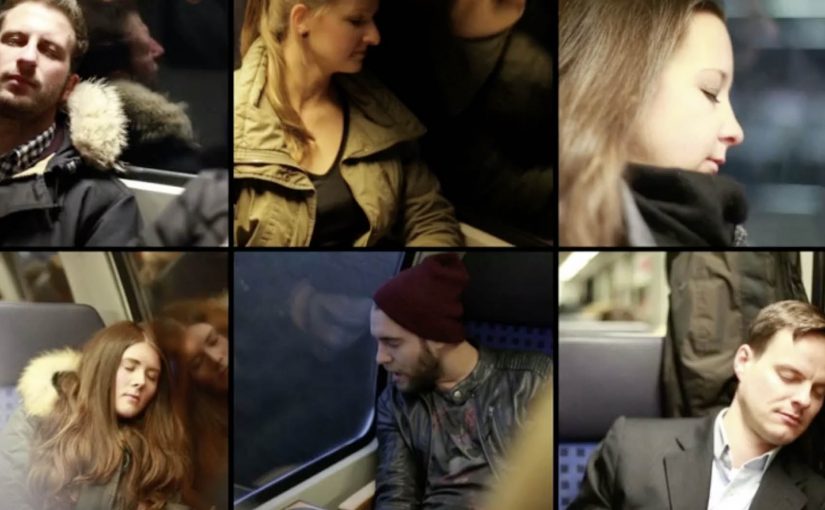
Train passengers who get bored during travel often lean their head against the window. Sky Go uses that exact micro-moment as an attention trigger, without asking anyone to look up from their seat.

BBDO Germany, together with Audiva, a bone conduction specialist, developed a small transmitter that attaches to the train window and delivers an audio message in a way that feels oddly personal. Bone conduction means transmitting sound to the inner ear through skull vibrations rather than through the air into the ear canal.

How the window “talks”

The transmitter emits an inaudible, high-frequency vibration through the glass. When a passenger rests their head against the window, those vibrations travel through the bones of the skull to the inner ear. The brain interprets the vibration as sound, so the person leaning on the window hears the message while nearby passengers hear nothing.

Bone conduction is the conduction of sound to the inner ear through skull vibrations, rather than through the air into the ear canal.

In public transport advertising, tying a message to a predictable body posture can create “only I can hear this” intimacy without turning the whole carriage into noise.

Why this lands

This works because it is activated by a natural behavior, not by a request. There is no screen to seek, no QR code to scan, no app to open in the moment. The novelty is also self-explaining. The passenger experiences the medium first, then understands the message.

Extractable takeaway: If you want attention in a distraction-heavy environment, design an opt-in trigger that happens through normal movement, and deliver the payload as a private experience rather than a public interruption.

What the campaign is really testing

The real question is where clever intimacy stops and intrusion starts in ambient media.

This format is strongest when the trigger feels voluntary and the message stays restrained. It is not audio quality being tested as much as tolerance. This kind of “whisper only to you” media explores how far ambient advertising can go before it feels intrusive, and where the line sits between clever targeting and unwanted interruption.

What ambient media can borrow from this

  • Exploit a reliable posture. Build around something people already do on autopilot.
  • Make the medium the headline. A new delivery mechanism earns attention before the message even lands.
  • Keep it private. Personal sound beats shared noise in confined public spaces.
  • Design for instant comprehension. If someone needs an explainer to “get it,” the ambient magic collapses.

A few fast answers before you act

What is the Sky Go “Talking Window”?

It is a train-window activation that delivers an audio message only to people who lean their head against the glass, using bone conduction vibration.

Why can only one person hear it?

The sound is carried through the glass and into the listener’s skull when they make contact. People not touching the window do not receive the vibration path.

Is this facial recognition or tracking?

No. The described trigger is physical contact with the window, not identity detection.

What is bone conduction in plain terms?

It is hearing sound through skull vibrations, where the vibration reaches the inner ear without traveling through the air into the ear canal.

What is the main risk of this format?

If it startles people or feels unavoidable, it can be perceived as invasive. The creative and frequency need restraint.

eMart: Flying Store Wi-Fi Balloons

In May 2012, eMart created the Sunny Sale campaign, distributing coupons through a sun-activated QR code.

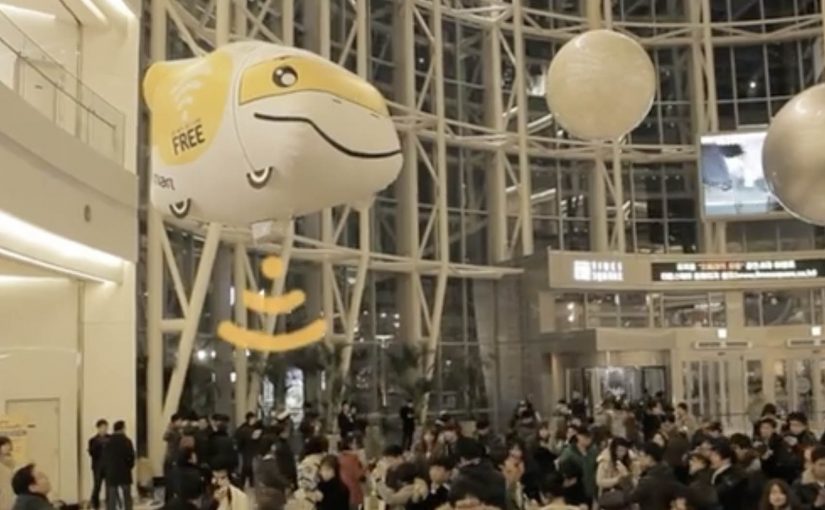
Now, in its latest campaign, eMart creates “Flying Stores”. These are truck-shaped balloons fitted with a Wi-Fi router. These balloon stores float across Seoul, and people who cannot get to an eMart store during the day can connect to the balloon’s Wi-Fi signal and order directly online.

Wi-Fi as the storefront

The mechanism is a mobile commerce shortcut disguised as outdoor media. The balloon is the attention object, but the real call-to-action is the hotspot. Connect. Land inside the eMart mobile experience. Buy now, while you are in transit or between errands. Because joining a Wi-Fi network is a familiar, low-friction action, the hotspot makes the “store comes to you” promise feel immediate.

In dense urban retail markets, removing distance and time as barriers is often the fastest route to incremental mobile conversion.

The real question is whether your activation builds a functional shortcut into the customer journey, not just a spectacle around it.

Why it lands

It targets a real constraint, not a demographic. People are time-poor, and “accessibility” often decides which retailer wins repeat behavior. The balloon flips accessibility from “go to the store” to “the store comes to you,” with Wi-Fi as the bridge.

Extractable takeaway: When your growth problem is “people can’t get to us,” do not just advertise harder. Create a literal on-ramp that collapses the journey from attention to transaction into one simple action that feels native, like joining a Wi-Fi network.

What to steal for your next retail activation

  • Make the trigger physical, then make the conversion digital. The balloon earns attention. The phone closes the sale.
  • Design for commuters. Transit corridors are full of intent, but short on time. Your flow must be fast.
  • Give the audience a reason to connect. Free Wi-Fi is a utility. Utility beats persuasion in the first 10 seconds.
  • Measure beyond views. If it is meant to drive commerce, track app installs, orders, and repeat usage, not just impressions.
  • Reinforce the pattern with a related example. See the 2011 flying fish balloons campaign for the Sea Life park in Speyer, Germany.

A few fast answers before you act

What is an eMart “Flying Store”?

A truck-shaped balloon equipped with a Wi-Fi router that people can connect to, then use to enter eMart’s mobile experience and shop online.

Why use Wi-Fi instead of a QR code this time?

Wi-Fi turns the activation into a utility, not just a scan. It creates a direct, immediate pathway into mobile shopping, especially for people on the move.

What makes this more than a PR stunt?

The hotspot is a functional distribution layer. If the mobile flow is good, the activation can produce measurable installs and transactions, not only buzz.

What should you measure to judge success?

Track connects to the hotspot and the downstream actions you care about, like app installs (if required), orders, and repeat usage, not just media impressions.

What is the biggest risk in copying this idea?

If the connection experience is unreliable, slow, or confusing, the novelty becomes frustration. Utility-led activations only work when the utility works.