
Nike Golf: No Cup Is Safe

Nike Golf: No Cup Is Safe

Nike Golf has released a TV spot in which Tiger Woods and Rory McIlroy turn a practice session into a small competition on the golf course. The joke is simple. When two world-class players share a range, even the targets feel under threat.

A practice range that plays like a duel

The mechanism is a clean escalation. Start with casual shots. Introduce a visible target. Add one-upmanship. Then let the athletes do what they do best. Make the impossible look repeatable. The “no cup” line is the punchline because it turns accuracy into a kind of harmless menace. That works because a simple duel structure makes elite skill legible in seconds.

In performance-driven sports categories, the fastest brand wins are often built on demonstrations that feel like entertainment rather than instruction.

Why it lands

The spot works because it respects the viewer’s intelligence. No spec sheet. No product sermon. Just elite talent, a familiar rivalry energy, and a challenge you can understand in one second. It sells Nike Golf as the gear behind precision and confidence, without ever having to say those words.

Extractable takeaway: If your product promise is “performance”, design a proof that reads instantly. Use a simple rule, a clear target, and a visible outcome that makes the capability undeniable.

What Nike is really doing here

This is also roster storytelling, where the pairing itself signals what kind of competitive culture the brand owns. The real question is whether Nike can turn a practice-range stunt into a broader signal of competitive credibility.

Nike gets this right because pairing Woods with McIlroy frames the brand as the home of golf’s competitive edge across generations. The tone stays light, but the subtext is serious: these are the players you associate with winning, and they are wearing this swoosh while they do it.

How Nike turns proof into a brand asset

  • Turn a feature into a game. Accuracy becomes a challenge, not a claim.
  • Let the product stay “off camera”. When the proof is strong, the brand earns belief without showing close-ups.
  • Build with escalation. Start normal, then raise the stakes in small steps so the payoff feels inevitable.
  • Make the line a summary, not a slogan. “No Cup Is Safe” works because the viewer already saw why.

A few fast answers before you act

What is Nike Golf’s “No Cup Is Safe” spot?

It is a Nike Golf commercial built around Tiger Woods and Rory McIlroy turning a practice session into a target competition where cups become the bullseye.

What is the main message?

Elite precision is entertaining, and Nike Golf is positioned as the brand behind that performance mindset.

Why use two athletes instead of one hero?

Competition creates story. Rivalry gives the viewer a reason to watch longer, and it makes the proof feel earned rather than staged.

What does the line “No Cup Is Safe” communicate?

That the shots are so accurate the targets are in danger. It is a humorous shorthand for confidence and control.

How can other brands apply this pattern?

Find a single capability you can prove visually, wrap it in a simple game mechanic, and let the outcome do the persuasion work.
Chevrolet: Then & Now

Chevrolet: Then & Now

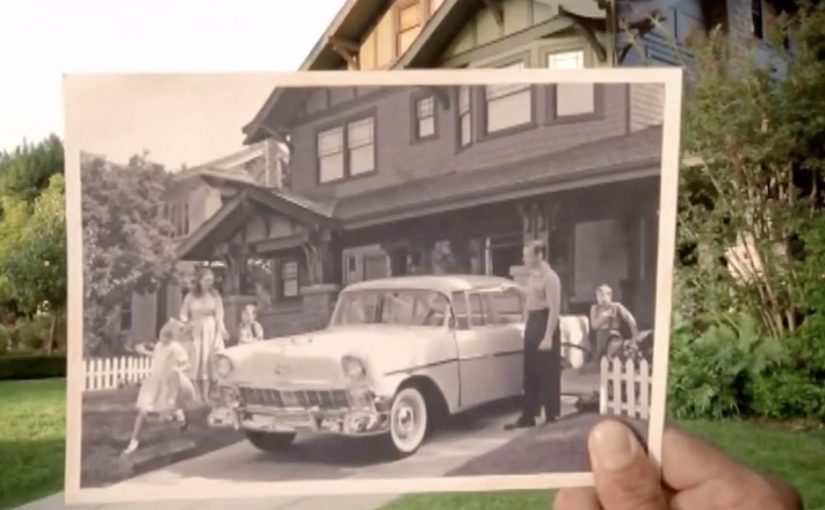
As a way to celebrate turning 100, Chevy creates a spot titled “Then & Now” that shows people staying connected to iconic moments, locations, and Chevrolet vehicles as if those moments are with them right there, right now.

A simple device that does the heavy lifting

The mechanism is beautifully restrained: vintage photographs of Chevrolets and the people around them are held up to the camera in the exact same locations today, aligning past and present into a single frame.

In automotive heritage storytelling, the fastest way to communicate longevity is to make time visible with a device that needs almost no explanation.

In heritage-heavy categories, anniversary storytelling lands best when it helps the audience locate their own memories in the present, not when it asks them to admire the brand.

Why it lands emotionally

The film does not argue that the brand matters. It shows that memory matters, and lets the vehicles sit naturally inside that truth. The hand-held photos are the emotional bridge. They make nostalgia feel personal, not corporate.

Extractable takeaway: If you can make time visible with one repeatable in-scene device, you can earn nostalgia without turning the work into a corporate victory lap.

The business intent behind the sentiment

A centennial can easily become self-congratulation. This avoids that trap by focusing on the audience’s continuity. The brand is the thread that runs through people’s lives, places, and rituals, rather than the subject demanding applause. The real question is whether your anniversary work makes the audience feel time passing in their own life, not whether it proves you have been around. Anniversary work should prioritize the audience’s continuity over brand self-congratulation.

Transferable moves for anniversary work

  • Choose one visual metaphor and commit. One repeatable device beats a collage of “greatest hits”.
  • Let people be the hero. Heritage feels earned when the customer’s life is the storyline.
  • Use restraint as a quality signal. Minimal copy and slow pacing can make the work feel more truthful.
  • Anchor the past in the present. Showing the same place now keeps nostalgia from drifting into museum mode.

A few fast answers before you act

What is “Then & Now” in one line?

A centennial film that aligns vintage Chevrolet photos with the same real-world locations today to show continuity across generations.

What is the core creative mechanism?

Hand-held historical photographs matched precisely to present-day scenes, creating a single frame that contains both time periods.

Why does this approach work for anniversary advertising?

It makes time visible instantly, and it ties the brand to lived memory rather than to corporate milestones.

What should you avoid in centennial storytelling?

Avoid making the milestone the hero. If the audience cannot see their own continuity in the work, the film risks reading like self-congratulation.

What is the most transferable takeaway?

If you can show the passage of time with one simple, repeatable device, you can tell a heritage story without overexplaining it.

Jeep: Compass Remote Postcards

Jeep: Compass Remote Postcards

One of the oldest and most effective ways to sell a product is with a good demonstration. Leo Burnett Brussels takes that approach and gives it a fresh spin for the Jeep Compass by turning the demo into a journey people can follow.

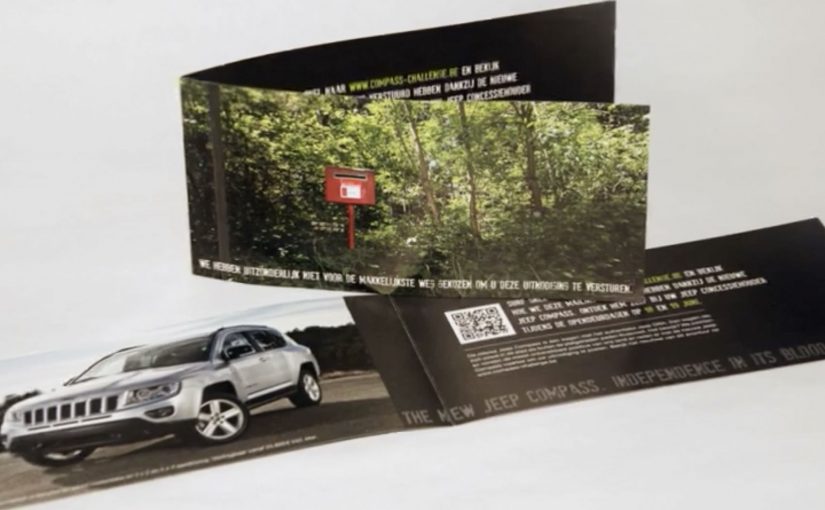
Cameras are strapped onto a few Jeep Compasses, and the team sets out to find the most remote post locations they can. Direct mailers are then shipped from these far-flung places, pointing recipients to a site where they can follow the trip and see the Compass in action.

Remote postcards as proof, not promise

The mechanic is simple. Put the product in the environment that proves the claim, document it, then send a physical artifact from the place itself. The postcard becomes evidence that the vehicle actually got there, not just a line in a brochure.

In automotive marketing, demonstrations land best when the proof is embedded in the distribution, so the message and the evidence arrive together.

The real question is how to turn an off-road capability claim into proof people can hold, trust, and retell. This is stronger than a spec-led demo because the proof is built into the medium itself.

Why this lands

This works because it collapses storytelling and verification into one object. A postcard from a remote location is inherently credible. Add footage from the route, and the demonstration feels earned rather than staged, even for people who only skim the campaign.

Extractable takeaway: If your product benefit is “go anywhere” or “handle more,” make the medium carry the proof. Send something that could only exist if the product performed as claimed.

What the campaign is really optimizing for

Beyond awareness, this is built to move the vehicle into active consideration. It gives prospects a concrete reason to re-evaluate the vehicle, and it creates a narrative that sales teams and enthusiasts can retell without needing technical jargon or spec sheets.

How to adapt this demonstration pattern

  • Turn proof into an artifact. Physical mail can signal effort and credibility.
  • Design a followable journey. A route with checkpoints is easier to remember and share than a one-off stunt.
  • Keep the CTA tight. One action. Follow the trip. See the product perform.
  • Make the environment do the persuading. Terrain and remoteness communicate capability faster than copy.

A few fast answers before you act

What is the core idea of the Jeep Compass remote postcards?

Use real remote locations as the demonstration, then mail postcards from those locations and direct recipients to follow the journey and watch the vehicle perform.

Why use direct mail instead of only video?

A postcard from a remote post office feels like proof. It is a physical signal that the journey happened.

What makes this a product demonstration, not just content?

The route and the mailer are consequences of the capability claim. The campaign structure is built around showing the vehicle doing the work.

What kind of products benefit most from this pattern?

Products with a capability claim that is easy to show in the real world. Durability, reach, range, off-road, endurance, or access.

What’s the biggest risk if you copy this approach?

If the “proof” feels manufactured or the journey is hard to follow, the credibility advantage disappears. The checkpoints and documentation need to be clear.