
Plan: The Erasable Billboard for Girls’ Education

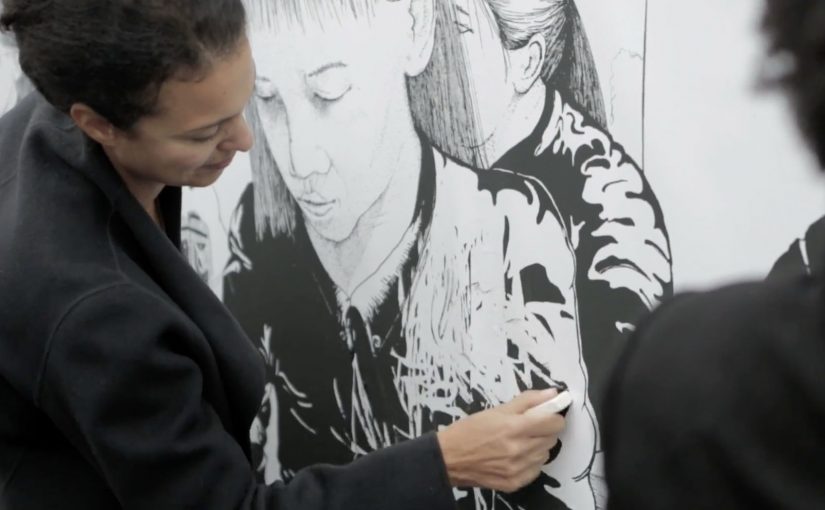
A large illustrated billboard appears in a busy city square. People donate, receive a simple eraser, and start rubbing away the artwork. As the top layer disappears, a second illustration is revealed underneath, shifting the story from girls working to girls going to school.

Plan has reported that tens of millions of girls worldwide are pushed into work instead of education, while in many less privileged countries boys are more likely to get access to schooling. To spark action, Plan and CLM BBDO created an erasable billboard with an illustration designed to be removed to reveal another illustration underneath. The billboard ran in central locations in Paris and Berlin. Passers-by were invited to donate in exchange for an eraser, then use it to change what the billboard showed.

Why the “erasable” mechanic is so strong

The mechanism does two jobs at once. It raises money, and it makes the issue understandable without explanation. The before-and-after is literal. Work disappears. School appears. The donor is not only informed. The donor performs the change. Cause-led campaigns should treat participation as the message, not a bonus layer.

Extractable takeaway: When the donor completes the transformation with their hands, the message becomes a memory and the donation feels consequential.

Definition-tightening: the eraser is not a gimmick. It is the interface, meaning the simple physical tool that gives the donor viewer control over the story. Because the act of erasing creates ownership, it makes someone more likely to donate, talk about it, and remember it.

In social-impact fundraising, participatory outdoor media can turn a small donation into a visible act of change that people feel in their hands.

The real question is whether your donation ask feels like participation or just passive sympathy.

What Plan is really buying

This is a public proof of participation. Instead of asking people to “care” in private, it makes caring visible, social, and shared. Every person who erases becomes a live endorsement that the issue matters enough to stop and act.

Steal this pattern: make giving tactile

  • Make the transformation physical. A tangible before-and-after beats a poster full of statistics.
  • Use the donation as the trigger. The action should only unlock after contribution, not before it.
  • Let participation create the content. The billboard changes because people change it.
  • Design for bystanders. Watching others erase is part of the persuasion.

A few fast answers before you act

What is the “Erasable Billboard” idea?

An illustrated billboard designed to be physically erased. Donors receive an eraser and reveal a second image underneath, shifting the story from girls working to girls going to school.

Why exchange a donation for an eraser?

Because it turns giving into an action. The eraser is a simple reward, but more importantly it is the tool that lets the donor create the transformation themselves.

What makes this more effective than a standard charity billboard?

It is participatory and observable. The public sees the billboard changing in real time, which builds social proof and makes the issue easier to grasp.

What is the main emotional lever?

Viewer control. The donor does not only learn about the problem. The donor performs a symbolic solution in front of others.

What is the biggest execution risk?

If the transformation is not instantly readable, people will not engage. The before-and-after needs to be obvious from a distance and satisfying up close.
fiftyfifty: Frozen Cinema

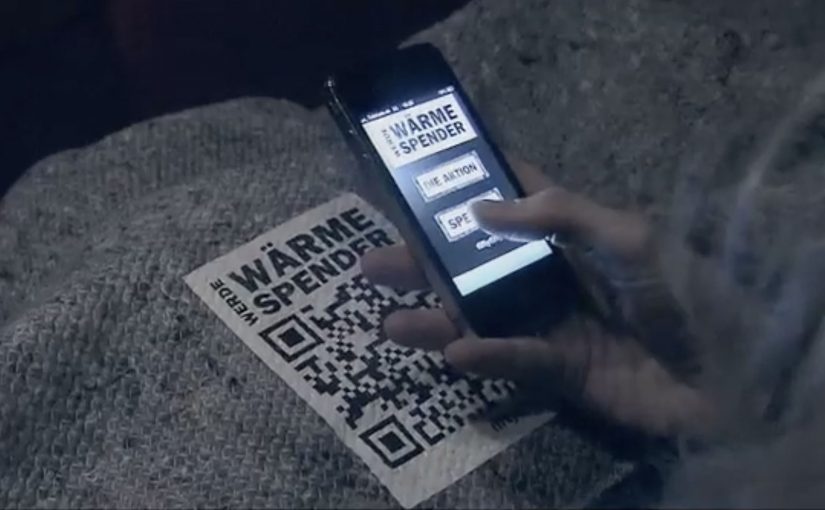
A cinema in Germany is set to a brutal 8°C. The audience starts to shiver, then notices blankets placed on the seats. A short film begins, and homeless people on screen comment on the “cold cinema experience”. For them, 8°C is described as cozy.

That contrast is the reality check. It turns “winter hardship” from an abstract idea into a physical sensation you cannot ignore, even if only for a few minutes.

How the donation loop is built

The mechanism is tightly engineered. Lower the temperature. Hand out blankets. Add QR codes to the blankets so the audience can donate instantly while the emotional context is still fresh. Here, the donation loop means a felt trigger, an instant prompt, and a friction-light way to give before the moment fades. The cold primes empathy. The QR code removes friction. That sequence works because the physical cue creates urgency and the QR code captures intent before it cools.

In European urban environments where most people only glimpse homelessness in passing, empathy campaigns land harder when they translate a daily reality into a shared, felt moment.

The real question is how to turn sympathy into immediate action before comfort returns and attention drifts.

Why it lands

This works because it is not just a message. It is a sensory demo. The audience experiences discomfort, then immediately hears the perspective of people who live with worse, for longer, with no quick “rewarm” button.

Extractable takeaway: If your cause depends on empathy, build one controlled, temporary experience that lets people feel a fraction of the problem, then put the simplest possible action in their hands while they still care.

What to reuse in empathy activations

  • Use the environment as media. A small physical change can do more than a big headline.
  • Pair feeling with explanation. The “why” must arrive before people rationalize the discomfort away.
  • Make the action immediate. Donations work best when there is no extra search, form, or delay.
  • Keep it respectful. The goal is recognition and support, not spectacle.

A few fast answers before you act

What is “Frozen Cinema”?

It is a charity awareness and donation activation that chills a cinema to 8°C and uses a short film plus QR-coded blankets to trigger immediate donations for homeless support.

What is the core mechanism?

Physical discomfort creates attention. Context from homeless voices creates meaning. QR codes on blankets remove friction so people can donate on the spot.

Why does the temperature change matter?

It turns an intellectual topic into a bodily experience. That shift makes the message harder to dismiss and easier to remember.

Why put the QR code on the blanket?

It places the donation action inside the experience itself, so people do not have to search for the next step after the emotional moment has passed.

What is the most reusable lesson?

When you need action, design a moment that people can feel, then make the response path effortless and immediate.

dotHIV: .hiv Domain

A familiar website address. One small change at the end. And suddenly the act of browsing is framed as a contribution.

.hiv is a global idea positioned to fight HIV and AIDS. Campaign materials claimed that by the end of 2010, the number of people diagnosed with HIV would have reached 150 million.

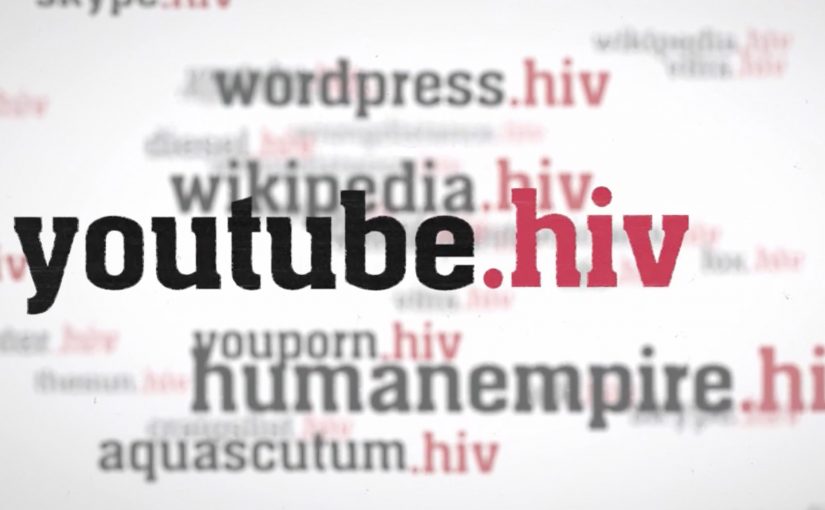
AIDS continued to be a deadly diagnosis, so nonprofit organization dotHIV and Hamburg-based agency KemperTrautmann launched a Facebook-led campaign with a specific ambition. Establish a new top-level domain, .hiv, alongside endings such as .com or .org.

The proposed mechanism is straightforward. Any website could soon have a .hiv version. The content stays the same, but using the .hiv version is framed as “doing some good”. Every visit would trigger a small donation to dotHIV, or the website owner would pay a monthly rate for using the .hiv ending, with proceeds routed toward the cause.

Why the domain idea is the message

This works because it turns a familiar object, the URL, into a symbol. A domain ending is tiny, but it is also persistent. It appears everywhere the link appears, and it travels without needing a new explanation each time. The “digital red ribbon” effect is built into the mechanics, not added on top. Here, “digital red ribbon” means a visible, repeatable sign of support that appears wherever the link appears. That matters because persistent, low-effort visibility lowers the cognitive cost of participation and helps the cause travel with the behavior.

Extractable takeaway: If you want scale for a social cause, design participation so it sits inside a behavior people already repeat daily, and make the proof of participation visible every time the behavior happens.

In global cause-led digital initiatives, the scalable advantage comes from attaching support to a habit people already repeat without thinking.

What the campaign is really trying to unlock

The real question is whether the cause can become part of a daily digital behavior instead of remaining a separate appeal.

The visible pitch is fundraising. The deeper play is normalization. If .hiv becomes a usable, recognizable address ending, it makes the cause present in everyday digital life, which can reduce stigma through repetition and visibility rather than messaging alone.

The more strategic value here is normalization, not just fundraising.

What cause-led marketers can borrow

  • Attach impact to habit. Make the “good” happen when people do something they already do.
  • Make participation visible. A marker people can see and share helps the idea spread without extra media.
  • Keep the mechanism explainable in one sentence. If it needs a diagram, adoption collapses.
  • Design for opt-in trust. Cause mechanics live or die on clarity about where money flows and why.

A few fast answers before you act

What is the .hiv idea in one line?

A proposed top-level domain intended to turn everyday browsing into support for HIV and AIDS work by routing fees or visit-linked donations through dotHIV.

How is it supposed to work for normal websites?

A site could have a .hiv version that mirrors the existing content, while usage or registration is framed as generating funds for dotHIV.

Why use a domain ending instead of a normal donation page?

Because a domain ending is persistent and repeatable. It can travel with links and become a visible marker of participation everywhere it appears.

What makes this idea credible or not credible to audiences?

Transparency about governance, pricing, and where proceeds go. The mechanism needs to be as clear as the promise.

What is the biggest risk with “donation-by-browsing” concepts?

If the value exchange is unclear, or the impact feels too small or too opaque, people disengage or suspect cause-washing.