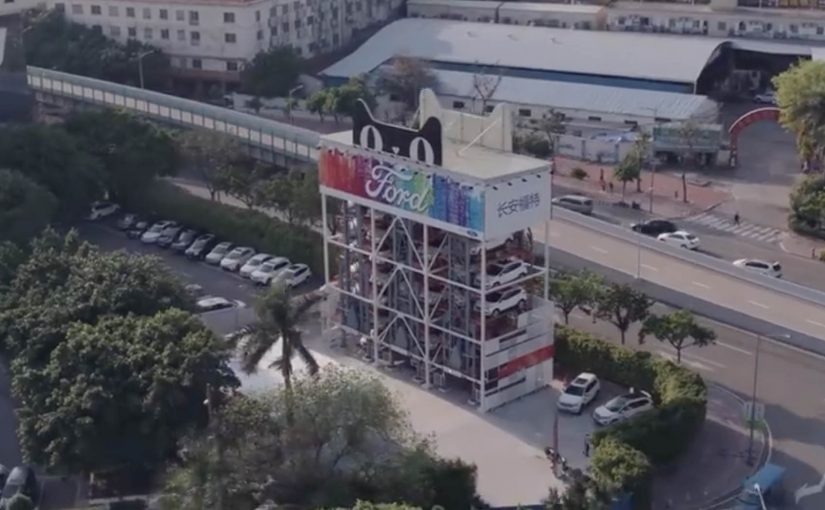
A glass “vending machine” in Guangzhou holds 42 cars. You choose a Ford model, pay a deposit in the Tmall app, schedule pickup, snap a selfie, and the machine recognises you when you arrive. Then it releases the car for a three-day test drive.
How the car vending machine flow works
Alibaba and Ford build this as a Super Test Drive Center. Think of it as a self-service test drive hub that compresses selection, deposit, scheduling, and pickup into one digital-to-physical flow. It turns the usual dealership steps into a clean sequence. Select the car model. Put down the deposit electronically via the Tmall app. Book a pickup slot. Use a selfie as identity confirmation at the moment of collection.
In high-density cities where e-commerce behaviours are habitual, self-serve pickup expectations spill into high-consideration products too.
The real question is how you remove dealership-shaped friction without removing trust.
Why this matters for test drives and conversion
The innovation is not the building. It is the removal of friction around intent. By compressing selection, deposit, scheduling, and identity confirmation into one predictable sequence, the concept reduces drop-off between “I want a test drive” and “I am in the car”. Here, “friction” is the waiting, paperwork back-and-forth, and sales pressure that makes people abandon the step entirely. This pattern is worth copying when your goal is more completed test drives, not more showroom theatre.
Extractable takeaway: If you can make “try before you buy” feel as immediate as e-commerce while keeping identity confirmation lightweight, you increase the odds that intent turns into action.
What the selfie step signals
The selfie is a simple trust layer. It connects the digital reservation to the physical handover. It also reinforces the theatre of the experience. You do not just pick up a car. You unlock it.
Stealable moves from this flow
- Turn the test drive into checkout: Make selection, deposit, and scheduling a single, self-serve sequence.
- Remove sales pressure by default: Let customers start with intent and time-on-product, not negotiation.
- Use lightweight identity at pickup: Tie the digital reservation to the physical handover without adding paperwork loops.
- Design for story, not just logistics: The unlock moment makes the handover feel earned and shareable.
A few fast answers before you act
What is a car vending machine?
It is a vertical, automated car storage and handover system that lets customers reserve and collect a vehicle via a digital flow, instead of a traditional showroom process.
How does the three-day test drive booking work in this concept?
You select a model, place a deposit electronically in the Tmall app, schedule a pickup time, and then collect the car for a three-day test drive at the vending machine site.
Why use a selfie for pickup?
It provides a lightweight identity confirmation step that ties the digital booking to the physical release, without adding visible friction for the customer.
What should brands measure if they copy this pattern?
Test-drive completion rate, conversion rate after the test period, time from reservation to pickup, repeat bookings, and the share of customers who choose this flow over a dealership visit.