
JavaZone: Java 4-ever Trailer Romance

JavaZone is a conference in Scandinavia where developers meet, listen to talks, and plug into the wider community. The fun part is that the people behind it also know how to market it like a movie.

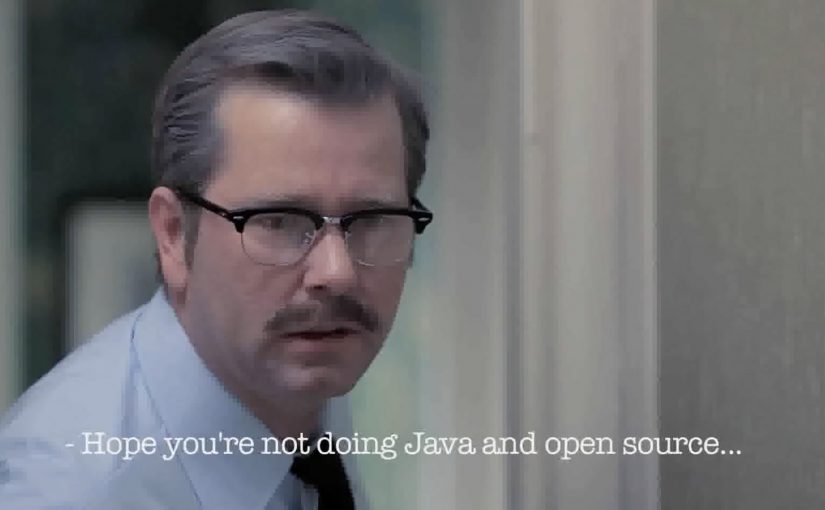
The trailer below is for an imaginary film called Java 4-ever. It is a full-on romance setup, but the forbidden love is not a person. It is a programming language.

A conference trailer that behaves like entertainment

The mechanic is simple. Instead of explaining “why you should attend”, JavaZone ships a piece of content you would watch even if you did not care about the conference. That content then does the job of awareness and persuasion on its own. That works because entertainment lowers resistance, so the conference earns attention before it asks for registration.

In developer communities, the fastest way to build affinity is to show you understand the culture. Then use that understanding to earn attention before you ask for registration.

Why it lands

The craft is not in the jokes alone. It is in how accurately it borrows the language of dramatic trailers. Serious music, tense reveals, disapproving family energy, and the familiar “I cannot hide who I really am” arc. The parody works because it treats tech tribalism, the identity-level loyalty people attach to tools and languages, as real emotion, which is exactly how it feels inside communities.

Extractable takeaway: If your audience is allergic to hype, do not “market” at them. Entertain them with something culture-true, and let the entertainment carry the message.

What the Java 4-ever format achieves

The real question is whether your event marketing feels native to the community you want to gather, or like promotion imported from outside it.

A trailer is short, rewatchable, and instantly shareable. That makes it a high-leverage asset for an event. One video can act as a brand statement, a community signal, and a distribution engine, all without needing a media budget narrative.

For technical events, culture-literate entertainment is stronger than benefit-led promotion when the goal is to earn voluntary attention.

What to steal for your own event

  • Write for the in-jokes, but keep the story universal. People should get it even if they are not in the tribe.
  • Use a familiar format. Trailers, sitcom cold-opens, and “documentary” cuts carry their own viewing habits.
  • Make the asset stand alone. If the content only works after someone knows your event, it will not travel.
  • Let craft be the credibility. In technical audiences, quality signals respect more than claims do.

A few fast answers before you act

What is this video actually doing for JavaZone?

It acts as cultural marketing. A shareable parody signals “this is your kind of community”, and that signal can be stronger than a feature list of talks.

Why choose a movie-trailer format?

Because audiences already know how to watch a trailer. The format compresses story, emotion, and memorability into a minute-scale asset.

What is the key creative insight?

Technical preferences often behave like identity. Treating that identity seriously, through parody, is what makes it feel accurate and funny.

How do you measure success for content like this?

Shares, rewatches, and discussion inside the community. Then correlate spikes in attention with registration momentum and speaker or sponsor interest.

Does this only work for developer audiences?

No. The transferable move is not the coding joke. It is wrapping your message in a format the audience already likes to watch and share.
T-Mobile Netherlands: The Rematch

A tiny final that deserved a real crowd

The strongest brand stories make connectivity feel human: it is not about coverage maps, it is about helping people reconnect what mattered.

Martijn, a 39-year-old carpenter, attempted to bring back his football team from 1997 for a rematch of a 13-year-old championship final that was then witnessed by a grand crowd of three people.

This time, he wanted his entire village to be there to see him win. A dream enabled by T-Mobile Netherlands.

How the rematch premise worked

The mechanism was classic. Take an unfinished personal story, add a clear goal, then remove the practical barriers that made it impossible before.

Reuniting a team after 13 years is not just a scheduling challenge. It is a social one. Finding people, persuading them, coordinating them, and turning “we should” into “we did.” T-Mobile positioned itself as the enabler that made that coordination real.

By “coordination”, I mean the practical work of finding the right people, aligning dates, and making commitments stick.

That removal of friction is why the payoff feels earned: a real crowd becomes proof the reconnection happened.

In European consumer telcos, stories like this work when connectivity shows up as real-world coordination, not as a network claim.

Why the story lands emotionally

The psychological pull is simple: redemption.

Extractable takeaway: If you want emotion without melodrama, make recognition visible: reunions, witnesses, and shared moments people can point to.

The original match mattered deeply to the people who lived it, but it happened almost unnoticed. Three spectators is not a crowd. It is practically private. The rematch reframed the same sporting moment as something the whole village could witness, validate, and share.

It also taps into identity. A village team is not just sport. It is belonging. Bringing everyone back together turns an individual need into a community event.

The business intent behind enabling the dream

T-Mobile was not selling minutes or data here.

The real question is how a telco earns emotional ownership of reconnection without making itself the hero.

Here, “reconnection” means turning a desire to meet again into a plan people can actually execute.

This kind of brand film works best when the brand enables and stays out of the spotlight.

The intent was to associate the brand with making real-life reconnection possible. Helping people organize, mobilize, and show up. In a category where offers are easy to copy, emotional ownership is the differentiator.

If your category is copyable, the durable edge is removing friction around moments people already care about.

What to steal for your next brand film

  • Start with a concrete, human objective. A rematch with a real stake beats any abstract message.
  • Make the “before” painfully small. Three spectators sets up a powerful contrast for the payoff.
  • Let the brand enable, not star. The hero is the person. The brand removes friction.
  • Scale the moment socially. A private memory becomes a public event. That is where shareability comes from.

A few fast answers before you act

What is T-Mobile Netherlands’ The Rematch about?

A 39-year-old carpenter reunites his 1997 football team for a rematch of a 13-year-old championship final that only three people watched at the time.

What is the core mechanism of the idea?

Identify an unfinished personal story, then use the brand to remove coordination barriers so the dream can happen at scale.

Why does it resonate with viewers?

It is a redemption story with community payoff. The same moment gets the crowd and recognition it never had.

What business goal does this serve for a telco?

Owning the emotional territory of reconnection and coordination, rather than competing only on interchangeable plans and pricing.

What is the main transferable takeaway?

Make the brand the enabler of a human goal, and build the narrative around contrast: what it was then versus what it becomes now.