
Québec City Magic Festival: The Magic Poster

To promote the Québec City Magic Festival, lg2 makes the poster behave like a trick, not a billboard.

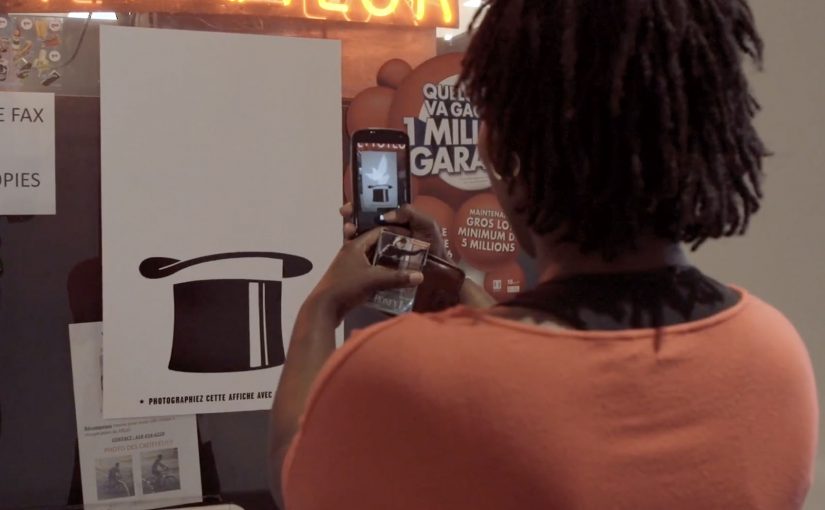
The creative is a magician’s hat poster with a message printed in invisible ink. Curious passers-by discover the mechanic by doing what people already do. They pull out a phone, take a picture, and turn the flash on. The flash reveals the hidden copy, and a lucky few are rewarded with a free ticket for the festival’s closing show.

A poster that turns curiosity into participation

The mechanism is invisible ink plus a flash-triggered reveal. Instead of asking for attention, the poster pays attention back. It gives you a reason to stop, and it gives you a satisfying “aha” the moment you do.

In high-traffic city out-of-home placements, the best interactive work rides on habits people already have, not instructions they have to learn.

In out-of-home, the strongest interactive ideas do not demand a new behavior. They attach to a behavior already in the environment and simply add a twist.

Why it lands for a magic festival

The medium is perfectly aligned with the message. The campaign does not merely advertise magic. It performs magic in the street. That alignment makes the experience feel like a preview of the festival rather than an ad for it. The real question is whether the medium can demonstrate the experience you are selling, not just describe it.

Extractable takeaway: When promoting an experience product, make the marketing behave like the product. Let the audience sample the feeling, not just read the promise.

The free-ticket twist strengthens the loop. The reveal provides instant reward. The prize provides delayed reward. Both motivate sharing, because people want friends to try it and to see if they win.

How to design a flash-reveal OOH interaction

  • Hide something worth revealing. The reveal must feel like a payoff, not a gimmick.
  • Use a native trigger. Flash photography is a default phone capability, not an app install.
  • Reward the behavior. Even a small chance of winning can meaningfully increase participation.
  • Make it repeatable. The interaction should be easy enough that people can show someone else on the spot.

A few fast answers before you act

What is “The Magic Poster” concept?

A festival poster printed with invisible ink that reveals its message when someone photographs it with a phone flash, turning a passive billboard into a small magic trick.

Why is the flash-triggered reveal effective?

It uses a built-in phone behavior, creates instant payoff, and turns the audience into the operator of the trick, which increases attention and sharing.

What makes it more than a novelty poster?

The mechanic reinforces the product truth. The campaign demonstrates magic rather than merely claiming it, making the ad itself a preview of the festival experience.

How can brands adapt this without copying the exact technique?

Design a simple reveal that matches your story, attach it to a native behavior in the environment, and ensure the revealed content is genuinely rewarding, not just hidden for hiding’s sake.

What should the hidden message say?

Keep the revealed copy short and emotionally rewarding in one glance, so the flash moment feels like a payoff and not a puzzle.
JWT Brazil: Black Bar Donation

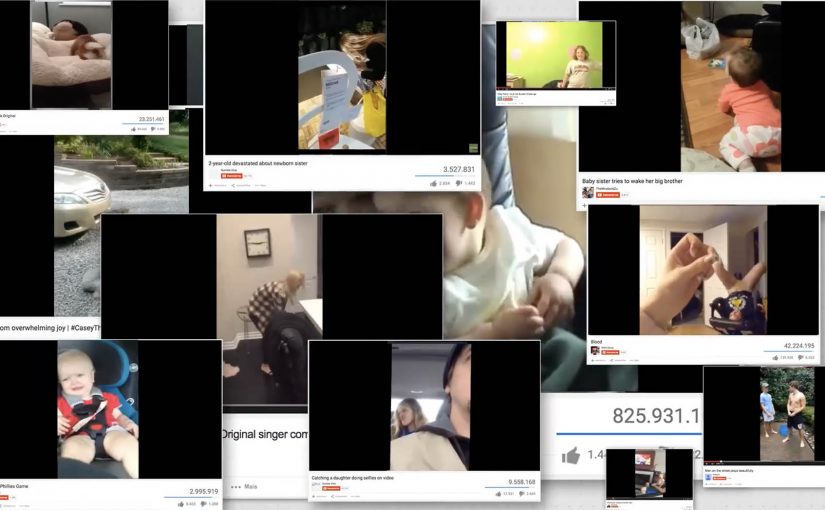
Videos that are recorded vertically and then posted online generally end up with black bars on either side. Lots of viewers find that wasted space annoying. So JWT Brazil came up with the “Black Bar Donation” campaign, which lets creators donate those bars to NGOs that need help promoting themselves.

On the campaign microsite, people select a vertical video to upload, tag it with the NGO of choice, and then publish it directly to their own channel with the NGO messaging living inside the black bars.

Turning a formatting mistake into donated media

The idea is neat because it starts from a real irritation. The bars are normally dead space. Here they become a donation surface that travels with the content, wherever the video gets shared or embedded. By “donation surface,” I mean a fixed, consistently visible part of the frame reserved for the NGO message. The “media spend” is created from a mistake people already make every day.

The mechanism: creator-led distribution with a cause payload

Traditional NGO awareness depends on buying reach or earning press. This flips the model. Creators supply the distribution. The campaign supplies the insert. Here, the “cause payload” is the NGO message container that sits in the bars and stays consistent across creator videos. NGOs receive a consistent message container that rides along with user-generated video. This is a stronger pattern than producing yet another standalone PSA, because it turns creator distribution into donated inventory.

The real question is whether your cause message can hitchhike on creator distribution instead of demanding attention on its own.

It also gives creators a low-effort way to feel helpful. Upload once, choose a cause, publish. No new platform to build an audience on. No complicated call to action.

In digital marketing where attention is scarce, the smartest cause campaigns repurpose existing media waste into useful inventory without asking audiences to change their habits.

Why the “black bars” frame is a strong creative device

The bars work because they are visually stable. They sit outside the main video action, so the NGO message does not compete with the creator’s content. At the same time, the contrast is impossible to miss because the bars are solid, empty shapes that viewers are already staring at.

Extractable takeaway: When you can transform a widely repeated user error into a benefit for someone else, you get scale through behaviour, not through budget.

A pattern for scale without media spend

  • Find a ubiquitous waste surface. Dead space, downtime, defaults, leftovers. Anything people already produce at scale.
  • Make contribution feel effortless. One clear action, one clear outcome. No learning curve.
  • Keep the creator’s content intact. Add value around it, not on top of it.
  • Design for portability. The message should travel with the asset as it gets re-shared.
  • Make the intent obvious. Viewers should instantly understand that the added space supports a cause.

A few fast answers before you act

What is “Black Bar Donation” in one sentence?

It is a campaign that repurposes the black side bars on vertical videos as donated ad space for NGOs, so the NGO message travels with the video when it is published and shared.

Why does this work better than a normal PSA video?

Because it piggybacks on content people already choose to watch. The NGO message becomes part of the viewing frame, not an interruption users try to skip.

What makes this campaign scalable?

The supply is user behaviour. As long as creators keep shooting vertical video and uploading it, the campaign has new “inventory” to convert into donated space.

What is the biggest risk with this model?

Quality control and brand safety. If the creator video is problematic, the NGO message can end up adjacent to content it would never choose intentionally.

How would you adapt this idea for other platforms or formats?

Look for other consistent “frame” areas that do not disrupt the core content. Then build a simple creator workflow that lets people attach a cause payload without editing tools.

Polar Beer: Cell Phone Nullifier

There is a specific kind of modern annoyance. You go out with friends, and ten minutes later the table is lit by phone screens instead of conversation.

Polar, a regional Brazilian beer brand, decides to treat that as a solvable problem. If phones steal the night, then the beer should give it back.

A beer cooler that changes the rules of the table

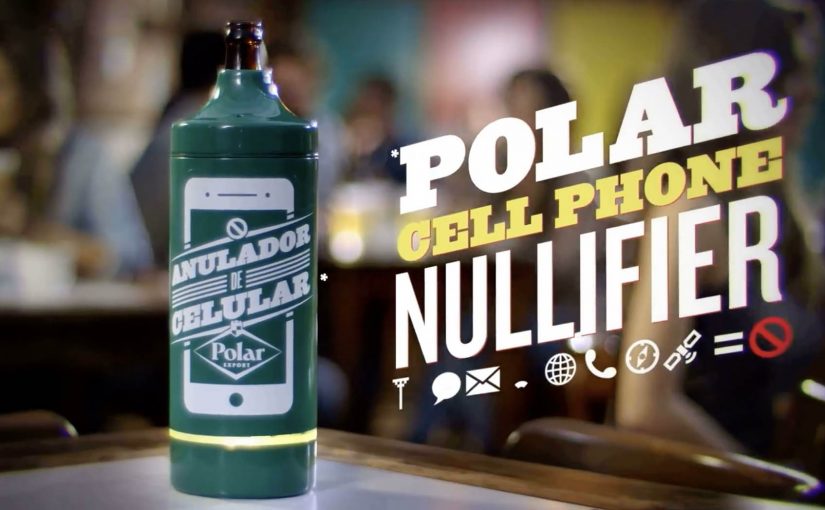
The mechanism is a physical prop with a blunt promise. A special Polar cooler is described as blocking 3G, 4G, Wi Fi, and GSM signals for devices within roughly a five-foot radius. Order Polar. Get served in the cooler. Watch the room look up.

In bar and nightlife settings, the strongest behavior-change ideas work when they attach to an existing ritual and alter it with minimal effort from the audience.

Because the cooler makes the phone temporarily useless at the table, conversation becomes the path of least resistance.

Why it lands, even if people hate it for a minute

This plays with a familiar tension. Everyone complains about “phubbing,” the habit of snubbing people in front of you by focusing on your phone, but nobody wants to be the first person to say “can we put phones away.” The cooler does the awkward social work on behalf of the group.

Extractable takeaway: If a social norm is breaking down, redesign the environment so the better behavior becomes the default. Remove the need for a lecture, and replace it with a small constraint that everyone experiences equally.

The brand benefit is also clean. Polar is not asking for attention. It is buying it back for you, then sitting at the center of the moment it created.

What the stunt is really selling

On the surface it is a gadget. Underneath it is a positioning move. Polar equates itself with real-world connection and the kind of night people say they want, even when their hands keep reaching for the screen.

The real question is whether you can earn attention by subtracting distraction, not by adding more stimulation.

This is a smart positioning move because it delivers the promise through the ritual, not through a slogan.

It is also a reminder that “anti-tech” can be a tech story. The cooler is not anti phone as an identity. It is pro conversation as an outcome.

Steal this for phone-free nights

  • Target the moment, not the attitude. Fix the table behavior, not the entire relationship with smartphones.
  • Use a prop that belongs in the setting. A cooler at a bar feels natural. A lecture does not.
  • Make it equal. The constraint applies to everyone in range, so it feels like a shared game, not a personal attack.
  • Build a story people retell in one sentence. “The beer that makes your phone stop” spreads fast.

A few fast answers before you act

What is Polar’s “Cell Phone Nullifier”?

It is a branded beer cooler concept described as cutting off nearby phone connectivity, so people ordering Polar are nudged into talking to each other instead of scrolling.

Why does blocking the signal work as a behavior-change tactic?

It removes the temptation rather than arguing with it. By changing the environment, it turns “I should put my phone away” into “my phone is not part of the table right now.”

What is the core creative mechanism here?

A familiar bar object is redesigned to enforce a social norm. The product ritual, ordering beer and receiving it in a cooler, becomes the delivery system for the idea.

How can brands adapt this without feeling preachy?

Focus on shared benefits and shared participation. Make the intervention playful and collective, and keep the user action simple and voluntary.

What is the biggest risk if you copy this idea?

If the constraint feels forced or punitive, it becomes the story instead of the conversation it was meant to protect. Keep it lightweight, contextual, and easy to opt into.