
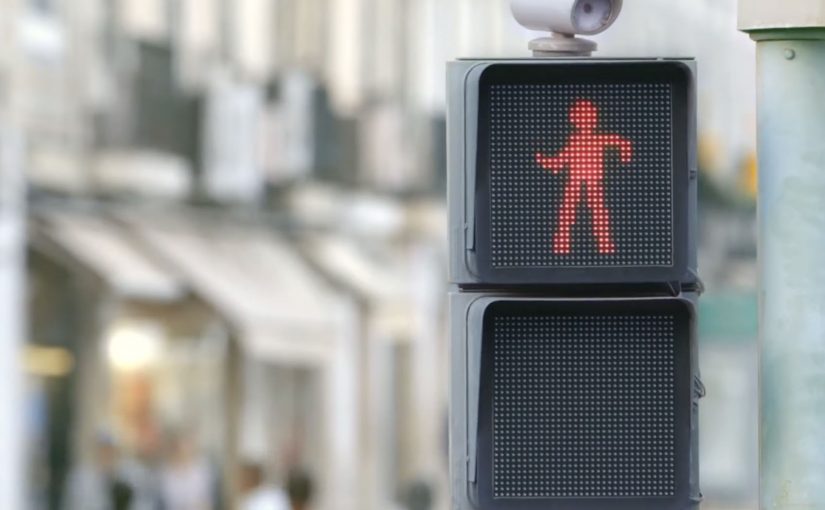
smart: The Dancing Traffic Light

Traffic lights can be dangerous for pedestrians, especially for those who do not like to wait for the light to change. So the Smart team from Mercedes-Benz created “The Dancing Traffic Light”, where a person’s dance moves were brought to a traffic light in real time. As a result, 81% more people stopped at that red light.

A red light that earns attention

The mechanism is simple. Put a person’s live dance into the “don’t walk” figure so waiting becomes entertainment rather than dead time. The red signal stays red, but the moment changes from friction to curiosity.

In busy cities, pedestrian safety interventions work best when they change what people do in the waiting moment, not when they rely on warnings people already ignore.

Why it lands

This works because it does not moralize. It redirects impatience. By turning the red figure into live motion, it converts passive waiting into anticipation, which is why people keep their attention on the signal instead of acting on impulse. People stop because they want to see what happens next, and because the signal feels like it is doing something for them instead of only restricting them.

Extractable takeaway: If your goal is compliance in a repeated micro-moment, do not just increase instruction. Add a small, repeatable reward that makes the safer choice feel like the more interesting choice.

What the brand is really demonstrating

The real question is how to make waiting at the curb feel better without weakening the rule itself.

The installation is framed as a safety idea, but it also functions as a brand proof point. “Smart” city thinking is expressed as an everyday behavior fix, not a futuristic gadget.

The stronger idea is not the choreography. It is the use of delight as a safety mechanism.

What to steal from this crossing

  • Design for boredom. Most unsafe shortcuts happen when people are impatient. Solve the impatience.
  • Keep the rule intact. The light still means stop. Only the experience changes.
  • Use real-time participation. Live input creates social magnetism and makes the system feel alive.
  • Measure behavior, not buzz. The strongest metric here is stopping behavior at the crossing, not views.

A few fast answers before you act

What is “The Dancing Traffic Light”?

It is an interactive pedestrian signal concept where a red “don’t walk” figure mirrors a nearby person’s dance moves in real time to make people more willing to wait.

What problem does it solve?

It reduces risky crossing behavior driven by impatience, by making the waiting phase more engaging.

Why does real-time motion matter?

Because it creates unpredictability and social attention. People watch longer when the content is live and human.

What kind of metric should you track for ideas like this?

Behavior change at the location, such as stopping and waiting rates, plus any reduction in unsafe crossing incidents.

How can another brand adapt this pattern?

Find a repeated safety or compliance moment, keep the rule unchanged, and add a small live reward that makes the safe choice feel like the better choice.
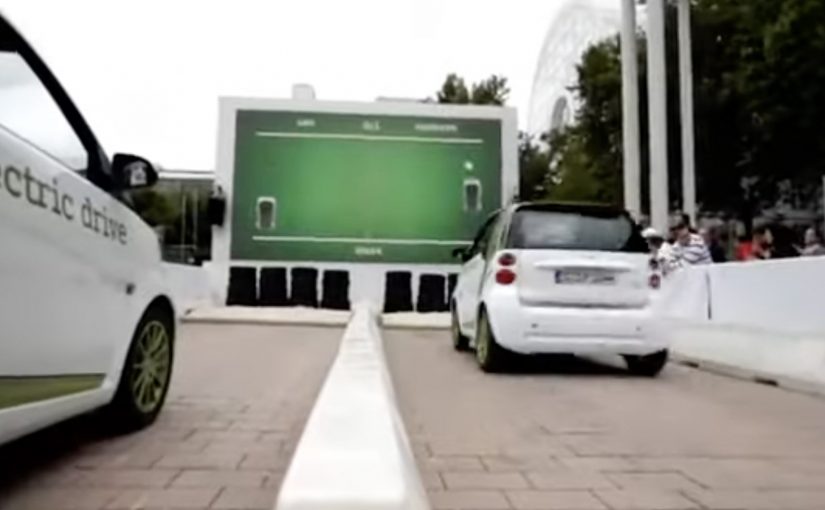
smart: eBall interactive ping pong duel

At the Frankfurt Motor Show (IAA) in 2011, Daimler promoted the third generation smart fortwo electric drive with a special interactive game event. Berlin-based Proximity BBDO designed a game called eBall that translates the joy of a highly responsive car into something visitors can play.

Visitors sign up with their driver’s license, get quick instructions on forward and reverse, and then step into a live ping pong duel. Instead of a controller, they use the car itself. Driving forward and back moves the “paddle,” with measurement technology tracking the rally on a large display.

When “responsive” becomes the gameplay

Electric drive messaging often struggles because it is full of abstractions. Efficiency, torque, responsiveness. eBall makes one of those claims physical. The faster and more precisely you control forward and reverse, the better you play. That is a rare alignment. The product behaviour is the mechanic.

Extractable takeaway: If your product promise is about control, speed, or precision, build an experience where performance is visible to a crowd and felt by the participant in under a minute.

In European automotive launches, live interaction works best when it turns a technical attribute into a simple skill people can feel and repeat.

The real question is whether your interaction turns the claim into a repeatable skill, not a slogan.

The tech trick is invisible on purpose

As described in coverage of the installation, the paddles on the LED wall are controlled by two real smart fortwo electric drive cars using laser measurement and transmission technology. The important detail is not the hardware. It is the immediacy. When the wall responds instantly, the player trusts the cause-and-effect and stays in the duel.

Why the driver’s license step matters

The license check does two jobs. It manages safety and liability, and it creates a small “this is real” threshold. You are not playing a simulator. You are operating a vehicle in a branded arena. That seriousness increases attention, and it makes the win feel earned.

What smart is really selling here

eBall does not try to convince you with specs. It frames the car as a fun, responsive object that behaves like a sports device in the hands of the driver. The subtext is clear. If it can play ping pong with precision, it will feel effortless in tight city driving too.

Moves worth copying in event mechanics

  • Translate one attribute into one action. “Responsive” becomes “hit the ball back.” No extra storytelling required.
  • Design for spectators. The LED wall makes the game readable from distance, so the crowd becomes the amplifier.
  • Keep the control model binary. Forward and reverse is legible, teachable, and low-cognitive-load.
  • Make the feedback immediate. Interactivity only feels truthful when response is fast.
  • Engineer the queue. A duel format naturally builds anticipation and repeat attempts.

A few fast answers before you act

What is smart eBall?

It is a live event game where visitors play a ping pong style duel by driving a smart fortwo electric drive forward and backward to control a digital paddle on a large screen.

Why does ping pong fit an electric city car story?

Because it is a precision game. It makes responsiveness and control visible in a way a brochure cannot, and it fits the “small, agile, quick” associations smart wants to own.

What makes this different from a normal driving simulator?

The controller is the vehicle, and the outcome is public. That changes the psychology from private play to performance, which increases energy, memorability, and word of mouth.

What is the biggest operational risk with this kind of activation?

Latency, safety, and throughput. If the system lags, people stop trusting the interaction. If safety or queue management fails, the experience becomes stressful instead of fun.

What should brands measure in a “playable product demo” like this?

Participation rate, average dwell time, repeat plays, audience size over time, and how many people capture and share the experience, plus any downstream test-drive or lead signals.