
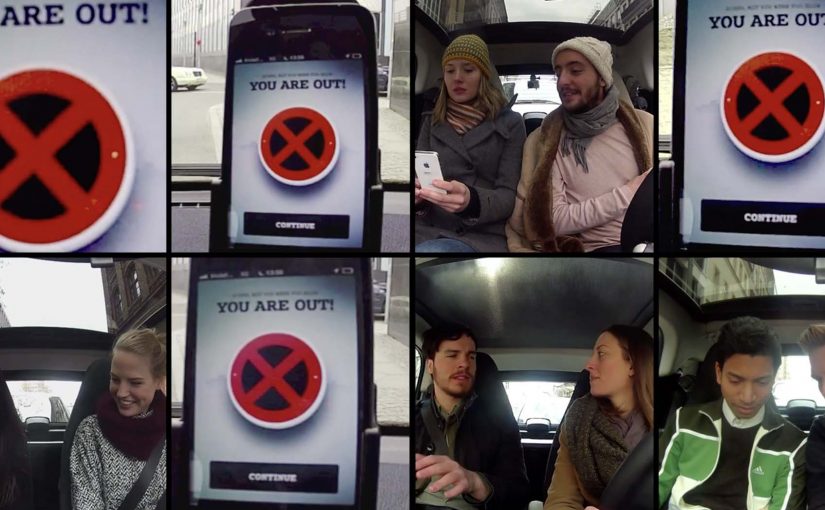
smart fortwo: parKING

Parking in the city is rarely fun, so BBDO Germany turns a regular test drive for the smart fortwo into an interactive parking game inspired by musical chairs.

An iPhone app plays music and directs teams around central Berlin. When the music stops, teams have to find a parking spot immediately. The last team to park and verify their location with a photo upload is eliminated. The competition runs out of the smart Center Berlin, where eight teams battle to become Berlin’s first “parKING”. In this activation, “parKING” names the elimination-style parking race where the last team to park when the music stops is out.

How the game works as a test drive

The mechanism is simple. A timed audio cue creates urgency. GPS-style direction turns the city into the board. Photo proof keeps it honest. Underneath the playfulness, every round forces the product truth the brand wants to dramatize. In a dense city, a small car that can slip into tight spots changes the outcome. Because the win condition is parking fast in tight spots, the fortwo’s city-fit advantage shows up as a competitive edge.

In urban European mobility marketing, turning a functional advantage into a public game is a reliable way to make a test drive feel like entertainment rather than evaluation.

The real question is whether the rules make the product truth decide the winner, without narration.

For city-mobility brands, this rule-first approach beats a standard test drive because it turns a claim into observable proof.

Why it lands

It converts a daily friction into a competitive moment, then makes the proof visible. People do not need to be told that parking is painful. They already feel it. The activation reframes that pain as a challenge where speed, composure, and the vehicle’s city fit are the deciding factors.

Extractable takeaway: If your product benefit only matters in a real context, stage a rule-based experience that forces the context to happen. Then let the rules make the benefit obvious without narration or feature lists.

Steal the parKING activation pattern

  • Build the experience around one constraint. Here it is time pressure when the music stops. One constraint keeps the story legible.
  • Use verification that audiences trust. Photo proof is simple and public. It prevents the “this is fake” reaction.
  • Turn the environment into the media. The streets of Berlin are not a backdrop. They are the gameplay.
  • Make the rules do the branding. When the win condition is aligned with the product truth, the brand message arrives naturally.

A few fast answers before you act

What is parKING in one sentence?

It is a city-wide parking game that turns a smart fortwo test drive into musical chairs, guided by an iPhone app and enforced with photo verification.

Why does a game work better than a normal test drive here?

Because it creates stakes and a clear outcome. A standard test drive is private and subjective. A game produces winners, losers, and shareable proof.

What makes this feel “made for Berlin” instead of generic?

The rules depend on dense city parking reality. The city’s constraints are the point, so the activation feels native to the environment.

What is the main risk when brands copy this pattern?

Misaligned rules. If the game’s win condition does not directly demonstrate the product truth, you end up with a fun event that does not build the intended belief.

What is the minimum viable version of this mechanic?

A single timed cue, simple navigation to keep teams moving, and one proof step such as a photo upload. Strip everything else.
smart: eBall interactive ping pong duel

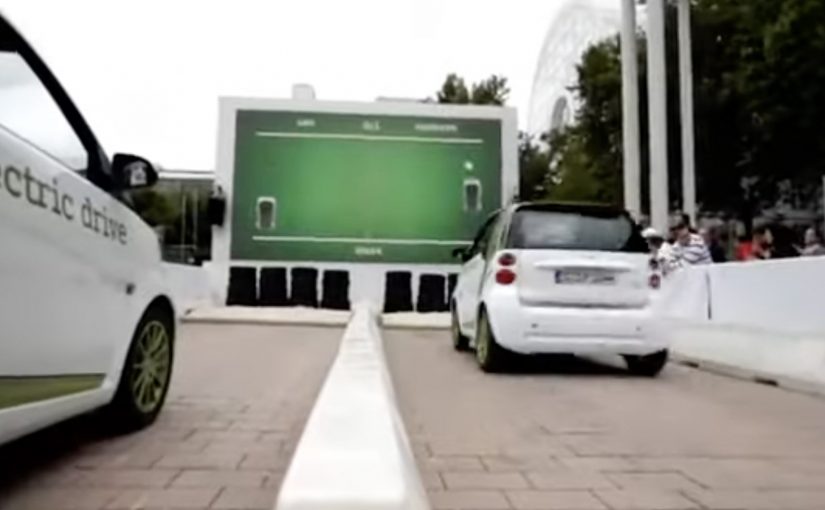
At the Frankfurt Motor Show (IAA) in 2011, Daimler promoted the third generation smart fortwo electric drive with a special interactive game event. Berlin-based Proximity BBDO designed a game called eBall that translates the joy of a highly responsive car into something visitors can play.

Visitors sign up with their driver’s license, get quick instructions on forward and reverse, and then step into a live ping pong duel. Instead of a controller, they use the car itself. Driving forward and back moves the “paddle,” with measurement technology tracking the rally on a large display.

When “responsive” becomes the gameplay

Electric drive messaging often struggles because it is full of abstractions. Efficiency, torque, responsiveness. eBall makes one of those claims physical. The faster and more precisely you control forward and reverse, the better you play. That is a rare alignment. The product behaviour is the mechanic.

Extractable takeaway: If your product promise is about control, speed, or precision, build an experience where performance is visible to a crowd and felt by the participant in under a minute.

In European automotive launches, live interaction works best when it turns a technical attribute into a simple skill people can feel and repeat.

The real question is whether your interaction turns the claim into a repeatable skill, not a slogan.

The tech trick is invisible on purpose

As described in coverage of the installation, the paddles on the LED wall are controlled by two real smart fortwo electric drive cars using laser measurement and transmission technology. The important detail is not the hardware. It is the immediacy. When the wall responds instantly, the player trusts the cause-and-effect and stays in the duel.

Why the driver’s license step matters

The license check does two jobs. It manages safety and liability, and it creates a small “this is real” threshold. You are not playing a simulator. You are operating a vehicle in a branded arena. That seriousness increases attention, and it makes the win feel earned.

What smart is really selling here

eBall does not try to convince you with specs. It frames the car as a fun, responsive object that behaves like a sports device in the hands of the driver. The subtext is clear. If it can play ping pong with precision, it will feel effortless in tight city driving too.

Moves worth copying in event mechanics

  • Translate one attribute into one action. “Responsive” becomes “hit the ball back.” No extra storytelling required.
  • Design for spectators. The LED wall makes the game readable from distance, so the crowd becomes the amplifier.
  • Keep the control model binary. Forward and reverse is legible, teachable, and low-cognitive-load.
  • Make the feedback immediate. Interactivity only feels truthful when response is fast.
  • Engineer the queue. A duel format naturally builds anticipation and repeat attempts.

A few fast answers before you act

What is smart eBall?

It is a live event game where visitors play a ping pong style duel by driving a smart fortwo electric drive forward and backward to control a digital paddle on a large screen.

Why does ping pong fit an electric city car story?

Because it is a precision game. It makes responsiveness and control visible in a way a brochure cannot, and it fits the “small, agile, quick” associations smart wants to own.

What makes this different from a normal driving simulator?

The controller is the vehicle, and the outcome is public. That changes the psychology from private play to performance, which increases energy, memorability, and word of mouth.

What is the biggest operational risk with this kind of activation?

Latency, safety, and throughput. If the system lags, people stop trusting the interaction. If safety or queue management fails, the experience becomes stressful instead of fun.

What should brands measure in a “playable product demo” like this?

Participation rate, average dwell time, repeat plays, audience size over time, and how many people capture and share the experience, plus any downstream test-drive or lead signals.