smart Argentina: The Tweet Commercial

smart Argentina: The Tweet Commercial

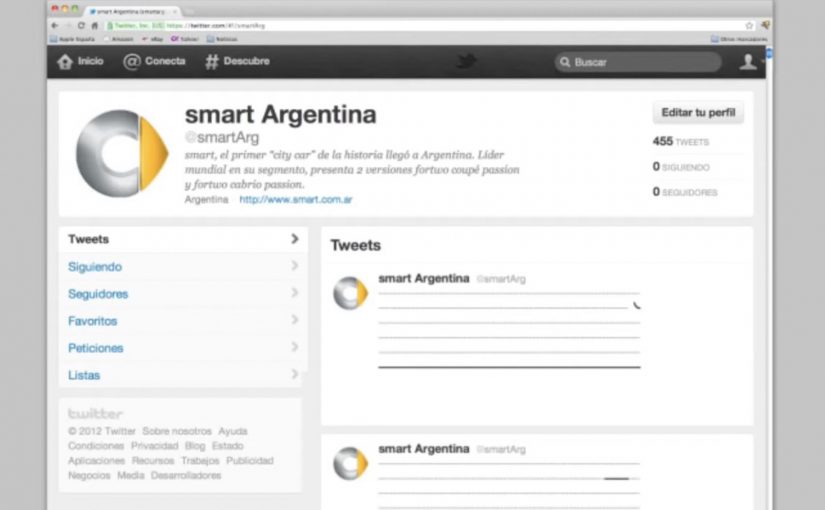
Argentina continues to set the standard in creative Twitter campaigns. In this latest execution, when you visit smart’s official account for Argentina, you might think some kid got in there and had his way with the keyboard. In reality, the feed is built from carefully crafted ASCII art tweets (images built from text characters) that stack into an animated sequence.

A Twitter timeline that behaves like a commercial

The mechanic is simple and slightly mischievous. The smart Argentina team publishes hundreds of ASCII frames as consecutive tweets, then relies on Twitter’s keyboard navigation to “play” them quickly. The result is billed as a Twitter-based animated commercial built from the timeline itself.

In consumer brand social media marketing, repurposing native interface behavior into a brand experience is one of the fastest ways to earn attention without buying more media.

How to watch it the intended way

Visit the smart Argentina twitter account and hold down the “J” key to move rapidly through the tweets and see the flipbook effect. Alternatively, the video below captures the idea as it was meant to be experienced.

Why this works, even though it is “just tweets”

It treats a constraint as a canvas. The 140-character format becomes the production rule, and the feed becomes the screen. That restraint is also the brand fit. A small car brand using a small-message platform to create a big-format effect is a neat piece of coherence. Because the viewer has to actively scroll to make it move, the act of watching feels like participation, which makes the trick easier to remember and repeat. The real question is whether you can make a platform’s native navigation feel like a viewing ritual, not a gimmick.

Extractable takeaway: If the interface can become the playback engine, you can turn a feed into a format, and a format into shareable proof of craft.

Steal the timeline-as-commercial pattern

  • Build the ad out of the platform. If the medium is the message, people are more likely to show others how it works.
  • Exploit one native behavior. Here, a single shortcut becomes the playback engine.
  • Make the payoff legible in seconds. The moment the animation “clicks”, the story tells itself.
  • Let craft signal effort. Hundreds of frames reads as obsession, and obsession reads as share-worthy.

A few fast answers before you act

What is “The Tweet Commercial” in one line?

A flipbook-style animation made from hundreds of ASCII tweets, designed to “play” as you move through smart Argentina’s Twitter timeline.

What role does the “J” key play?

It uses Twitter’s keyboard navigation to advance quickly through tweets, effectively turning the timeline into a fast-scrolling animation reel.

Why is the “world’s first” claim risky to repeat as fact?

Because “first ever” is hard to prove across a platform’s full history. It is safer to treat it as how the work was billed at the time.

What is the transferable lesson for brand teams?

If your platform is saturated with conventional posts, build a sequence that only makes sense in the native interface. The novelty becomes the distribution.

What is the main execution risk if platform behavior changes?

If keyboard shortcuts or timeline behavior change, the “playback” may break. Treat the navigation trick as a bonus, and make sure the idea still holds up when captured as video.

wp.pl: Magic Boobs for Breast Cancer Awareness

wp.pl: Magic Boobs for Breast Cancer Awareness

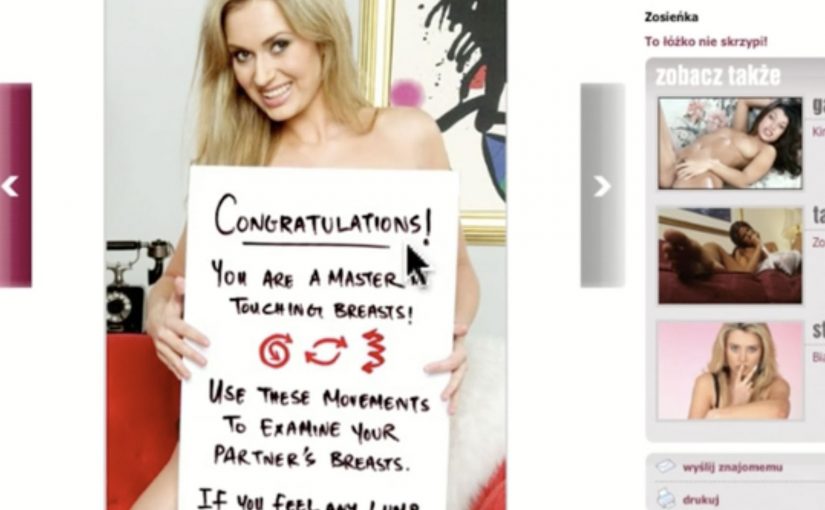
Digital can put learning in places people do not expect it. In this Polish breast cancer awareness idea, Change Integrated places an interactive experience inside the adult section of a major Polish portal, so men stumble into a lesson while they are there for something else.

The execution replaces a standard adult-gallery moment with a guided, click-and-touch interaction that demonstrates breast-check technique. It turns curiosity into a short, hands-on tutorial rather than a poster telling you to “be aware”.

The mechanic that makes it work

The mechanism is simple and deliberate. Use a high-attention environment to earn the first click, then use interactivity to pace the learning. Each interaction step nudges the user to explore the right areas and patterns, and the interface rewards correct moves with immediate feedback.

In public health communication, especially when the target audience avoids traditional education messages, playful interactivity can lower the barrier to learning.

Why this lands with the audience

It converts an awkward topic into a permissioned moment, meaning the audience feels they have chosen to enter the interaction rather than being pushed into a lesson. The adult context makes the entry feel natural rather than preachy, and the game-like format reduces the discomfort that often blocks attention. Because it is hands-on, the message is encoded as a physical routine, not just a line of copy.

Extractable takeaway: If you need people to learn a technique, do not just ask for awareness. Put the technique inside an interaction loop where attention is already high, then let feedback do the teaching.

What the campaign is really optimizing for

The real question is how to teach a sensitive behavior in a way people will actually complete. For cause-led digital work like this, teaching the behavior matters more than broadcasting awareness.

The intent is behavior change, not just recall. The case is designed to increase the odds that men will remember what “checking correctly” looks like and encourage it in real life. The case film reports the placement was live for one week and that it trained a very large number of participants in that window.

What to steal for your own cause-led work

  • Meet the audience where they already are. Relevance is sometimes a location choice, not a message choice.
  • Teach by doing. Interactivity works best when it is the lesson, not a decoration around the lesson.
  • Use feedback as the copy. Immediate response to user actions replaces long explanations.
  • Design for controversy without disrespect. If you use adult inventory, the line between attention and backlash is thin. The craft has to stay purposeful.

A few fast answers before you act

What is “Magic Boobs” in one sentence?

An interactive awareness placement on wp.pl’s adult section that teaches breast-check technique through a guided, game-like touch interaction.

Why place a health message in an adult environment?

Because it captures attention from a hard-to-reach audience and reframes the lesson as something people willingly explore rather than something they are told to do.

What is the key design principle behind the interaction?

Turn the desired learning into the interface itself. Each step of the interaction is the instruction, reinforced by feedback.

What makes this different from a standard awareness banner?

A standard banner asks for attention. This format makes the user perform the learning step by step, so the teaching happens through action rather than passive exposure.

What is the biggest risk with this approach?

Misalignment with the cause. If the execution reads as exploitative or tone-deaf, it can damage trust faster than it builds awareness.