
LEGO: Life of George

LEGO: Life of George

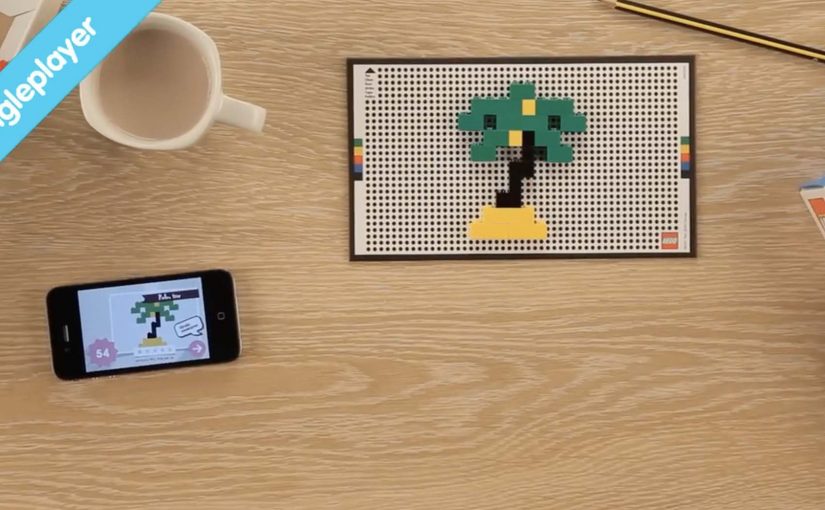
George shows you a photo from his travels and challenges you to rebuild it, fast, using real LEGO bricks. You scramble through a small set, build the scene on a dotted playmat, snap a picture, and the app scores you for speed and accuracy. The game is pretty useful as kids do not need to lug their entire LEGO collection around. While for parents the game helps in teaching counting and hand-eye coordination as you need to find blocks as quickly as possible and then put them together.

It is an exciting time for 12 year olds as they witness the first wave of electronic gaming. Digital-to-physical gameplay. Last year Disney announced a new line of toys called Disney Appmates that worked in tandem with the iPad. Now with “Life of George”, LEGO combines real bricks with an app for iOS and select Android devices.

Definition tightening: Digital-to-physical gameplay uses a screen to set the challenge and validate the outcome, while the actual play happens with real objects in the room.

The mechanic that makes it feel like a “real” game

The loop is clean. The app presents a reference image. You recreate it with 144 pieces. You photograph your build on the dotted playmat. The app reads the build using image recognition, then awards points based on how close you got and how quickly you did it.

In global toy categories where screens compete for attention, hybrid play wins when the device camera becomes a bridge back to hands-on making.

The real question is whether the app uses the screen to replace LEGO play, or to make physical LEGO play faster, clearer, and more replayable.

Why it lands for kids and parents

For kids, the fun is the time pressure and the treasure hunt. Finding the right brick and placing it correctly becomes the challenge, not navigating menus. For parents, the value is that the rules structure the chaos. Counting, pattern matching, and hand-eye coordination are baked into the race.

Extractable takeaway: The strongest digital-to-physical games treat the screen as referee, not as the playground. They keep the “doing” physical, and use the device only to prompt, verify, and reward.

What to steal from this format

  • Make the rules visual. A single reference image beats a paragraph of instructions.
  • Use the camera as validation. Let players “submit” their physical work in one tap.
  • Keep the kit portable. A small curated set can travel, unlike a whole LEGO tub.
  • Reward speed and accuracy. Those two levers create replay without adding complexity.

A few fast answers before you act

What is LEGO Life of George?

A hybrid LEGO game where the app shows a picture challenge, you rebuild it with real bricks on a playmat, and the app scores your photo using brick recognition.

What is the core mechanism?

Prompt with an image. Build physically. Photograph on a patterned play surface. Use computer vision to validate and score speed and accuracy.

Why does the dotted playmat matter?

It standardizes the photo capture so the app can recognize scale and placement more reliably, which makes scoring feel fair.

What is the main benefit versus classic LEGO play?

Structure and portability. A small set plus timed challenges creates a “game” you can play anywhere without carrying a full collection.

What is the most reusable lesson for digital-to-physical products?

Use the device to create clear prompts and instant feedback, but keep the core activity tangible and social in the real world.
Disney Appmates. The next toy revolution

Disney Appmates. The next toy revolution

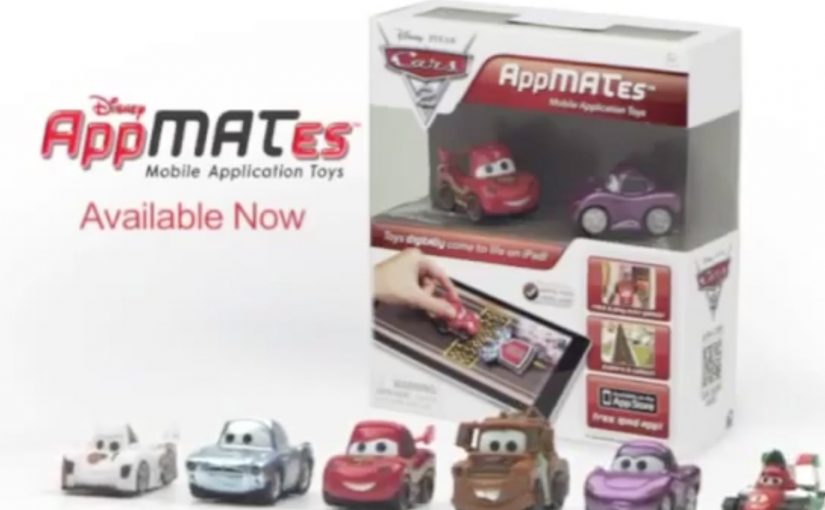
Disney recently announced a new line of toys called Disney Appmates. These new toys and the iPad work in tandem to create a very new age play experience. Featuring the likenesses of characters from Cars 2, the Appmates are miniature figures with special sensors mounted on the bottom. The sensors work with the Cars 2 Appmates app to identify each figure when put against the iPad screen.

The Apple and Disney Stores will start selling Lightning McQueen, Tow Mater, Finn McMissile, and Holley Shiftwell in October. Francesco Bernoulli and Shu Todoroki will be launched in November and will be made available exclusively through the Apple Store.

What is actually new here

The interesting shift is not “toys plus an app.” It is the iPad becoming part of the physical play space. The figure is not only a character. It becomes an input. Place it on the screen, and the app recognizes it and reacts. That is a different play loop than tapping icons, or watching a video, or playing a standalone game. Here, play loop means the repeated sequence of placing a figure, getting a reaction, and continuing the experience through the object itself. That works because turning the toy into the input collapses the gap between physical play and digital response, which makes the interaction feel immediate and intuitive.

In kids’ entertainment and licensed merchandise, the scalable opportunity is not a one-off app but a repeatable toy-to-screen system that sells both characters and ongoing play.

Why this lands beyond novelty

This is an early but strategically important shift from screen play to object-based interaction. The real question is whether the screen stays the destination, or becomes the stage for a physical product system that can expand one character at a time.

Extractable takeaway: When the physical object becomes the interface, each new character can work as both merchandise and feature unlock, which makes the product line easier to extend without rebuilding the core experience.

Why the Cars 2 character lineup matters

The character list makes the product strategy visible. Lightning McQueen, Tow Mater, Finn McMissile, and Holley Shiftwell anchor the launch. Francesco Bernoulli and Shu Todoroki extend the line later. The Apple Store exclusive adds a distribution edge for a toy that is, by definition, tied to an iPad experience. It is a simple way to turn character collecting into repeat purchases inside the same iPad-led system.

What to steal for toy-to-screen experiences

  • Make the physical object the input device. The figure becomes the controller, not an accessory.
  • Keep identification effortless. Recognition on contact avoids pairing and keeps play fast.
  • Use characters as modular content units. Each figure is a new capability that expands the same base app.
  • Distribute where the audience already buys the ecosystem. Selling via Apple and Disney channels reinforces the iPad-first play pattern.

A few fast answers before you act

What are Disney Appmates?

A line of toys designed to work with an iPad to create a combined physical and digital play experience.

How do the toys interact with the iPad?

The miniature figures have sensors mounted on the bottom, which the app uses to identify each figure when placed on the iPad screen.

Which characters are part of the initial release?

Lightning McQueen, Tow Mater, Finn McMissile, and Holley Shiftwell.

What comes next?

Francesco Bernoulli and Shu Todoroki extend the lineup and are described here as Apple Store exclusives.

What is the transferable pattern?

Use physical objects as modular inputs, so collecting characters expands the experience without changing the core platform.