
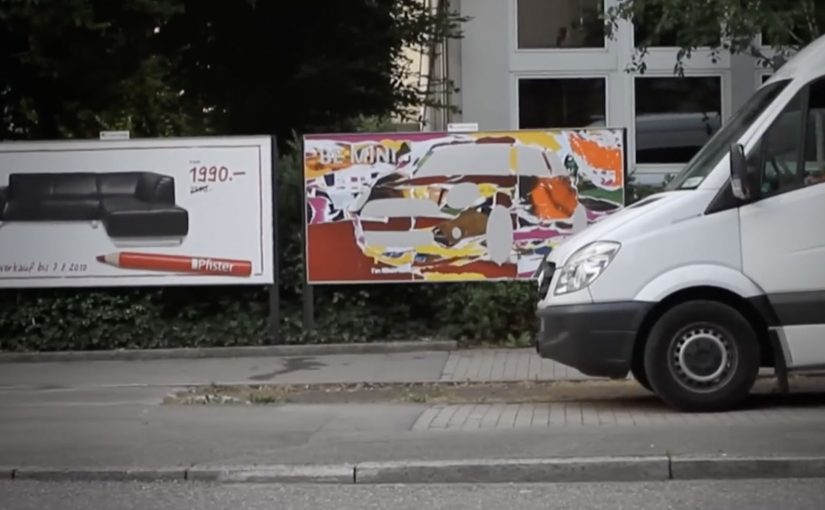
MINI: The Art of Omission Posters

MINI: The Art of Omission Posters

A “MINI” has only the things it really needs. That means getting rid of the superfluous and keeping an eye on the essentials. MINI calls this “Minimalism”.

So Draftfcb/Lowe Group in Zürich creates a poster series across Switzerland that demonstrates the MINI art of omission in an intentionally simple way. Here, “art of omission” means the idea is carried by what you remove, not what you add. Reportedly, more than 20 executions appear in the wild, framed as genuine, unique works of art rather than disposable tactical print.

Minimalism as a communication system, not a slogan

The mechanism is straightforward: take the brand’s “minimum necessary” philosophy and express it through omission, letting what is missing do as much work as what is shown.

In European automotive advertising, stripping a message down to a single visual point is often the fastest way to win attention in cluttered public spaces.

Why omission cuts through

Most posters fight for attention by adding. More copy. More product shots. More badges. Omission flips that logic. The real question is whether your idea is strong enough to survive subtraction. If simplicity is part of the product truth, omission beats piling on claims. The viewer has to resolve the idea themselves, and that small moment of mental completion makes the message stick.

Extractable takeaway: If the audience can reconstruct the meaning from what you remove, the idea is strong. If they need you to explain it, you are not done simplifying.

What the street placement adds

Putting the work across Switzerland turns “Minimalism” into a repeated encounter, not a one-off reveal. Repetition is the multiplier here, because every new variation reinforces the same discipline: remove anything that does not earn its place.

How to apply omission in your next poster

  • Use subtraction as the creative device. If you cannot remove an element without losing the point, it is probably essential.
  • Let the format carry the proof. A minimalist brand idea is more believable when the execution is minimalist too.
  • Design for one-second comprehension. The fastest posters are the ones that do not ask for reading.
  • Build a series, not a single hero. Variations teach the audience the “rule” of the campaign.

A few fast answers before you act

What is this MINI “Minimalism” poster idea in one line?

A Swiss poster series that communicates MINI’s “keep only what you need” philosophy by using omission as the main creative device.

Why does omission work better than adding more message?

Because it interrupts expectations in public space and forces a quick mental “solve”, which increases recall.

What makes this feel clutter-breaking?

The work reduces visual noise instead of competing with it, so the absence becomes the attention trigger.

When should a brand use this pattern?

When the brand truth can be expressed as one visual point, and when simplicity is a credible part of the product story.

How do you decide what to remove without losing meaning?

Strip the execution until the message breaks, then add back only the one element that restores the point. If you need multiple add-backs, the idea is not single-point yet.
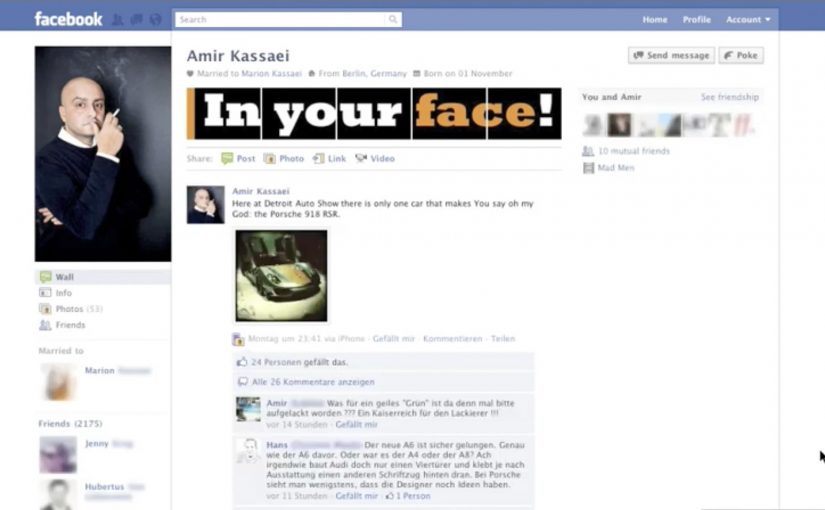
Draftfcb: In Your Face Recruitment Hack

Draftfcb: In Your Face Recruitment Hack

Draftfcb Germany is the latest ad agency to join the trend of tactically using social media for recruitment. In this case, they use Facebook’s redesigned profile layout to spread their hiring needs to a highly targeted advertising audience.

Recruitment message, delivered as a profile takeover

The mechanism is a simple interface hijack. Instead of posting a job ad and hoping people click, the recruitment message is built into the profile itself, so anyone landing on it experiences the “In Your Face” moment immediately. It is native to the platform, and it travels through the same social graph pathways as any other profile view.

In competitive hiring markets, social recruiting works best when the message shows up inside the places people already browse, rather than asking them to switch into “job search mode.”

Why it lands

This is not a deep story. It is a sharp pattern interrupt. That means the familiar Facebook profile suddenly behaves like a recruitment billboard, which makes the message easy to recognize and easy to forward to the right peers. The profile becomes the ad unit, the ad unit becomes a talking point, and the talking point becomes a referral engine as people share it with the exact peers who might fit.

Extractable takeaway: If you want a recruitment message to spread inside a community, put it where the community already looks, and make the first two seconds instantly legible without requiring a click.

The real question is whether the profile itself can carry the hiring message strongly enough to spread through the right creative network without needing a click. This is a smart recruitment move because it converts ordinary profile views into immediate message delivery and referral fuel.

Recruitment moves worth borrowing

  • Use the platform’s default surfaces. If the profile is the most-viewed asset, make that the canvas.
  • Design for “seen in passing.” The message should register at scroll speed.
  • Make it referable. The best recruitment creative gives insiders something easy to forward to insiders.
  • Keep it role-specific. If you want a “select advertising audience,” avoid generic “we’re hiring” language.
  • Respect the line. If the takeover feels spammy or deceptive, it damages employer brand more than it helps.

A few fast answers before you act

What is “In Your Face” in one sentence?

It is a Draftfcb Germany recruitment idea that turns Facebook’s profile layout into a visual hiring message that spreads through normal profile views and shares.

Why use a profile takeover instead of a standard job post?

Because it removes friction and increases certainty. The viewer immediately understands the intent without leaving the platform or clicking through.

What makes this tactic “targeted”?

It travels through an industry social graph. The people most likely to see it are connected to the agency, its staff, or the wider creative community.

What is the biggest risk with this approach?

Novelty decay. Once the trick is familiar, it stops being a conversation piece, so the idea needs either a short run or variations.

What should you measure if you do something similar?

Qualified inbound candidates, referral volume from employees and peers, share rate inside relevant networks, and sentiment about the employer brand.