
Castello: Eat the Art

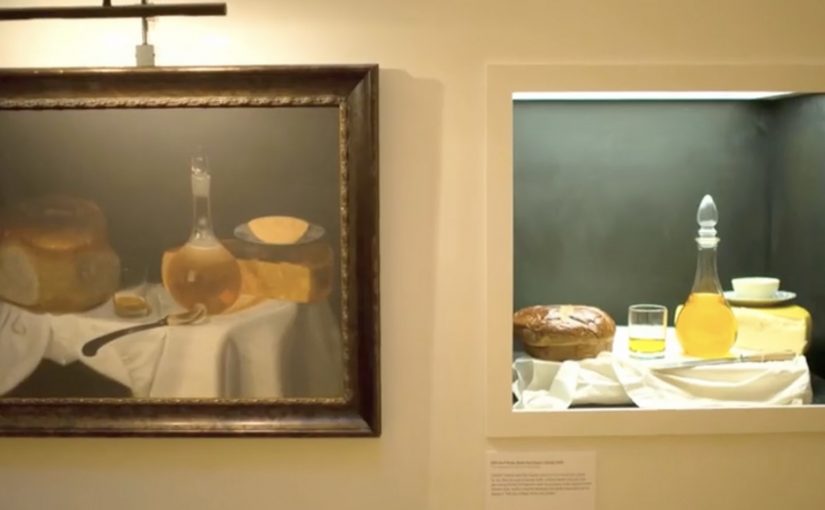
Cheese brand Castello teams up with ad agency Duval Guillaume to give New Yorkers the opportunity to taste their cheese in a very original way. A pop-up museum is set up at Grand Central Terminal, where famous still-life paintings that contain cheese are reproduced with great precision using real Castello cheeses. The difference is simple. You can smell and eat the copied works of art.

Over the course of two days, more than 500,000 visitors reportedly pass through the exhibition, and around 40,000 people actually taste the cheese.

Turning “look” into “taste”

The mechanism is sensory sampling disguised as culture. Borrow the credibility of recognizable art, rebuild it with the product itself, then let the audience complete the experience by tasting the thing they are looking at.

In urban retail environments where people are overloaded with visual messages, multisensory experiences create disproportionate stopping power because they feel like a break from advertising, not another ad unit.

Why it lands

This works because it turns product trial into a story people want to repeat. A free sample is forgettable. “I ate a painting made of cheese at Grand Central” is social currency, which means it is a simple story people want to pass on. It gives the brand an earned reason to be talked about without needing heavy branding on every surface.

Extractable takeaway: If your category wins on taste, do not hide behind claims. Build a public moment where trying the product feels like participating in something bigger than a sample.

What the business intent looks like

The real question is how to turn food sampling into a public moment people actively choose and then talk about. Castello gets scale and relevance in one move. Grand Central delivers footfall. The art framing delivers permission to pause. And the tasting converts attention into the only proof that matters for food. “It is good”. This is a stronger food-marketing move than standard sampling because it makes trial memorable.

What food brands can steal from this

  • Wrap sampling in a reason to stop. People do not queue for “try this”. They queue for a moment.
  • Use a familiar cultural code. Still-life paintings are instantly legible, even at walking speed.
  • Let the product be the medium. When the product is literally the artwork, the message cannot be missed.
  • Design for retellability. If the experience can be summarized in one sentence, it travels further.

A few fast answers before you act

What is Castello “Eat the Art”?

It is a pop-up museum experience where still-life paintings featuring cheese are recreated using real Castello cheeses, and visitors can smell and taste the “art”.

Why stage it in Grand Central Terminal?

Because high footfall increases reach, and a transit setting makes the surprise feel bigger. You find a museum moment in the middle of a commute.

Is this advertising or sampling?

It is sampling, delivered through an ambient, cultural format that makes the trial feel special rather than transactional.

What makes the concept effective for food brands?

It converts attention into taste. Food marketing becomes more persuasive when it gets people to try the product quickly, in a memorable context.

What is the simplest way to adapt the pattern?

Pick a familiar cultural frame your audience already respects, then embed product trial directly into that frame so trying the product feels like participation.
Smart Apps: Audi Start-Stop and Reborn Apps

Here are two mobile apps that recently caught my eye…

Audi Start-Stop App

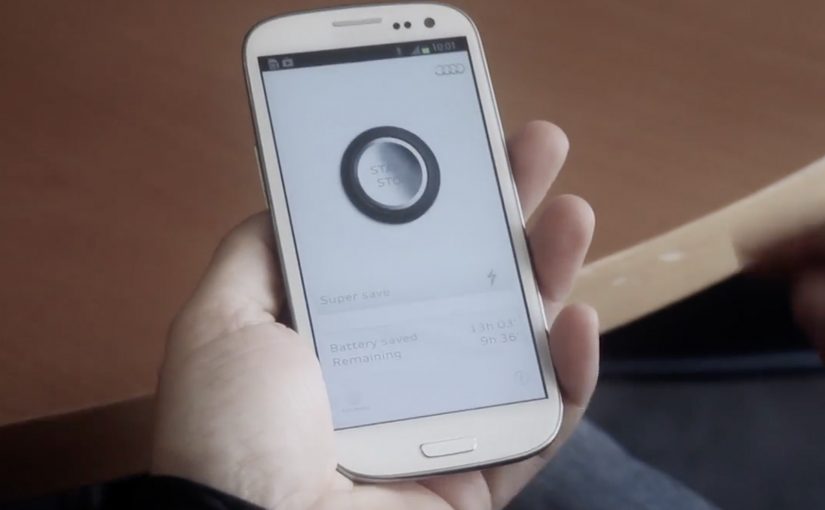
The Audi start-stop system turns off the engine when the car stops at a traffic light and turns it on again when the car starts. Using the same principle, Audi along with DDB Spain creates an Android app that detects which applications have been open longest without being used and sends an alert to the user to close them. Thus saving battery and making the phone a more efficient tool.

Reborn Apps

Many events create their own smartphone apps. But when the event is over, the apps lose their usefulness and are then hardly used. To give these apps a second life, Duval Guillaume gets various Belgium organisations to push out an update which turns their event apps into a registration medium for organ donation.

In European mobile marketing, the strongest brand apps behave like practical utilities first and brand messages second.

The real question is whether your app earns its place by doing one useful thing so well that people choose it again tomorrow.

Brand apps should be judged on repeat usefulness, not on campaign polish.

Why these app ideas work

Both concepts start with a familiar trigger and then make the next best action nearly frictionless, which is why the prompt feels helpful instead of noisy.

Extractable takeaway: Both apps translate a familiar real-world idea into a simple mobile behavior change. One nudges you to close what you are not using. The other repurposes what you already have installed.

  • They solve a real friction. Battery drain and app clutter are everyday pains. Low donor registration is a societal pain.
  • They use a clear trigger. “Unused for long” becomes the reason to act. “Event is over” becomes the reason to update.
  • They keep the action lightweight. A close action or a signup action can happen in seconds.

Two different intents, one shared pattern

The Audi app is a utility story. It borrows a car feature metaphor to make an Android housekeeping task feel purposeful. The Reborn idea is a “mobile for good” story. By “mobile for good,” I mean using everyday mobile touchpoints to drive a public-interest action, not just brand engagement. It turns leftover event attention into a meaningful registration moment, without asking people to download something new.

Patterns to borrow for brand apps

  • Start from a known behavior. People already ignore background apps. People already keep old event apps installed.
  • Make the trigger obvious. If users cannot explain why the app pinged them, they ignore it next time.
  • Design for the next best action. One tap to close. One short flow to register.
  • Let the brand sit behind the benefit. If the utility feels real, the brand halo follows naturally.

A few fast answers before you act

What is the Audi Start-Stop App?

It is an Android utility idea that identifies apps left open for a long time without being used and alerts you to close them, borrowing the metaphor of Audi’s start-stop engine system.

What problem does it try to solve?

It targets battery and resource drain caused by apps that stay running in the background after you stop actively using them.

What are Reborn Apps?

It is an idea that asks event app publishers to push an update after the event ends, transforming those unused apps into a simple organ donation registration tool.

Why is the “update instead of download” approach smart?

It removes acquisition friction. The app is already on the phone, so the campaign can focus on conversion rather than installs.

What is the common lesson across both examples?

Make the desired behavior the easiest behavior. Use a clear trigger, keep the action simple, and let usefulness do the persuasion.

Febelfin: Amazing Mind Reader Reveals His Gift

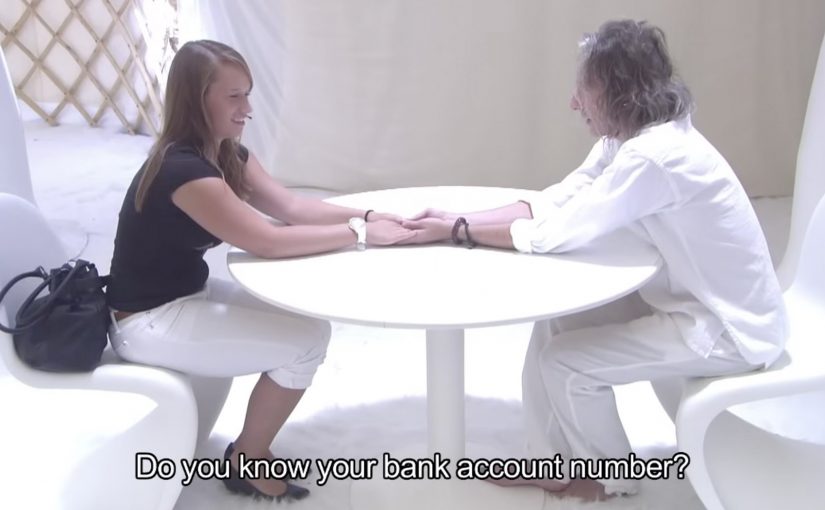
Febelfin, the Belgian federation for the financial sector, launched a campaign urging people in Belgium to be vigilant about what they make available online. To drive the message home, they recruited Dave, an extremely gifted “clairvoyant” who appears to read strangers with uncanny accuracy.

Dave showcases his talent to a random sample of people. Just when they start to believe in his gift, the magic behind the magic is revealed.

The trick that makes the “mind reading” believable

The mechanism is a classic reveal structure. First, you watch a performer deliver personal details that feel impossible to know. Then you discover the method: the information is assembled from what people have already left exposed online, and fed to the performer in real time. The stunt lands because it starts as wonder and ends as discomfort.

In consumer cybersecurity awareness campaigns, showing how easily public traces can be stitched into a personal profile is often more persuasive than abstract warnings.

Why it lands

This works because it makes the risk feel immediate and personal. The audience is not asked to imagine a faceless threat. They watch real people realize that a stranger can infer and retrieve sensitive details from what is already searchable, shareable, and often forgotten.

Extractable takeaway: If you turn an invisible risk into a visible demonstration that feels “too accurate to be safe”, you shift behavior faster. People do not remember the warning line. They remember the moment they felt exposed.

The intent behind the stunt

The campaign is not really about a performer. It is about reframing online sharing as a security decision. The real question is how to make careless public sharing feel risky enough that people actually change their settings and habits.

By revealing the method, the story pivots from “psychic” to “preventable”, and the viewer is left with a clear implication: tighten what you publish, and you reduce what can be weaponized.

What privacy-awareness teams can borrow

  • Lead with a believable scenario: start in a world viewers accept, then escalate into the lesson.
  • Make the reveal educational: do not only shock. Show the method so people understand what to change.
  • Use real reactions as proof: authentic discomfort is more convincing than any statistic.
  • Keep the message singular: one risk, one demonstration, one behavior change.
  • End with control: the viewer should feel “I can prevent this” rather than “this is inevitable”.

A few fast answers before you act

What is Febelfin’s “Amazing Mind Reader” video?

It is a hidden-camera awareness film where a “clairvoyant” appears to know intimate details about strangers, then reveals that the information was gathered from what they have available online.

What is the campaign trying to teach?

That personal data leakage is often self-inflicted through oversharing, weak privacy settings, and public profiles. The “magic” is the internet.

Why use a mind reader premise?

Because it creates instant attention and a clean reveal. The viewer first experiences surprise, then realizes the risk is real and avoidable.

Is this about online banking only?

It is framed by the financial sector, but the lesson applies broadly: anything public or easily discoverable can be combined into a usable profile by bad actors.

What is the biggest risk in copying this format?

If the reveal feels manipulative or too invasive, the audience can reject the message. The best executions shock first, then immediately teach and restore a sense of control.