
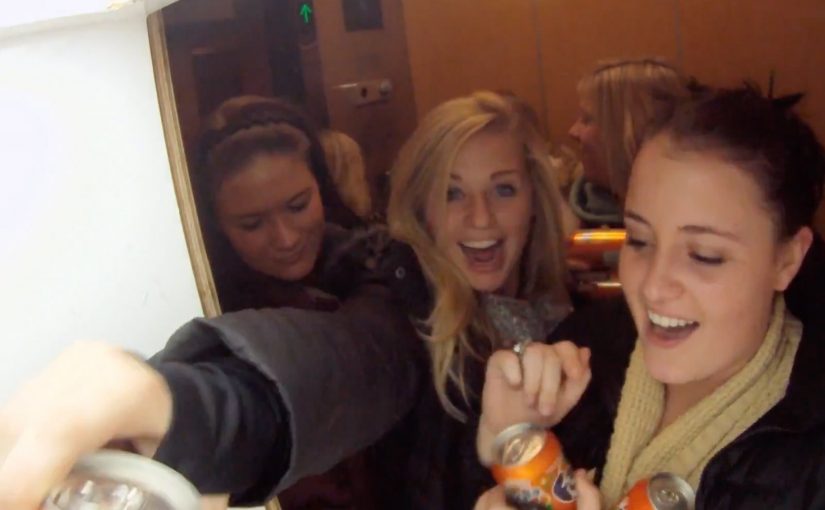
A school elevator that refuses to stay boring
Ogilvy Brazil sought to reinforce Fanta’s brand image of “joy” in the USA. So they came up with an elevator prank called “Lift & Laugh”.
An elevator in a school in Atlanta was chosen to arouse students curiosity and laughter. In the elevator they installed a device that responded to the movements and comments from the students.
The mechanic: a responsive space that reacts back
This works by turning a routine moment. waiting for an elevator ride. into an interaction loop. The environment listens, then answers in real time, so the people inside start experimenting to see what triggers the next reaction.
An ambient ad is a brand experience placed in an everyday setting, where the setting itself becomes the medium and the message is delivered through participation.
In youth and soft drink marketing, “joy” only sticks when it is felt in-the-moment, not just claimed in a tagline.
The real question is whether your experience design can make play discoverable without instructions.
Why the prank lands with students
It creates instant permission to play. The elevator is a confined stage, the reactions are immediate, and the group dynamic amplifies everything. If one person laughs, everyone joins, and the experience escalates without needing instruction.
Extractable takeaway: When the audience’s own movement or words trigger an immediate response, the fun feels earned and becomes more likely to be retold.
The business intent: make joy a repeatable brand behavior
This is not just a one-off gag. It is a proof point for a positioning idea. Fanta turns dull places into fun places. If the experience is good enough, the brand gets earned attention plus social retell value without needing to push product features.
In the end many students did not want to get off the elevator and asked for a repeat trip.
What to steal if you want an experience people replay
- Make the interaction discoverable. People should learn the rules by trying, not by reading.
- Reward experimentation fast. Short feedback loops create momentum.
- Design for groups, not individuals. Laughter spreads socially. Build for that amplification.
- Anchor the behavior to your brand. The “why” should map cleanly to what you stand for.
A few fast answers before you act
What is Fanta’s Lift & Laugh?
It is an elevator prank experience where the elevator reacts to students’ movements and comments, turning a normal ride into a playful, responsive brand moment for Fanta.
Where did the activation take place?
It was staged in a school in Atlanta, using a real elevator as the experience space.
How does the elevator prank create engagement?
It uses immediate cause and effect. People try something, the elevator responds, and the group starts experimenting together to trigger more reactions.
Why does this work especially well with students?
The elevator becomes a contained stage and laughter spreads socially. One reaction gives others permission to play, which escalates the experience quickly.
What makes this “ambient advertising” rather than a standard ad?
The everyday environment becomes the medium. The message is delivered through participation in a real situation, not through a screen or a slogan.
What should brands learn from this format?
If you want “fun” as a brand attribute, build it into a situation people already live. Then make participation the delivery mechanism, not a message about participation.