
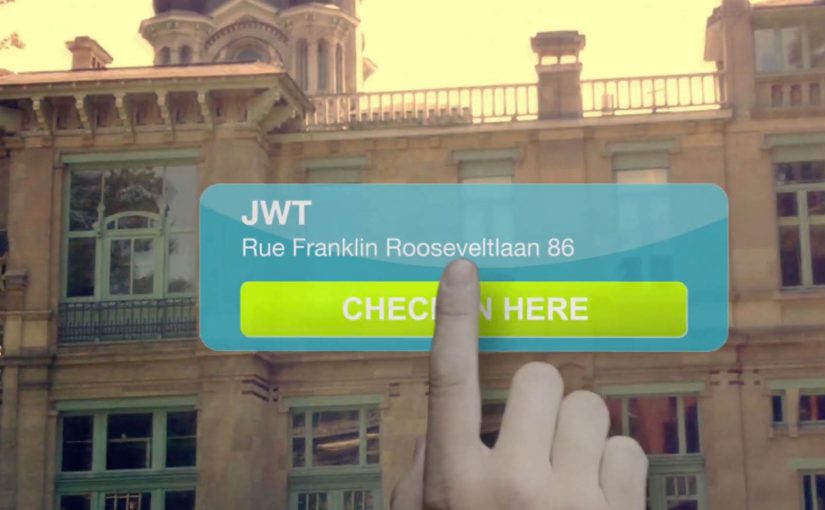
Euro RSCG: Foursquare Mayor Recruitment

Guerrilla recruitment via social channels is gaining popularity among agencies. In this example, Euro RSCG Brussels used Foursquare to seek out digital talent.

The team at Euro RSCG drove around Brussels every day and checked in at leading agencies. After they became the “Mayor” of targeted agencies, they released their recruitment messages.

Foursquare as a recruitment billboard

The mechanism is simple and slightly mischievous. Foursquare rewards repeated check-ins at a venue with the “Mayor” status. Euro RSCG uses that status as the placement, then drops hiring messages where competitors’ people are most likely to notice them. It works because the platform-granted title creates visible relevance at the exact venue where rival talent is already paying attention.

In competitive digital-talent markets, employer branding works best when it shows up inside the daily tools and rituals your target audience already uses.

Why it lands

It is instantly understandable, and it leverages a public platform rule rather than buying attention. The move also signals confidence. “We are willing to compete for talent in plain sight.” Used with restraint, this is a smart recruiting idea because it turns ordinary check-in behaviour into targeted employer visibility. The real question is whether the platform rule makes the message feel natively relevant or just makes the stunt feel intrusive. At the same time, it walks a fine line. If it feels like harassment rather than humour, the tactic can backfire.

Extractable takeaway: If you use a social platform as a recruiting channel, make the entry mechanic native to the platform and keep the message playful, specific, and respectful, or it will read as desperation.

Other examples of agencies using social media to attract talent are:

Recruitment moves worth borrowing

  • Target by context, not by demographics. “Where do the people I want already spend attention?” is often the better question.
  • Use platform rules as media. When the channel itself creates the placement, participation feels less like advertising.
  • Keep the call to action tight. One clear role or value proposition beats generic “we’re hiring.”
  • Anticipate the ethics. If you would not want a competitor doing it to you, adjust tone and frequency.
  • Design for screenshots. If the message is worth sharing, the audience will distribute it for you.

A few fast answers before you act

What is the Euro RSCG Foursquare idea in one sentence?

It is a recruitment tactic where Euro RSCG repeatedly checks in at competitor agency venues on Foursquare, becomes “Mayor,” then posts hiring messages to reach digital talent.

Why does “Mayor” status matter?

Because it is a visible, platform-granted position at a location. That makes the recruitment message feel placed “inside” the venue’s social layer rather than pushed from outside.

What makes this more effective than a standard job post?

It targets people by environment and habit. The message shows up where relevant talent is likely to be, not where job ads usually live.

What is the main risk?

Reputation. If the move feels aggressive, disrespectful, or creepy, it can damage employer brand faster than it attracts candidates.

How do you measure success?

Qualified inbound applications attributed to the tactic, social sharing and sentiment, and whether awareness among the intended talent pool increases without negative backlash.
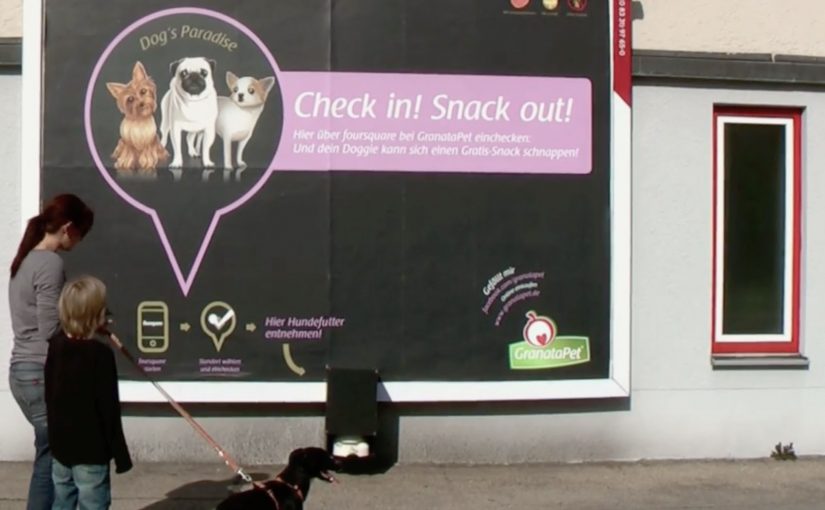
GranataPet: Check In, Snack Out

GranataPet is one of the innovative leaders of high premium pet food in Germany. Their agency, agenta, was given the challenge to create awareness for GranataPet dog food on a slim budget.

The idea targets dog owners at the exact moment they are most open to noticing pet-related messages. While walking their best friend. Socially activated installations are placed on key walking routes. Dogs catch the scent of treats, stop, and pull their owners toward a billboard that simply says “Check in. Snack out”.

A sampling demo that your dog starts for you

This is a classic trial mechanic with a smart trigger. Instead of asking humans to approach a promoter, the dog does the targeting. The owner follows the leash. Then the message becomes self-evident. Check in with Foursquare to activate a free bowl of dog food.

How the mechanism works

The billboard combines three parts. A location check-in prompt, a connected dispenser and bowl, and a social echo via the check-in behavior, meaning each check-in can create additional visibility beyond the street placement itself. When a user checks in at the billboard’s location, the system releases a portion of food into the bowl. The owner watches the dog’s reaction in real time, which functions as the product demo.

In pet food sampling, the highest-converting trial moments are the ones where the animal can deliver an immediate preference signal in front of the owner.

The real question is whether the brand can turn a routine walk into a low-friction proof moment that the owner trusts more than advertising copy. The stronger move here is to let the dog, not the promoter, make the case.

Why it lands

It is easy to trigger, well-timed, and emotionally loaded. The owner does not have to imagine whether the dog will like the food. They see it. That works because a visible reaction from the dog removes guesswork faster than any product claim can. The social layer then turns one local poster into distributed impressions, because check-ins can surface to friends depending on settings. The most important part is that the “proof” is not the copy on the billboard. It is the dog’s behavior.

Extractable takeaway: If your product decision depends on a third party’s preference, build a live demo where that third party delivers the verdict on the spot, and use a simple location trigger to scale it.

What the brand is really buying

This is awareness, trial, and measurable demand in one loop. The execution creates talk value, it generates trackable interactions per location, and it pushes owners toward retail purchase after a positive in-the-moment test. Trade coverage at the time also described increased local demand following the activation.

What pet food marketers can steal from this

  • Target the moment, not the demographic. Dog-walking routes beat broad reach when the category is specific.
  • Let behavior be the headline. A happy dog is more persuasive than any claim line.
  • Make the trigger simple. One action. One reward. No explanation tax.
  • Use the environment as your interface. The billboard is the call-to-action and the proof point.
  • Instrument the activation. Location check-ins can double as measurement, not just distribution.

A few fast answers before you act

What is “Check in, snack out” in one sentence?

An interactive billboard that dispenses free dog food when a nearby owner checks in using a location service.

Why does this outperform a normal sampling stand?

The dog initiates the interaction, and the product proves itself immediately through the dog’s reaction, which reduces hesitation for the owner.

What makes the social layer valuable here?

Check-ins can create secondary reach beyond the physical location, and they can be used to track which placements generate the most interactions.

What is the biggest operational risk?

Reliability. If the dispenser jams or the trigger fails, the experience collapses and the brand takes the blame.

How would you adapt this without Foursquare?

Keep the same structure. A location trigger plus instant physical reward. Use whatever mobile mechanism your audience already uses for quick opt-in and confirmation.