TAC: How to Plan a Funeral

In September 2012, the Transport Accident Commission (TAC) in Australia runs a Pinterest campaign with a line that lands like a punch: How to plan a funeral.

The idea is aimed at girlfriends and mothers of young men. The case frames the problem bluntly. Young men are far more likely to die in a crash than young women, and speeding is positioned as a primary contributor to those fatalities.

How Pinterest becomes a road-safety channel

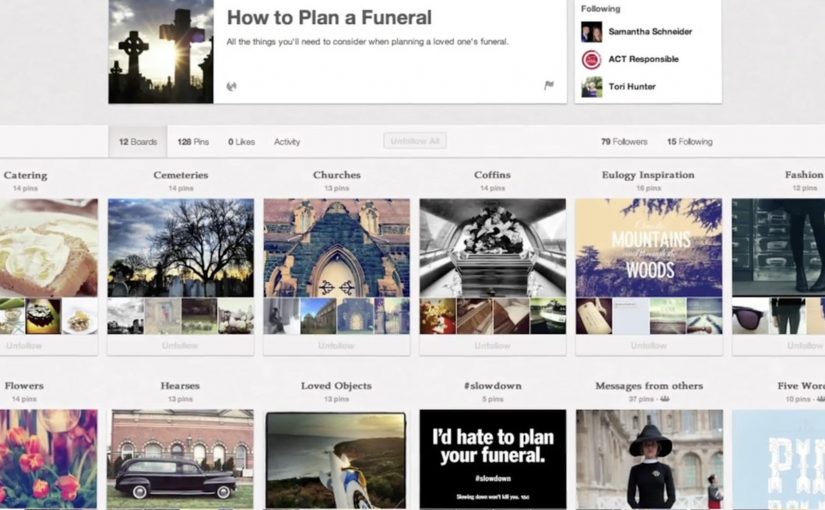
The mechanism uses Pinterest boards that look like practical inspiration for funerals. Images and pins map to real funeral-planning themes, then steer toward the campaign’s message: “I’d hate to plan your funeral. Slowing down won’t kill you.” That works because the planning format lowers resistance before the safety message lands.

In road-safety behavior change, the most effective interventions often come from trusted relationships rather than institutional authority.

Why it lands

It shifts the emotional weight. Instead of telling a driver what TAC wants, it lets a partner or parent express what they fear. Pinterest is a deliberate platform choice because the boards feel like a real place someone would browse for “ideas”, which makes the moment of recognition more personal and more unsettling.

Extractable takeaway: If you need behavior change, route the message through the person with social permission to say it, meaning someone whose concern will be heard as care rather than control. Then build the media experience so it feels like everyday browsing, not an “ad break”.

What the campaign is really optimizing for

This is not trying to win an argument about enforcement. It is trying to trigger a conversation at home. The work uses a shareable, repeatable line that people can copy in their own words, because a close person saying it carries more force than a government body broadcasting it.

The real question is how to make the warning come from someone the driver will actually hear before the risky behavior happens.

The stronger strategic move here is to design for the relationship, not for the institution.

What to steal for your own safety or health campaign

  • Design for the messenger. Decide who the audience will actually listen to, then craft the creative for that relationship.
  • Choose a platform that matches the behavior. If the message is “planning” and “ideas”, a board format can feel native.
  • Use one line people can borrow. If supporters cannot repeat it verbatim or paraphrase it easily, it will not travel.
  • Make the consequence concrete. “Funeral planning” is an action. It forces imagination to do the work.

A few fast answers before you act

What is the core idea of How to Plan a Funeral?

A TAC Pinterest presence that looks like funeral-planning inspiration, designed to help girlfriends and mothers deliver a more impactful “slow down” message to young men.

Why use Pinterest instead of a typical road-safety ad format?

Because the browsing context feels personal and practical. That makes the emotional message land as something a loved one would stumble into and share, not something an authority announces.

What is the key insight behind the campaign line?

A close relationship can say what an institution cannot. “I’d hate to plan your funeral” is a social message first, and a safety message second.

Who is the message really meant to activate?

Girlfriends and mothers of young men. The campaign is built for the people whose concern is more likely to be heard as care than control.

What is the biggest risk in copying this approach?

If the platform context feels forced or exploitative, people disengage. The creative must feel native to the behavior on that platform, and the tone must stay respectful.

LEGO France: Creativity Forgives Everything

A child gets caught mid-creation. The scene looks like trouble at first glance, then the line flips the judgement: “We forgive everything to their creativity”. LEGO has recently launched this campaign in France around that exact tension between mess and imagination.

Click here to watch the video on AdsSpot website.

Turning “naughty” into proof of imagination

The core mechanism is a simple reframe. Instead of defending play as “educational”, the work leans into the moments parents normally correct. The child’s act is still a transgression, but it is also a creative act. The signature gives parents permission to smile first, and judge later.

In brand advertising for physical toys competing with screens, the fastest way to win attention is to make imagination look like something happening right now in the room.

Why the line sticks

“Creativity forgives everything” works because it treats creativity as a social contract, not a product feature. Here, “social contract” means an unspoken trade-off: parents tolerate the mess because it signals imagination at work. Parents recognise the micro-drama instantly. You want boundaries, but you also want your child to be bold, curious, and inventive. The campaign positions LEGO as the tool that triggers that boldness, even when it comes with collateral damage.

Extractable takeaway: If your category is crowded with functional claims, choose a human tension your audience already lives with. Then write a line that resolves the tension emotionally, and let the product become the enabler of that resolution.

What LEGO is protecting

This is brand defence disguised as humour. The real question is how LEGO stays culturally distinctive when screens can deliver endless entertainment without leaving any real-world evidence. It keeps LEGO out of a specs battle and away from “learning toy” cliches. By celebrating the messy edge of creativity, the brand claims a territory that is hard for digital entertainment to steal. Real-world play that leaves evidence.

What brands can borrow from LEGO here

  • Use a permission-giving signature. A great brand line does not just describe. It authorises a feeling or behaviour.
  • Stage recognisable “caught in the act” moments. When the scenario is instantly familiar, the audience supplies the backstory for you.
  • Make the brand the ally. The work does not lecture parents. It makes them complicit, which is more persuasive.
  • Let the theme travel across formats. This idea naturally fits film, print, and outdoor because the tension can be captured in a single moment.

A few fast answers before you act

What is LEGO’s “Creativity forgives everything” campaign?

It is a LEGO France brand campaign built around the idea that adults can forgive children’s small “misbehaviours” when they are clearly driven by creativity and imaginative play.

What is the core idea in one sentence?

Reframe mischief as imagination, then position the product as the trigger for that imagination.

Why does this positioning work for LEGO specifically?

Because LEGO is a physical system for building anything. The campaign connects that open-endedness to real, observable behaviour rather than abstract “learning” benefits.

How do you adapt this approach to another category?

Identify a daily tension your audience recognises, write a line that gives emotional permission, then demonstrate the product as the enabling tool inside that tension.

What should you avoid when copying the pattern?

Avoid moralising. The power comes from empathy and recognition, not from telling the audience how they should behave.

GGRP: Cardboard Record Player Mailer

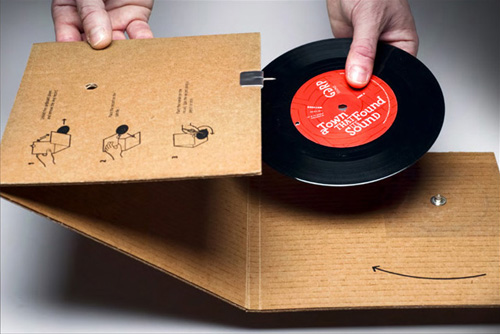
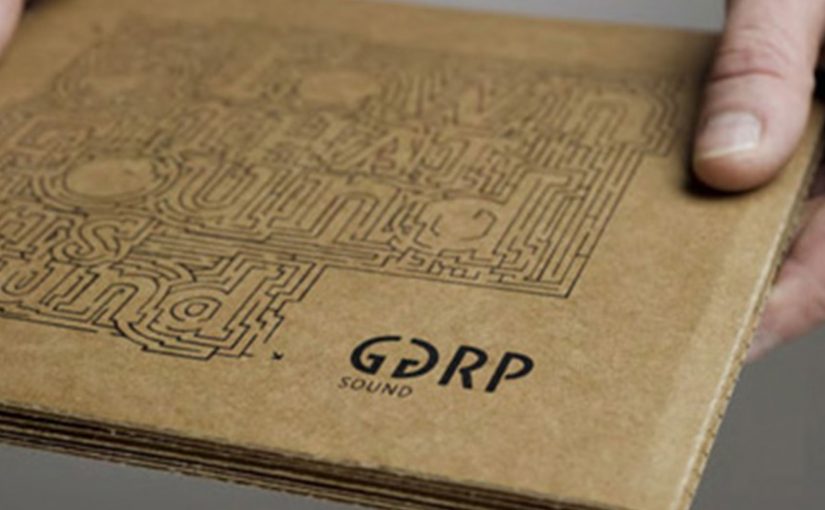
Grey Worldwide in Vancouver created a record player from a piece of corrugated cardboard that folds into an envelope.

GGRP Mailer Open

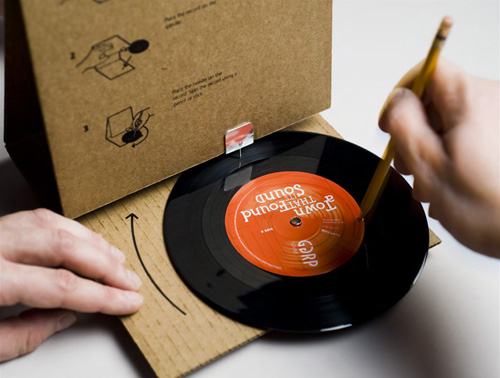
Once assembled, a record can be spun on the player with a pencil. The vibrations go through the needle and are amplified in the cardboard material.

GGRP Mailer CD

The players were sent out to creative directors across North America as a creative demonstration of GGRP’s sound engineering capabilities.

A demo you can literally feel

This is direct mail that behaves like the product promise. Not a brochure about audio craft, but a physical object that turns vibration into sound in your hands. It creates a moment of discovery before you even think about the brand. Then the brand gets credit for making it work.

How the mechanism does the selling

The sleeve folds into a small phonograph. A pencil becomes the spindle. A simple needle converts the grooves into vibration, and the cardboard body acts as the amplifier. No power, no app, no explanation-heavy setup, just a working proof-of-concept hidden inside a mailer.

Here, proof-of-concept means the mailer itself demonstrates the capability before any sales conversation starts. In B2B creative services, the strongest new-business work is often a tangible demo that turns capability into an experience. Because the recipient has to assemble it and hear it working, the mechanism turns a technical claim into remembered evidence. The real question is whether your outreach proves the craft fast enough to earn a second look.

Why it lands with creative directors

It respects the audience. Creative directors do not need to be told what “sound engineering capabilities” means. They need to feel that the shop thinks differently and executes cleanly. The format also earns time. You do not skim it. You assemble it. That extra time is the real attention premium.

Extractable takeaway: When you sell an invisible craft, build a self-contained artifact that proves it in one minute. The artifact becomes your credibility layer, and your follow-up becomes welcome instead of intrusive.

What this mailer teaches about demo design

  • Make the medium the proof. If it does not demonstrate the promise, it is just packaging.
  • Design for a single “aha”. One clear moment beats multiple clever details.
  • Keep the setup friction low. If it takes instructions to start, the audience drops.
  • Target a specific recipient role. This is built for decision-makers who value craft signals.

A few fast answers before you act

What makes this mailer different from a typical promo piece?

It is not a message about capability. It is a working demonstration that the recipient assembles and experiences immediately.

Why is cardboard the right material choice here?

It is cheap to distribute, easy to fold into a mail format, and it can physically amplify vibration, which makes the “sound craft” claim believable.

What is the main business objective of an object like this?

To create high-quality recall and conversation with a small, high-value target list, rather than broad reach.

What is the biggest execution risk?

If the object does not work reliably, the demo backfires. The entire idea depends on the “it actually plays” moment.

How can other B2B brands apply the same pattern?

Translate your capability into a simple physical demo that proves the benefit without needing explanation, then send it only to the people who can buy.