
BredaPhoto: Infiltrating Holiday Prints

BredaPhoto is a photo festival in the Netherlands. In 2010 it ran between September 16 until October 24. During this period, Breda lives and breathes photography. Photographers from all over the world come to show their vision on a present world that feels upside down.

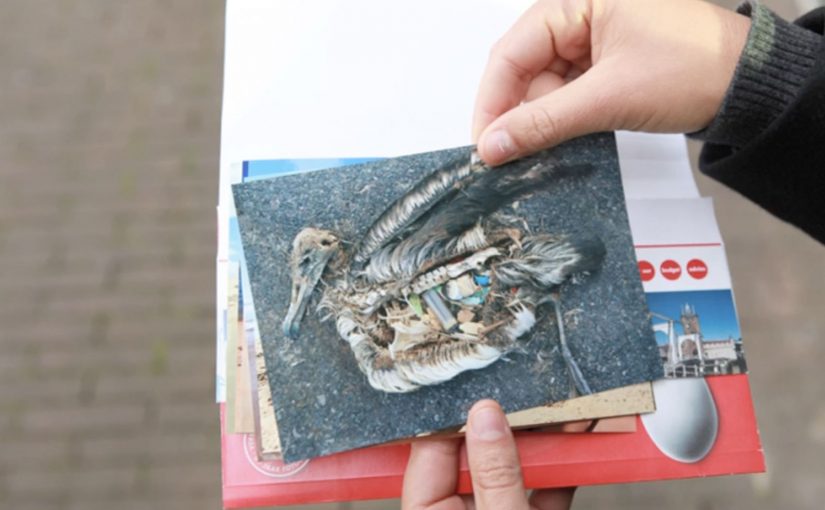
In order to encourage more people from the surrounding areas to visit the festival in 2010, the team used the end of the Dutch holiday season to step directly into the comfort zone of their target group. They tied up with 12 regional photographic shops who, while printing holiday photos, also provided a photo from the BredaPhoto festival.

The contrast between the holiday photos and the festival images was so stark that it is reported to have drawn 55,000 visitors, described as a record for the festival.

Holiday prints as a distribution channel

The insight is almost embarrassingly practical. After holidays, people already walk into photo shops with emotion in hand and a willingness to look at images. BredaPhoto does not try to interrupt that behavior. It inserts itself into it.

The mechanic: a surprise image in the envelope

The “infiltration” is literal. Every time someone picks up their printed holiday photos, they also receive one festival photo. No extra decision. No extra trip. The festival’s work lands in the same stack as the family memories it will be compared against.

In European cultural festivals, partnerships that piggyback on an existing routine like printing holiday photos can outperform broad awareness media because they reach people at a moment of high receptivity.

Why the contrast does the persuasion

Holiday photos are comfort. Festival photography is often confrontation, curiosity, or a sharper point of view. Put them side by side and the festival image does not need a manifesto. The viewer feels the difference instantly, and that feeling creates the urge to see more.

Extractable takeaway: If your product is “new perspective”, deliver one sample at the exact moment people are already consuming the old perspective, then let comparison do the selling.

What this is really optimizing

This is not just reach. It is qualified reach. Anyone printing holiday photos has already self-identified as someone who cares about images, and the distribution happens locally, which reduces the friction between “interesting” and “I could actually go”.

The real question is how to put one credible sample of the festival in front of the right local audience before asking them to commit a visit.

This is a smarter local-growth play than buying broad awareness and hoping interest shows up later.

What event marketers should steal from this

  • Hijack a routine with built-in attention. Choose a behavior where people already expect to look carefully.
  • Make sampling unavoidable but tasteful. Put the sample in the default flow, not behind an opt-in form.
  • Use contrast as your copy. If the product difference is visual, show it next to the audience’s baseline.
  • Localize distribution. When the event is physical, use channels that keep the distance to action short.

A few fast answers before you act

What did BredaPhoto do to attract visitors in 2010?

They partnered with regional photo shops and slipped a festival photo into customers’ holiday print orders, so people encountered the festival work while collecting their own photos.

Why does this work better than a normal poster campaign?

Because it reaches people when they are already engaged with images, and it delivers a concrete sample of the festival’s point of view instead of a promise.

What is the key design principle behind the tactic?

Make the first experience of the product frictionless. One unexpected image in the envelope is enough to trigger curiosity and intent.

Why were photo shops the right channel for this?

Because the audience was already in a visual mindset and already handling printed images, which made the festival sample feel relevant instead of intrusive.

What kind of events should copy this approach?

Events that sell perspective, taste, or discovery. Especially when the audience already has a routine where they consume similar media, like prints, tickets, playlists, or screenings.

Carrefour: Escaping shopping carts

A shopping cart appears where it should not be. It is spotted racing through neighbourhood streets, then turning up abandoned in unlikely corners of Rome. People start talking because the “protagonist” is absurdly familiar. The cart is the symbol of value, and now it is behaving like it has a mind of its own.

Saatchi & Saatchi Milan built this mystery for Carrefour Italia to support the rollout of 106 new Carrefour Markets in Lazio, grounded in the brand’s “Positive every day” positioning. The creative idea is simple. Value for money is an appeal people struggle to resist. So the carts become the carriers of that temptation.

The activation is designed as a two-phase integrated campaign. Here, “integrated” means the same narrative runs in parallel across multiple channels, so each touchpoint adds another “sighting” or a step of explanation. First, it seeds sightings and curiosity across multiple channels at the same time. Then it resolves the story by revealing where all those carts are heading.

A teaser built like a local urban legend

The first phase plays like breaking news. A live-feeling street presence. Transit placements. News-style content. Online video. Each touchpoint adds another “sighting” so the mystery grows without needing complex explanation.

The choice of protagonist matters. A shopping cart is instantly readable, and it already carries the promise of savings. When you animate that object, you turn a pricing message into a narrative people retell.

Solving the mystery without breaking the spell

The second phase keeps the same media system but shifts the objective. It moves from “have you seen it” to “here is where it is going.” The reveal connects the runaway-cart story to the new Carrefour Market openings, so the attention converts into a clear destination and a clear reason.

In large-scale retail launches, integrated campaigns work best when one story can travel from street to screen to store without changing its meaning.

Why this lands for a retailer

This is value communication that does not feel like a leaflet. It uses curiosity, pattern recognition, and a small dose of humour to make people look twice. The pricing promise stays present, but it arrives through a chase, not a claim. The real question is whether your rollout story makes value feel like a discovery instead of a discount. For multi-location openings, a repeatable curiosity loop is a stronger starting point than a price-led announcement.

Extractable takeaway: If value is your promise, stage it as a simple, repeatable story people can retell, then make the store opening the payoff.

What to steal for your next multi-location rollout

  • Choose a protagonist that already means something. Everyday objects can carry brand meaning faster than mascots.
  • Design a two-step rhythm. Tease first, then resolve. Mystery creates attention. Resolution creates direction.
  • Let every channel play a specific role. Street for credibility. Transit for frequency. Online for amplification. Press for legitimacy.
  • Make the reveal point somewhere real. The story must end at the store door, not inside the ad unit.

A few fast answers before you act

What is “The Mystery of the Escaping Shopping Carts”?

It is an integrated Carrefour Italia campaign where shopping carts are staged as “escaping” across Rome to build curiosity, then the story resolves by linking the carts to new Carrefour Market openings in Lazio.

Why use shopping carts as the protagonists?

Shopping carts are universal retail symbols and naturally connected to value for money. Turning them into characters makes the savings message feel like a story rather than a promotion.

What does “integrated” mean in this campaign?

It means multiple media channels run in parallel and reinforce the same narrative. Each channel adds sightings, social proof, or explanation, so the mystery grows consistently across the city.

Why does a teaser-and-reveal structure work for retail openings?

Because it builds attention before asking for action. The teaser creates talk and curiosity. The reveal converts that attention into a clear destination, which fits the goal of driving visits to new locations.

What is the main risk with mystery-led retail campaigns?

If the reveal is weak or delayed, people feel tricked. The payoff has to be satisfying, and it must clearly connect the story to a real store or offer.

Supreme Security: Job Offer in Luggage Scanner

Supreme Security is an international company offering security services ranging from personal security to dog squad assignments, as well as access and baggage checks. To deliver that, it continually needs specially trained personnel, but only a small pool of specialists fits this narrow job profile in Switzerland, and many of them work in border patrol or airport police.

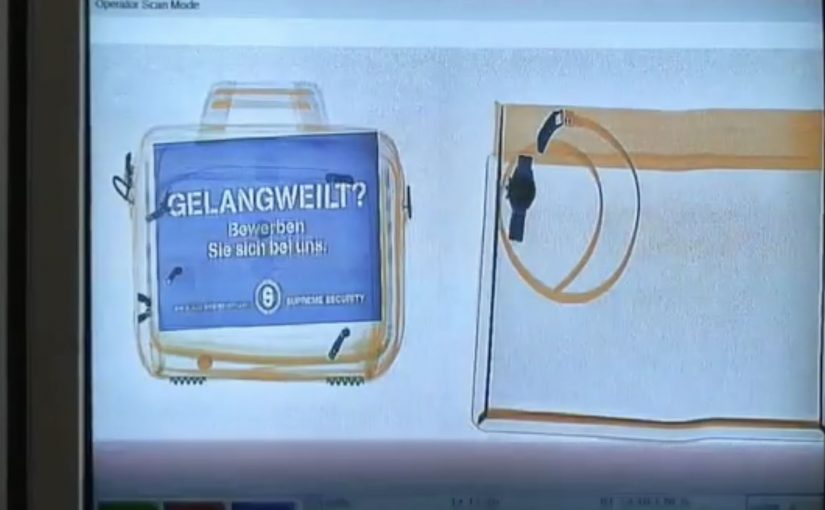
So the company equips its own employees with machined metal bars and sends them on business trips with those bars packed in their hand luggage. When the bags go through security, the X-ray image reveals a clear recruitment message to the people operating the scanner.

The X-ray reveal: a job ad delivered inside the checkpoint

The execution is almost stubbornly physical. No QR codes. No landing pages in the moment. Just a piece of metal engineered so its silhouette becomes readable text on a baggage scanner screen.

That design choice matters because it matches the audience’s reality. These candidates spend their day looking at X-ray images. The campaign puts the job offer exactly where their attention already lives.

In specialist recruitment markets, placing your job offer inside the candidate’s daily workflow can outperform broad awareness media.

Why it lands: it respects expertise and filters for it

This is not a mass recruitment message pretending to be clever. It is a targeted signal aimed at a professional who will immediately understand what they are seeing, and why it was made for them. The real question is whether your recruitment message shows up inside the exact workflow that signals real fit. This is smart recruitment because the medium itself does part of the qualification work.

Extractable takeaway: The fastest way to reach scarce talent is to design a “high-signal artifact”, meaning a message carrier whose form already screens for relevance, so only the right audience will notice and appreciate it. If the medium itself acts like a competency filter, you get fewer leads, but better ones.

The low-budget constraint is part of the story too. The campaign is described as being produced for under 5,000 Swiss francs and as recruiting eight highly qualified employees in two months. That makes the idea feel replicable, not reserved for brands with giant hiring spends.

What to steal for your next hard-to-hire role

  • Recruit inside the work context: deliver the message where the target audience already concentrates.
  • Make the medium do the targeting: if only the right people “get it”, you reduce noise.
  • Keep the message legible in one glance: no one at work wants to decode your campaign.
  • Design for retellability: the story should travel as “did you see this” even without a link.
  • Use constraints as credibility: low-production realism can read as confidence, not lack of polish.

A few fast answers before you act

What is the core idea here?

A job offer is embedded into a metal object so it becomes readable when scanned by an airport X-ray system, reaching security professionals while they work.

Why is this better than a normal recruitment ad for this audience?

Because it targets scarce specialists in their professional environment and feels like an insider message rather than generic hiring noise.

What makes it “experience-based”?

The candidate does not just see a message. They experience the reveal in a real workflow moment, which makes it memorable and easy to retell.

What’s the biggest risk if you copy this approach?

Operational and reputational risk. If the artifact disrupts operations, causes safety concerns, or feels deceptive, the idea backfires. The execution must be safe, respectful, and clearly non-threatening.

How do you measure success beyond hires?

Track qualified inbound leads, interview-to-offer ratio, time-to-hire for the target profile, and earned mentions within the professional community you are trying to reach.