
Garage Beer: We Want Your Pee Stunt Becomes A System

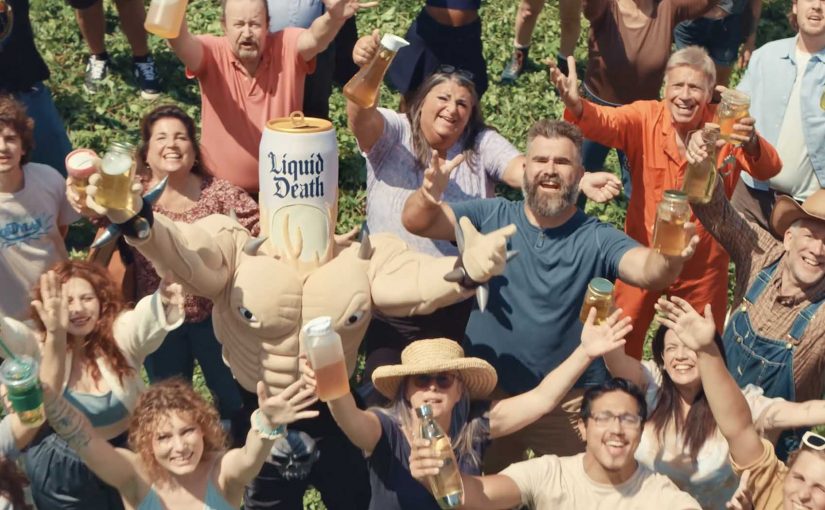
Garage Beer co-owner Jason Kelce looks into the camera, holds up a jar of yellow liquid and sings the campaign’s line: “We want your pee.”

What follows is not just a crude song. Garage Beer Classic Light Beer and Liquid Death Sparkling Energy are part of the joke, a limited-edition resealable “Data Center Coolant Collector” makes it physical, and the campaign page gives people somewhere to go next.

The “We Want Your Pee” campaign is best read as a campaign system. A campaign system is a set of connected touchpoints that gives one creative idea a different job at every stage, from attention to action, consented data and commercial follow-through. The useful lesson is not to copy the provocation, but to build the route from attention to measurable action before launch.

The mechanism: Give every partner a job

The campaign starts with a brutally simple chain: drink Garage Beer or Liquid Death Sparkling Energy, create urine, collect it, and supposedly send it to cool an AI data centre. Kelce brings more than a recognisable face: the retired Philadelphia Eagles centre connects the campaign to the NFL, while his brother Travis’s marriage to Taylor Swift places Jason inside a much wider pop-culture context. But the products themselves drive the plot, making the collaboration causal rather than cosmetic.

The wider tension is real: Berkeley Lab estimated that US data centres directly consumed 66 billion litres of water in 2023, although consumption varies materially by cooling system, grid and location.

Because both products are positioned as inputs to the same ridiculous solution, neither brand feels pasted onto the idea. The issue gives the joke relevance, the product logic gives the partnership coherence, and the jingle makes the mechanism easy to retell.

The journey: Give attention somewhere to go

A standalone video could create reach but would leave no owned next step. Here, the collector carries the idea onto the campaign page and into a product interaction. The real question is whether the creative idea survives the handoff from video to owned experience.

The campaign page presents the collector as a limited-edition product. When it is unavailable, the page offers a “Notify Me” registration and an option to join the email list. That turns the punchline into a structured intent signal without forcing every visitor straight into a beverage purchase.

That handoff matters because social attention is rented and short-lived. An owned destination lets the team observe what people do next: watch, browse, register interest, opt into marketing or buy. It creates the possibility to measure them.

The control: Make the joke safe to execute

The same clarity that makes the campaign memorable creates risk. If someone interprets “send your pee” literally, the joke can spill into customer care, fulfillment, reputation and platform moderation.

The official product page explicitly tells people not to actually send their urine. That disclaimer is essential because the clearer the public action, the more precisely the campaign must define where the joke stops.

That handoff matters because the campaign no longer ends with a view. The owned destination creates concrete next actions: browse, register interest, opt into marketing or buy.

The lesson: Make the products carry the idea

The useful part of this campaign is that the drinks, collector and campaign page are not afterthoughts. The drinks create the fictional coolant, the collector makes it tangible, and the page turns the punchline into a product interaction.

Use a simple test before approving the work: if the products can be removed without changing the idea, the brands are sponsoring the entertainment rather than driving it.


A few fast answers before you act

What is the “We Want Your Pee” campaign?

“We Want Your Pee” is an August 2026 campaign from Liquid Death and Garage Beer featuring Jason Kelce. It uses a song and a fake proposal to cool AI data centres with urine to draw attention to water consumption and promote both beverage products.

Why do Garage Beer and Liquid Death fit together?

Garage Beer and Liquid Death fit because both products have a functional role inside the joke: consumers drink them, produce the supposed coolant and use the co-branded collector. The partnership is part of the mechanism, not just a shared logo treatment.

What makes this more than a video stunt?

The campaign connects the film to a physical collector, an owned product page, an availability notification, an email option and an explicit disclaimer. Those touchpoints give attention a route into action, consent and measurement.

Is the campaign really asking people to mail urine?

The creative idea says people should send urine to data centres, but the official product page explicitly tells consumers not to do it. The mailing instruction is satire, not a real fulfilment model.

What should another brand copy from this campaign?

Another brand should copy the connected design, not the crude joke. The useful pattern is a clear product role for every partner, an owned next step, governed risk and a measurement plan that follows the consumer across touchpoints.

How should a connected stunt be measured?

A connected stunt should be measured at each handoff: content engagement, visits to the owned destination, product interaction, purchase or registration, valid marketing consent and later product behaviour. The owners and baselines should be agreed before launch.
Cadbury: Keep Our Team Pumped

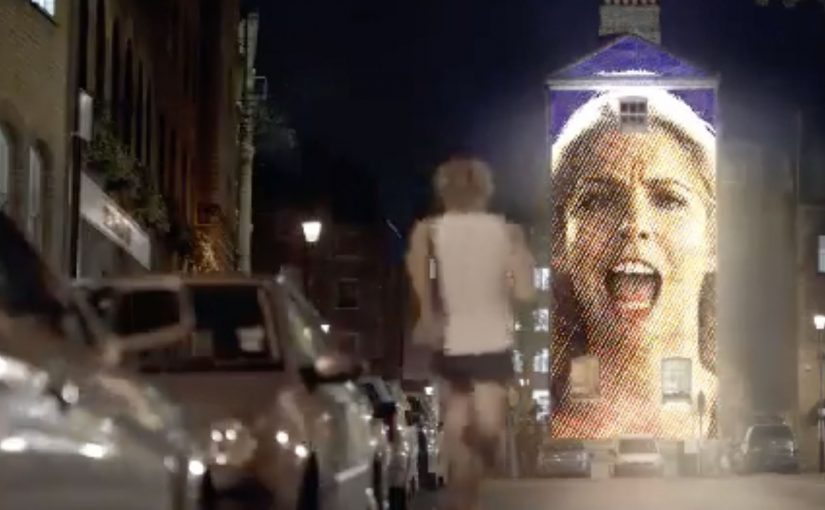
Training for the Olympics is tough, so Cadbury has come up with its loudest campaign to date: Keep Our Team Pumped. Here, supporters of the Great Britain Olympics team can sing a series of motivational, iconic power anthems to keep their team motivated during long training sessions ahead of the big event in 2012.

In plain terms, this is a crowdsourced music campaign: Cadbury gives the nation a set of recognisable “power” tracks, then turns public participation into fuel for Team GB, and into media for the sponsor.

Cadbury is set to release six tracks over the next seven months, culminating in a finale in March 2012 featuring a medley of all six songs created by the British public, plus a performance to Team GB athletes in London.

The Final Countdown

Simply the Best

The integrated campaign involves recruiting singers through social media, followed by a TV campaign airing on 3rd October and running for 6 weeks. There is also radio partnership activity, events, and digital media, with extra support on-pack and in-store, rallying the British public to keep singing.

The fans could follow it all at www.keepourteampumped.com.

In global FMCG sponsorship marketing, this approach works because it turns passive support into an action people can do in under a minute, then reuses that action as campaign content across channels.

The real question is whether your sponsorship can give people a repeatable one-minute action that feels like support, not like homework.

Why music is such a strong sponsorship mechanic

Music is a shortcut to emotion and memory, especially when the songs are already culturally “loaded.” If you pick anthems people instantly recognise, you lower participation friction and increase the chance they will share, remix, or join in again when the next track drops.

Extractable takeaway: If you need mass participation over time, start with a culturally familiar format so the effort is in joining, not in learning what to do.

For a multi-month sponsorship, I would choose a familiar-anthem format over inventing a brand-new mechanic every time, because recognition keeps the participation loop light.

What Cadbury is really building ahead of 2012

At the surface, it is motivation for athletes. Underneath, it is a sponsor-owned participation platform that can run on TV, radio, digital, on-pack and in-store without needing a new idea every week. By “participation platform,” I mean a repeatable participation flow plus reusable assets that can run across channels without reinventing the mechanic. Each track release is a fresh moment, and the public contribution keeps it feeling like a national project rather than a one-off ad.

How to structure a multi-month participation campaign

  • Use a repeatable content format. Six tracks. Same mechanic. New moment each time.
  • Make participation obvious. One clear action, one clear outcome, then show people what happens next.
  • Design for channel handoffs. Social recruitment feeds TV and radio, which then sends people back online.
  • Turn the finale into a payoff. If you ask people to contribute for months, the end needs to feel earned and public.

A few fast answers before you act

What is Keep Our Team Pumped?

It is a Cadbury campaign that invites the British public to record and contribute motivational “power anthem” performances intended to keep Team GB energised during training ahead of London 2012.

How does the campaign mechanic work?

Cadbury releases a sequence of tracks, recruits singers via social media and other channels, then builds toward a final medley performance assembled from public contributions.

Why release the campaign in tracks instead of one big launch?

Staggered releases create repeat attention peaks, give people multiple chances to participate, and keep the campaign fresh across months without changing the core idea.

What channels does this kind of campaign need to work?

You need an online hub for participation, plus at least one mass channel to drive scale and a retail layer to convert awareness into purchase at shelf.

What is the biggest risk with crowdsourced music campaigns?

If the participation flow is awkward or unclear, contributions drop fast. The format only sustains if it is easy to join and people feel their input is genuinely used.

Carrefour: Escaping shopping carts

A shopping cart appears where it should not be. It is spotted racing through neighbourhood streets, then turning up abandoned in unlikely corners of Rome. People start talking because the “protagonist” is absurdly familiar. The cart is the symbol of value, and now it is behaving like it has a mind of its own.

Saatchi & Saatchi Milan built this mystery for Carrefour Italia to support the rollout of 106 new Carrefour Markets in Lazio, grounded in the brand’s “Positive every day” positioning. The creative idea is simple. Value for money is an appeal people struggle to resist. So the carts become the carriers of that temptation.

The activation is designed as a two-phase integrated campaign. Here, “integrated” means the same narrative runs in parallel across multiple channels, so each touchpoint adds another “sighting” or a step of explanation. First, it seeds sightings and curiosity across multiple channels at the same time. Then it resolves the story by revealing where all those carts are heading.

A teaser built like a local urban legend

The first phase plays like breaking news. A live-feeling street presence. Transit placements. News-style content. Online video. Each touchpoint adds another “sighting” so the mystery grows without needing complex explanation.

The choice of protagonist matters. A shopping cart is instantly readable, and it already carries the promise of savings. When you animate that object, you turn a pricing message into a narrative people retell.

Solving the mystery without breaking the spell

The second phase keeps the same media system but shifts the objective. It moves from “have you seen it” to “here is where it is going.” The reveal connects the runaway-cart story to the new Carrefour Market openings, so the attention converts into a clear destination and a clear reason.

In large-scale retail launches, integrated campaigns work best when one story can travel from street to screen to store without changing its meaning.

Why this lands for a retailer

This is value communication that does not feel like a leaflet. It uses curiosity, pattern recognition, and a small dose of humour to make people look twice. The pricing promise stays present, but it arrives through a chase, not a claim. The real question is whether your rollout story makes value feel like a discovery instead of a discount. For multi-location openings, a repeatable curiosity loop is a stronger starting point than a price-led announcement.

Extractable takeaway: If value is your promise, stage it as a simple, repeatable story people can retell, then make the store opening the payoff.

What to steal for your next multi-location rollout

  • Choose a protagonist that already means something. Everyday objects can carry brand meaning faster than mascots.
  • Design a two-step rhythm. Tease first, then resolve. Mystery creates attention. Resolution creates direction.
  • Let every channel play a specific role. Street for credibility. Transit for frequency. Online for amplification. Press for legitimacy.
  • Make the reveal point somewhere real. The story must end at the store door, not inside the ad unit.

A few fast answers before you act

What is “The Mystery of the Escaping Shopping Carts”?

It is an integrated Carrefour Italia campaign where shopping carts are staged as “escaping” across Rome to build curiosity, then the story resolves by linking the carts to new Carrefour Market openings in Lazio.

Why use shopping carts as the protagonists?

Shopping carts are universal retail symbols and naturally connected to value for money. Turning them into characters makes the savings message feel like a story rather than a promotion.

What does “integrated” mean in this campaign?

It means multiple media channels run in parallel and reinforce the same narrative. Each channel adds sightings, social proof, or explanation, so the mystery grows consistently across the city.

Why does a teaser-and-reveal structure work for retail openings?

Because it builds attention before asking for action. The teaser creates talk and curiosity. The reveal converts that attention into a clear destination, which fits the goal of driving visits to new locations.

What is the main risk with mystery-led retail campaigns?

If the reveal is weak or delayed, people feel tricked. The payoff has to be satisfying, and it must clearly connect the story to a real store or offer.