
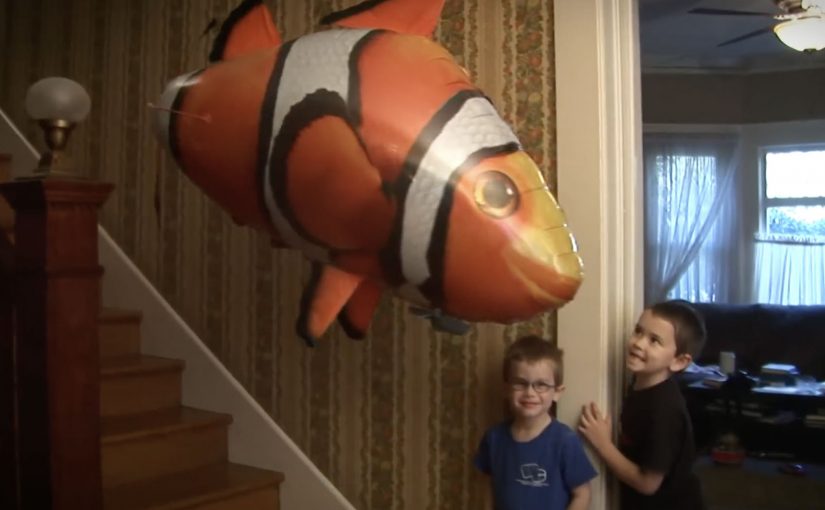
Air Swimmers: Flying Shark and Clownfish

Have you ever seen a fish that can swim in the air with smooth, life-like motion. Air Swimmers is a US-based company that developed these remote controlled, helium-filled flying fish.

They are designed for indoor fun even in small rooms. Air Swimmers describes them as running on four AAA batteries, one in the body and three in the controller, with up, down and 360 degree turning control.

How it works

The mechanism is lighter-than-air buoyancy plus simple steering controls. The helium does the lifting. The controller provides direction and small adjustments that make the movement read as “swimming” rather than “flying”. The technology fades into the background, and the illusion becomes the product.

In consumer retail for playful tech products, the fastest path from curiosity to purchase is a demo that looks impossible at first glance, but becomes obvious after ten seconds of watching it move.

The real question is how quickly your demo turns “that can’t be real” into “I want to try that”.

Lead with the impossible-looking motion first, and let the explanation come second.

Why it lands

It delivers a clean emotional sequence. Surprise first. Then control. The viewer sees it drift like a creature, then realises someone is steering it with precision. Because buoyancy handles the lift, small steering inputs read as effortless, which makes the motion feel alive and shareable. That makes it instantly shareable because the value is visible without narration or specs.

Extractable takeaway: If your product’s value is delight, design a demo that creates a visible illusion, then reveal just enough control to make people want to try it themselves.

Guerrilla activation lessons from Air Swimmers

  • Make the demo the message. If the value is visual, build your marketing around one clip that proves the experience in seconds.
  • Use “living motion” as the hook. Here, “living motion” means movement that reads like a creature rather than a machine, so people treat it as a moment worth filming.
  • Turn everyday space into a stage. Air Swimmers were also used as a guerrilla execution for SEA LIFE Speyer in Germany. Reported coverage describes Leo Burnett Frankfurt sending “flying sharks” through Frankfurt, including public locations and public transport, to turn the city into a temporary “aquarium” and build awareness for the aquarium in the Rhein-Main region.
  • Design for spectators, not only users. The best stunts create a second audience. Passers-by who do not control the object still get the full story.

A few fast answers before you act

What is an Air Swimmer?

A helium-filled balloon “fish” you steer indoors with a handheld controller, designed to move with a swimming-like motion through the air.

Why does it feel more impressive than other RC toys?

Because buoyancy handles the “floating,” so the control inputs translate into smooth, creature-like movement rather than noisy, mechanical flight.

What makes a product like this easy to market?

The demo is the message. One short clip communicates the full value without specs, because the motion is the proof.

Why was this a good fit for a SEA LIFE guerrilla execution?

Because it is thematically aligned with marine life, instantly attention-grabbing in public spaces, and it creates a moving spectacle people want to film and talk about.

What should the first ten seconds of the demo show?

Start with the “impossible” floating motion, then reveal the steering control quickly, so people understand it is real and want to try it.
LivingSocial: Roll the Dice Taxi

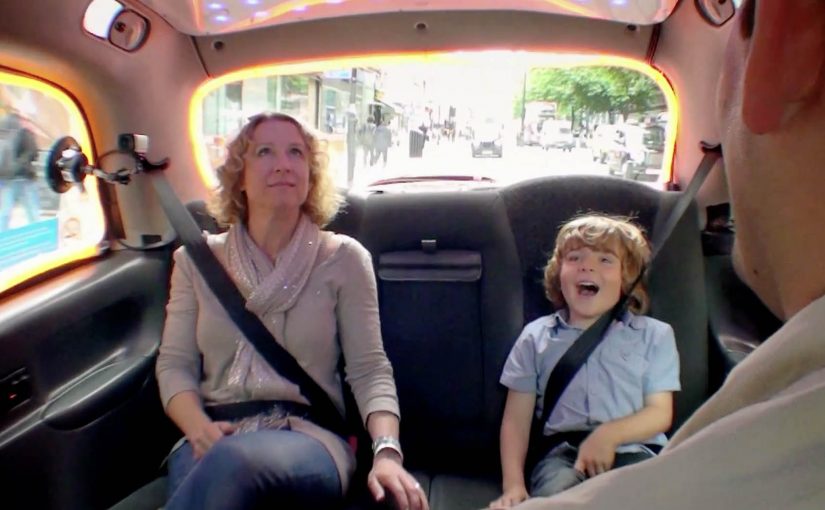
Taxis are becoming a great media for unexpected advertising. In London, LivingSocial takes over an everyday cab and turns it into a surprising, delightful experience.

The objective is simple. Create buzz around the LivingSocial website and showcase the variety of discounts in a way that feels like a story, not a sales pitch.

A taxi ride with a fork in the road

When unsuspecting passengers hail this special taxi and get inside, they are offered a choice. Carry on to their original destination, or “roll the dice” and go for an experience instead.

The decision is the hook. The passenger stays in control, but the brand turns that control into a game, and the game turns a normal ride into a memorable narrative.

In urban commuter cities, a taxi ride is one of the few time-boxed moments where a brand can own the environment end-to-end.

Why the gamble is more persuasive than the pitch

This works because it reframes discount discovery as adventure. The “roll the dice” option creates a moment of suspense, and suspense buys attention better than any list of offers ever will.

Extractable takeaway: If you sell a broad catalogue of offers, do not lead with the catalogue. Lead with a simple, voluntary choice that creates emotional momentum, then let the catalogue appear as the natural payoff for choosing to play.

While the ride plays out, the experience is described as feeding contestants a long stream of sales information. The trick is that the information arrives while the passenger is already invested in what happens next, so it feels like part of the ride rather than an interruption.

The real business intent behind the stunt

At the surface, this is “surprise and delight.” The real question is whether you can turn an everyday ride into a voluntary choice people want to retell. Underneath, it is a conversion engine. It demonstrates the breadth of deals, pushes people into trying something they would not normally consider, and gives them a story they want to retell.

Steal this pattern for city-scale activations

  • Offer two paths. A safe default and a bold option. The contrast makes the bold option irresistible.
  • Make the choice voluntary. Consent turns skepticism into curiosity.
  • Let the content ride shotgun. Teach benefits during the experience, not before it.
  • Design for retellability. Make the twist easy to repeat in one sentence, like “a taxi that lets you roll the dice for a surprise destination.”

A few fast answers before you act

What is the LivingSocial Taxi Experiment?

It is a branded taxi experience where passengers can either continue to their original destination or roll the dice and be taken to a surprise experience that showcases LivingSocial deals.

Why does the “roll the dice” mechanic work?

It creates suspense and a sense of ownership. The passenger chooses the gamble, which makes the experience feel like their story, not the brand’s stunt.

What is the key mechanism that makes this shareable?

A clear, explainable twist on a familiar behavior. Taking a taxi becomes a game with a surprising payoff, which people naturally want to describe to friends.

How do you adapt this pattern without a taxi fleet?

Find a time-boxed environment you can fully control, introduce a simple forked choice, and make the “bold” path deliver a visible, memorable payoff that naturally carries your product story.

What is the simplest way to judge if it worked?

If people can retell the twist in one sentence and explain why they chose the bold path, you built something that travels beyond the ride.

Rajec: Frozen Art to Sell Water in Winter

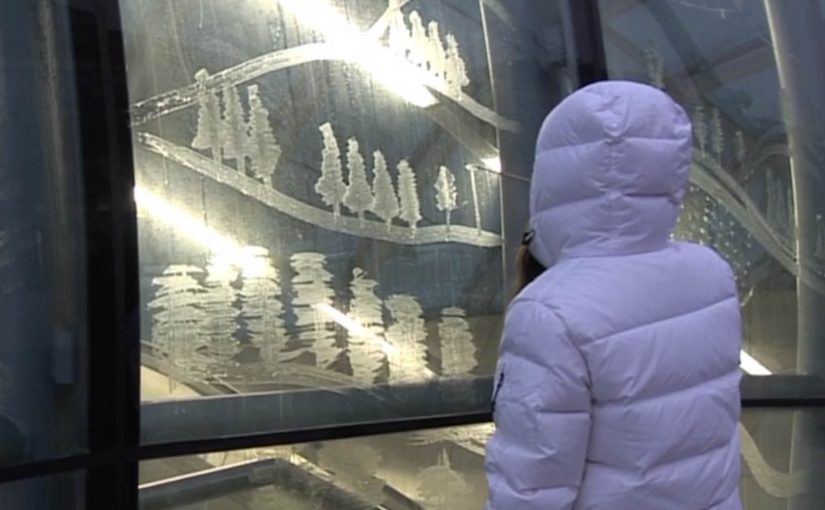
Rajec wants people to buy spring water even when it is cold outside, so the brand turns its own product into the medium. Artists use Rajec water to create frosty artworks overnight in high-footfall locations, so the next morning the city wakes up to “Patented by Nature” made visible.

The mechanic is simple and budget-smart. Pick specific public locations, give artists permission to work within the constraints of freezing weather, and let the cold do the production. The result is temporary ice art that looks native to winter, but still unmistakably tied to water.

In Central European FMCG categories, winter is where habitual consumption drops. So a physical, weather-native installation can reframe the product as seasonally relevant instead of seasonally optional.

Why frozen artwork is a strong “Patented by Nature” proof

It makes the positioning literal. The environment “patents” the result, because the cold is doing real work. That gives the campaign an authenticity cue that polished advertising often struggles to achieve, especially for a product as familiar as water.

Extractable takeaway: When your brand promise depends on “naturalness”, build a proof that requires nature to complete it. Then place that proof where people can stumble on it without opting in.

What the campaign is really optimizing for

The real question is how to make bottled water feel worth noticing in the season when people are least inclined to buy it. This is a smart seasonal demand play because it turns winter from a sales headwind into the proof itself.

This is designed to create winter salience with minimal spend. Here, winter salience means staying mentally available in the season when bottled water is easiest to ignore. The installations function as local talk triggers, photo moments, and brand reminders, without needing long media flights. You get attention because it is unexpected and temporary, and you get relevance because the execution only exists in winter conditions.

What to steal for your own seasonal demand problem

  • Exploit the season instead of fighting it. Use weather and constraints as production tools.
  • Make the product physically present. When the product is the material, the brand tie is harder to miss.
  • Design for ephemerality. Temporary work creates urgency and increases the chance people share it.
  • Choose “commuter proof” locations. Busy, repeat-traffic spots do the frequency building for you.

A few fast answers before you act

What is the core idea of Rajec Frozen Artwork?

Use Rajec water to create ice artworks overnight in frequented public places, so winter itself becomes the production method and the brand proof.

Why does this help sell water in winter?

It restores relevance by linking the product to the season people least associate with water buying, and it does so with a physical cue people notice without trying.

What makes the execution feel credible rather than “advertising”?

The cold does real work. The result looks like something the environment caused, which supports the “Patented by Nature” idea.

What kind of location makes this work best?

High-footfall public locations work best because repeat exposure turns a temporary installation into a stronger memory cue without requiring paid media weight.

What is the main risk in copying this approach?

If the brand link is too subtle, it becomes “nice street art” with weak recall. The product-to-art connection needs to be unmistakable.