
Thalys: Sounds of the City

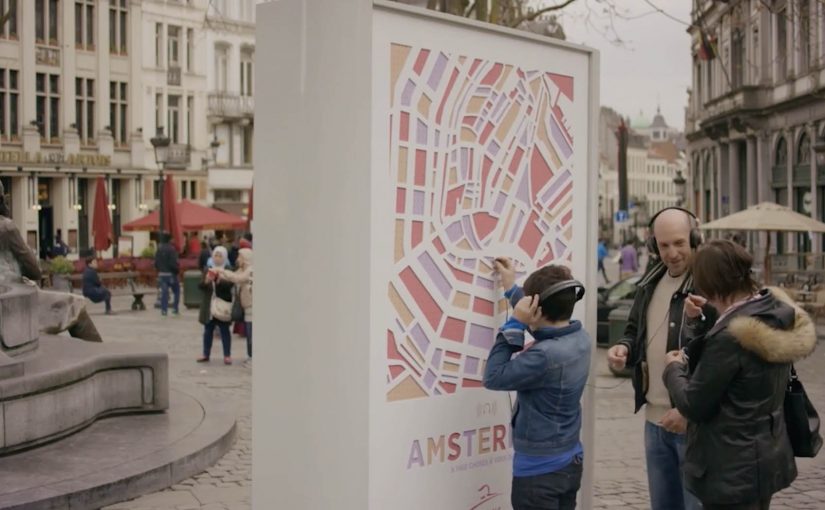
To encourage people to use the train to go and explore nearby cities, railway service Thalys creates three interactive billboards. Each billboard represents a city, and each is host to more than 1,000 unique sounds from that city.

Pedestrians who walk past these billboards are invited to plug in with their personal headphones and start exploring. So instead of using headphones to block out the city, they are made to use them to rediscover one.

When a billboard becomes a listening device

The mechanism is the whole point. A city map on a billboard doubles as an audio interface. Plug your headphones into different points and you unlock different sounds, turning a familiar out-of-home billboard format into a self-guided micro journey.

That matters because the interface makes exploration feel self-directed, which is why the destination becomes memorable before the trip starts.

In European high-speed rail travel, nearby cities compete on spontaneity and sensation as much as price or schedule.

Why it lands

This works because it flips a modern habit. Headphones usually remove you from your surroundings. Here they pull you into a destination you have not reached yet, using curiosity and discovery instead of discounts and slogans.

Extractable takeaway: If your audience already carries an interface, design the experience so their default behavior becomes your entry point. Then reward exploration with variety, so people keep trying “one more” interaction.

What Thalys is really selling

The real question is not how loudly you advertise a nearby city, but how quickly you make it feel explorable.

For travel brands, a sensory preview like this is stronger than another fare-led message.

The campaign sells proximity. You do not need a long promise about travel. You get a sensory preview that makes the next city feel close and personally explorable, even in the middle of your current one.

What travel marketers can lift from this

  • Turn passive media into a tool. If the unit does something, people approach it voluntarily.
  • Build a library, not a single message. 1,000+ sound fragments makes repeat interaction feel natural.
  • Use “rediscovery” as the hook. Familiar objects can become new experiences with one clever twist.
  • Let the audience choose the path. Interactivity creates viewer control and longer dwell time.

A few fast answers before you act

What is Thalys “Sounds of the City”?

It is a set of interactive billboards that let passersby plug in headphones and explore a city through a large library of location-specific sounds.

Why use sound instead of visuals?

Sound creates immersion fast and feels personal through headphones. It also differentiates travel advertising that usually relies on images.

What behavior does the idea exploit?

People already carry headphones and use them in public. The billboard redirects that habit from blocking out the world to exploring a destination.

What is the main metric to watch for OOH interactivity like this?

Dwell time, repeat interactions per person, and any measurable lift in intent or searches for the featured routes and cities.

How can another brand apply the pattern?

Identify a “portable interface” your audience already has, then design a physical touchpoint that turns exploration into the reward.
Powerade: Workout Billboards in Berlin

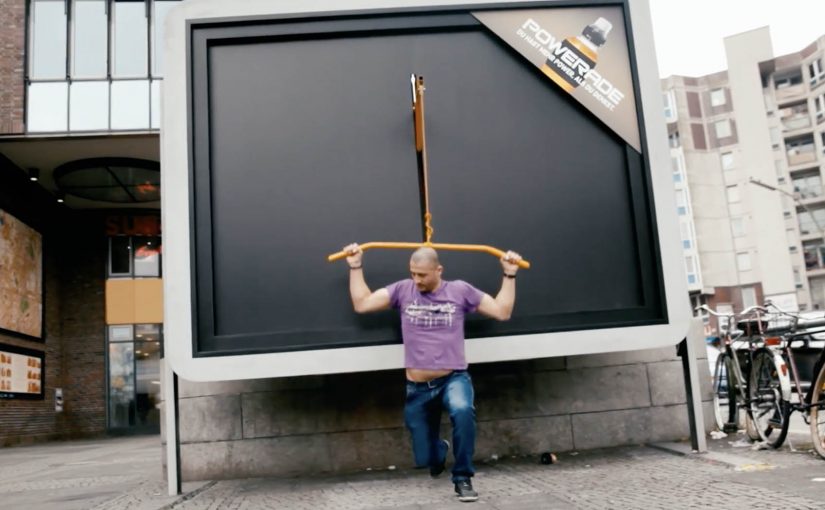
A billboard does not just tell you to train. It invites you to climb it, lift it, or punch it, right there on the street, then hands you a Powerade when you are done.

Powerade, with the help of Ogilvy & Mather, set up several workout billboards in Berlin that, apart from advertising the product, also doubled up as workout equipment to emphasize the brand’s attitude, “You have more power than you think”. Here, “workout billboards” means the billboard structure is built to be used as simple exercise equipment.

People practicing their rock climbing, weight lifting, and boxing skills on the unique billboards were also rewarded with some free Powerade to help replenish their electrolytes.

Why this works as outdoor advertising

The mechanism is a clean value exchange. The brand offers an activity that creates immediate proof of effort. The participant gets a short challenge and a visible outcome. The product then shows up as the natural next step, not as an interruption. Because effort comes first, the product feels like a reward rather than an ad.

Extractable takeaway: When outdoor media gives people a small, safe task to complete, the brand message lands as earned proof, not as a claim.

In sports and performance brands competing for attention in dense urban spaces, turning an ad surface into a usable experience is a direct way to earn participation instead of only impressions.

What Powerade is really buying

This is not mainly about reach. It is about association. The ad makes the brand feel like a training partner, not a poster. It also turns physical engagement into a public spectacle, which draws more people in and makes the moment more memorable than a standard billboard.

The real question is whether your activation gives people something they can do in public, not just something they can look at.

Steal-worthy moves for participatory OOH

  • Make the product a logical reward. The drink lands because effort comes first.
  • Design for participation, not just viewing. If people can do something, they will stop and watch others do it too.
  • Keep the idea explainable in one line. “Billboard that is also a workout” travels fast.
  • Let the environment do the distribution. Public performance creates its own audience.

A few fast answers before you act

What is a “workout billboard” in this campaign?

A billboard installation that doubles as real workout equipment, so people can climb, lift, or punch as part of the brand experience.

Why does turning a billboard into equipment change behavior?

It shifts the role from passive viewing to active participation, which increases time spent, memorability, and the likelihood people talk about it.

What is the main value exchange for the audience?

A quick public challenge plus a tangible reward. Free Powerade after effort makes the product feel earned and relevant.

What is the biggest execution risk?

If it looks unsafe, complicated, or embarrassing, people will not try it. The interaction has to feel obvious and low-risk at first glance.

What is the simplest way to apply this idea without building hardware?

Create a participatory moment that produces visible effort and a clear reward, even if the “equipment” is replaced by a simpler challenge format.

Prigat: Smile Stations

Publicis Israel and e-dologic are back with a new campaign for Prigat, a leading company in the Israeli fruit juice market.

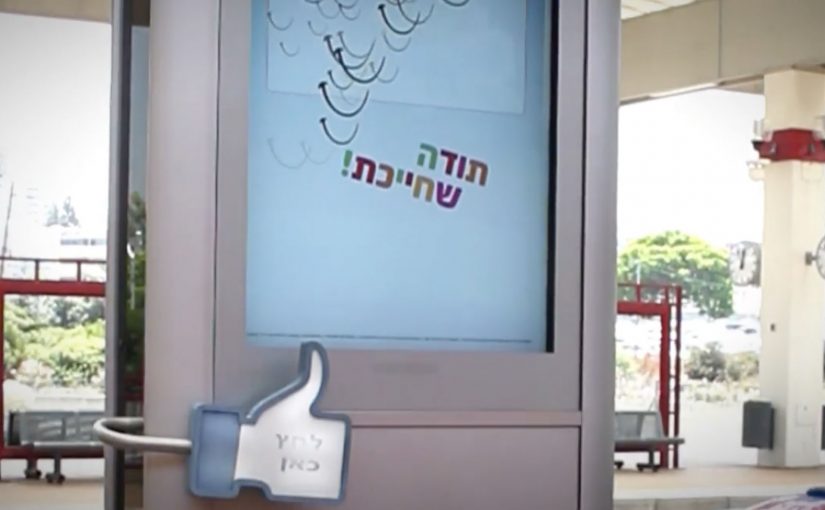
This time they use innovative digital billboards called “Smile Stations” to send real-time messages at various train stations. The aim is to get passers-by to smile, and “like” the moment.

The mechanic: turn a Facebook message into a station moment

It starts on the Prigat Facebook Page. People send messages that are pushed to screens at train stations. Commuters walking by can approach the screen and press a physical “Like” button.

That button press triggers a simple payoff. The billboard captures the moment, then broadcasts the video back to the person who sent the message. Users who generate the most smiles win a prize.

In busy public transit environments, interactive out-of-home works best when the action is obvious, the feedback is immediate, and the reward is shareable.

Why it lands: it makes public emotion measurable

Most out-of-home asks for attention. Smile Stations asks for a reaction, then turns that reaction into proof you can send back to the originator.

Extractable takeaway: If you want participation at scale, close the loop. Let a remote user trigger a real-world moment, let a passer-by respond with one physical action, then send that response back as a personal artifact the originator can keep and share.

Reported figures put this at over 10,000 messages sent to station screens, with thousands of people responding by hitting the Like button.

What the brand gets from this

The real question is whether a public display can turn a remote social prompt into a personal moment worth sharing.

This is stronger than passive digital out-of-home because the physical Like button reduces effort and the returned video turns a fleeting reaction into a personal memory both sides can own.

The campaign does not just generate impressions. It creates a two-sided interaction where both parties feel like they caused something to happen. That is a stronger memory structure than “I saw an ad”, especially in a context as repetitive as commuting.

What to steal for your own social-plus-out-of-home activation

  • Design a one-step physical interaction: one big button beats a complicated interface in public space.
  • Make the response visible: the passer-by should understand instantly that their action “counts”.
  • Return a personal artifact: sending the video back is what turns participation into sharing.
  • Gamify without friction: “most smiles wins” is a clean mechanic with no explanation overhead.
  • Pick locations with dwell time: stations work because people pause, look up, and wait.

A few fast answers before you act

What is a “Smile Station”?

It is an interactive digital billboard at a train station that displays user-submitted messages and invites passers-by to respond by smiling and pressing a physical Like button.

What makes this different from a normal digital billboard?

It is two-way. Remote users trigger messages, commuters respond physically, and the response is captured and sent back as video, creating a closed feedback loop.

Why include a physical Like button?

Because it removes friction. A single, tangible action is faster and more intuitive than asking people to pull out a phone, scan, or type.

How do you measure success for an activation like this?

Message volume, unique senders, Like-button presses, response rate per message, video shares by originators, and dwell time around the screen locations.

What is the main execution risk?

Latency and unclear feedback. If the system feels slow or people are unsure what their button press did, participation drops quickly in a commuter setting.