
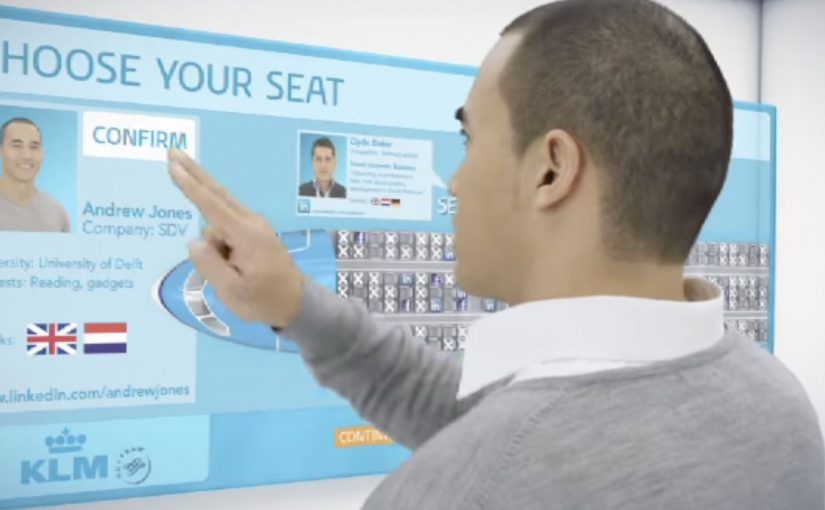
KLM: Meet & Seat

Most brands use social channels tactically, mainly to reach people with social ads. KLM takes a different route by turning social into a flight feature, not just a media channel.

Last year KLM announced it would launch a social seating service in 2012 that lets Facebook and LinkedIn users meet interesting passengers on their flight.

From social graph to seat map

The mechanism is opt-in. Passengers can link a Facebook or LinkedIn profile to their booking, view other participating passengers, and use that context to decide who they might like to sit near. Instead of “broadcasting” brand messages, KLM uses social signals to make the journey feel more connected and a little less anonymous.

In global airline customer experience, social features only earn their place when they reduce travel friction while keeping passenger comfort and control intact.

Why this goes beyond advertising

The real question is whether your “social” idea earns a place inside the core workflow, or stays a bolt-on marketing layer.

This is not a campaign that ends when the media stops. It is a product layer that sits inside the booking and seat-selection experience. That matters because the value is practical. The idea helps solo travelers find relevant people. It helps professionals spot peers. It helps conference-goers connect before landing.

What makes the idea feel safe enough to try

The service is framed as voluntary. You choose to participate, and the experience only works if passengers trust they can opt in, opt out, and keep the interaction lightweight. That balance is the difference between “novel” and “creepy”, especially when your setting is an enclosed cabin for many hours.

Extractable takeaway: If a feature touches identity inside a captive environment, design for clear consent, easy exit, and low-pressure interaction first.

Where it is live, for now

Meet & Seat has now gone live and is currently available on KLM flights between Amsterdam and New York, San Francisco and São Paulo. The stated intent is to extend the service to other sectors over time.

Steal this pattern for social utility

  • Turn social into utility. A social feature that solves a real moment beats social content that asks for attention.
  • Make it opt-in by design. Voluntary participation is how you earn trust for anything identity-adjacent, meaning tied to real identity or profile data.
  • Embed it in a workflow. Booking and seat selection are high-intent moments where new features get tried.
  • Keep the promise small. Help people meet someone interesting. Do not overclaim “matchmaking”.

A few fast answers before you act

What is KLM Meet & Seat in one line?

An opt-in service that lets passengers connect via Facebook or LinkedIn and use that context during seat selection to sit near people they find interesting.

Why is this different from a normal social media campaign?

Because it is a service embedded in the travel journey, not content distributed around it.

Why does opt-in matter so much here?

Because seatmate selection touches identity and comfort. Participation needs to feel controlled, reversible, and low-pressure.

Where should a similar feature live in the journey?

Put it in a high-intent step, such as booking or seat selection, so people can try it when they already have a reason to act.

What is the main transferable lesson?

Stop treating social as a megaphone. Treat it as a signal you can convert into a useful moment inside the customer journey.
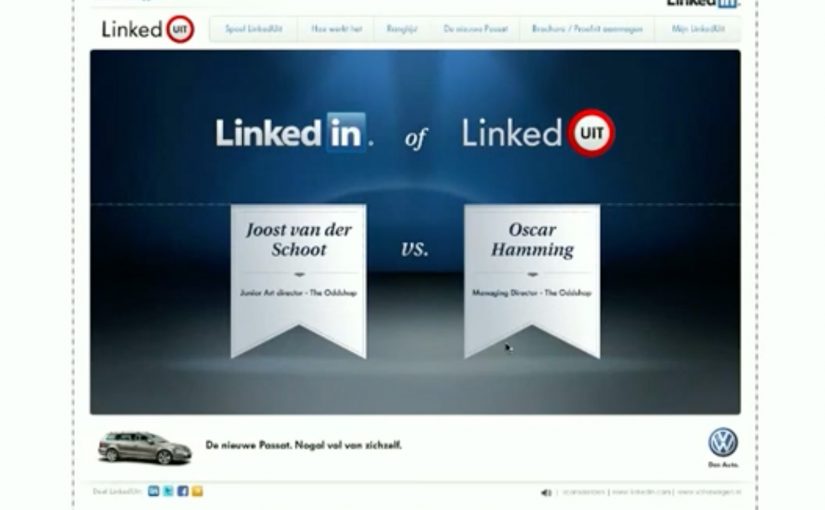
Volkswagen LinkedUit: A LinkedIn API Campaign

Volkswagen has released a LinkedIn-based campaign which takes full advantage of the new LinkedIn API. Here, “LinkedIn API” simply means the permissioned interface that lets an app read profile information after you sign in.

The campaign is called “LinkedUit” (LinkedOut) and gives anyone who challenges a friend on LinkedIn a chance to win a Volkswagen Passat.

The game is really simple. After signing in using your LinkedIn profile, the app lets you choose others in your network to challenge. A LinkedIn victor and a LinkedOut loser is then chosen based on education, experience, recommendations and connections.

Mechanically, the app pulls profile fields after sign-in and turns them into a score you can compare against someone in your network. This pattern is worth copying when you can explain the scoring in plain language and keep participation clearly opt-in. Because the inputs are already curated, the result feels personal with almost no extra work.

In European automotive marketing, platform-native games like this only stay credible when the data use is explicit and the scoring feels fair.

The real question is whether the value of the interaction outweighs the discomfort of being compared.

Why this is a smart use of platform data

This campaign uses something people already curate and care about. Their professional identity. Instead of asking for attention, it uses existing LinkedIn data as the raw material for the experience.

Extractable takeaway: If you can make a platform’s identity data the mechanic, you lower friction and raise relevance. But you only earn repeat use when people can predict why they won or lost.

  • Low input for users. The profile is already built. The game simply reads it.
  • High personal relevance. Comparisons feel personal because they are based on your own history.
  • Built-in social spread. Challenges create a natural loop through networks.

The Passat benefit: “feature-rich” as a metaphor

The creative link is straightforward. Passat equals feature-rich. LinkedIn profile equals information-rich. The experience makes the metaphor tangible by turning profile depth into a competitive score.

That kind of metaphor works when it is easy to explain in one sentence and easy to experience in one click.

What makes this type of social game succeed or fail

  1. Fair scoring logic. If the rules feel arbitrary, people reject the result.
  2. Fast time-to-result. The payoff must arrive quickly after sign-in.
  3. Friendly rivalry. Challenges should feel playful, not judgmental.
  4. Clear reward. A chance to win a Passat is a simple, memorable incentive.

What to take from this if you are building platform-native campaigns

  • Use the platform’s native data as the experience. The more you rely on what already exists, the lower the friction.
  • Make the mechanic social by default. Challenges, invites, and comparisons drive distribution.
  • Keep the brand connection clean. One strong metaphor beats multiple weak links.
  • Design for credibility. When you use personal data, transparency and perceived fairness matter.

A few fast answers before you act

What is Volkswagen “LinkedUit”?

It is a LinkedIn-based campaign that uses LinkedIn profile data to create a challenge game, giving participants a chance to win a Volkswagen Passat.

How does the game determine a winner?

The app compares elements such as education, experience, recommendations, and connections to choose a “LinkedIn victor” and a “LinkedOut” loser.

Why is the LinkedIn API important here?

Because it enables the experience to pull in profile information automatically, making the game quick to start and personally relevant without extra data entry.

What is the creative link to the Passat?

The campaign uses the idea that the new Passat is full of features, just like a LinkedIn profile is full of information, then turns that into a competitive mechanic.

What is the main lesson for social platform campaigns?

If you build around native identity and data, and make the interaction social by default, you can create an experience that spreads through the network naturally.