
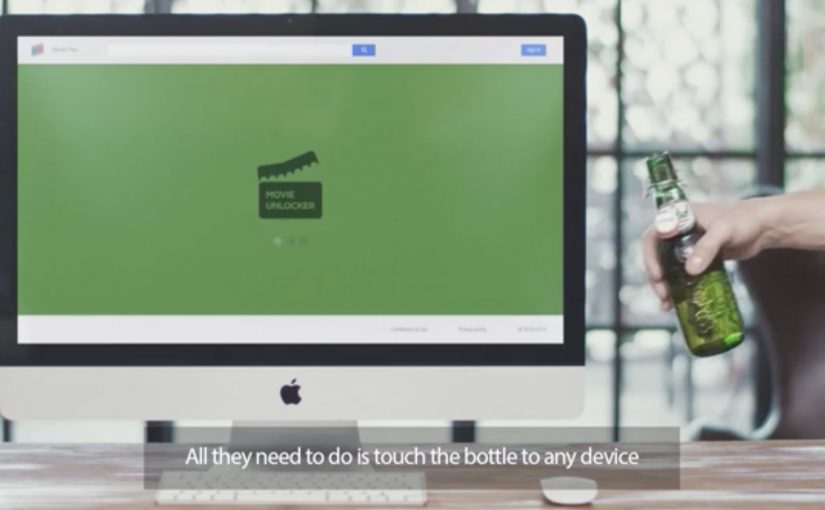
Grolsch: The Movie Unlocker

Paying for movies with a credit card is framed as yesterday’s behaviour. Grolsch positions a new alternative as “Movie Unlocker” technology, letting consumers use the beer bottle itself as the key to watch movies online.

The bottles are described as being fitted with custom Bluetooth beacons that transmit a unique code when brought close to a laptop or smartphone with Bluetooth Low Energy, or BLE, enabled. That code verifies the user and unlocks access to the chosen movie.

How the bottle becomes the checkout

The mechanism is a proximity-based redemption flow. Open the beer. Bring the bottle near your phone or laptop. The beacon transmits an identifier. The partner website receives it, validates it, and then grants access.

Functionally, it’s the same “code under the cap” idea, but moved from manual entry to a one-touch interaction triggered by distance and Bluetooth.

In consumer promotions, frictionless redemption mechanics often outperform bigger media spend because they turn the product into the access token.

Why “bottle-as-ticket” works

This lands because the value exchange is immediate and physical. The bottle is proof-of-purchase, and the unlock moment happens in the same context as consumption. At-home. On-device. With minimal steps. That makes the reward feel like a feature of the product, not a separate campaign hoop.

Extractable takeaway: If you want high participation in a reward mechanic, eliminate typing and logins where possible. Use a physical trigger that makes redemption feel like a natural extension of the product ritual.

What the brand is really optimizing

The real question is how to make purchase verification feel like part of the product experience rather than a separate redemption step.

Beyond “cool tech,” this is about repeat preference. It attaches a digital entertainment benefit to a beer purchase, creating a reason to choose Grolsch again the next time someone is deciding in-store.

What to steal from bottle-as-ticket

  • Turn proof-of-purchase into a trigger. Let the product initiate the unlock, not a coupon field.
  • Design for the living room moment. Redemption should work where consumption happens.
  • Keep the exchange legible. “Beer near device equals movie” is easy to explain.
  • Make authentication invisible. Users should feel the magic, not the plumbing.

A few fast answers before you act

What is Grolsch Movie Unlocker?

It’s a promotion mechanic where a beer bottle transmits a unique Bluetooth Low Energy code to help unlock a movie online.

What does BLE do here?

BLE enables low-power proximity communication so a nearby bottle can pass an identifier to a phone or laptop without pairing like a normal accessory.

Is this replacing payment or replacing a promo code?

It functions like replacing the promo code step with a proximity trigger. The “payment” is effectively the purchase of the beer tied to the unlock.

Why is this better than typing a code?

It reduces friction. Fewer steps usually means higher completion and less drop-off in promotional redemptions.

What’s the biggest practical risk?

Reliability and onboarding. If Bluetooth is off, compatibility is unclear, or the unlock flow is confusing, the perceived magic disappears fast.
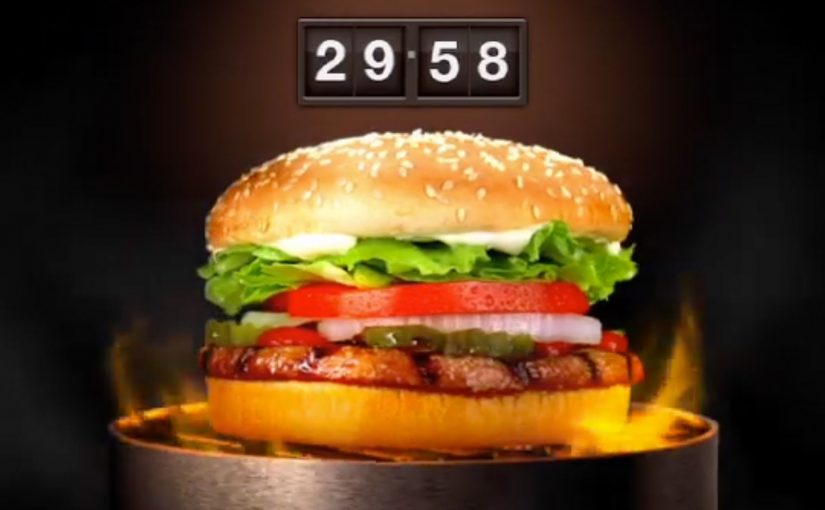
Burger King: The Whopper Lust Challenge

Stare at a picture of a Whopper long enough and you win one. That’s the premise of an interactive TV campaign from Burger King. What looks like a never-ending ad is actually a dedicated TV channel on DirecTV channel 111, built around a spinning flame-grilled burger and a timer.

To win, you tune in and activate the Whopper Lust challenge. A five-minute countdown starts, and you have to keep watching the rotating Whopper for the full duration. Make it to five minutes and you earn one free burger. Keep going for another ten and you earn two. Keep going and the rewards scale. The longer you last, the more you unlock.

The catch is that the channel occasionally prompts you to hit buttons on your remote. Miss one and the clock resets, so you lose the reward you were building toward. Complete the challenge and you can claim the free burger directly on the TV.

How the mechanic turns attention into currency

This is “watch time” treated like a loyalty program. Here, “watch time” means the viewer’s sustained, verified attention, not just a channel left on in the background. The spinning Whopper is deliberately hypnotic, the timer makes the commitment explicit, and the remote prompts prevent passive cheating. It is simple, but it forces real engagement rather than background viewing.

That works because the timer defines the commitment, the remote prompts verify attention, and the visible progress makes the reward feel earned rather than handed out.

In US quick-service marketing, converting a passive channel into a participation loop can buy disproportionate attention without buying proportional media.

Why this lands

It works because it is a dare, not a discount. The reward feels earned, and the friction is oddly satisfying because it creates tension. Will you slip and reset. The interaction also turns a solitary act. Watching TV. Into a game you can talk about immediately.

Extractable takeaway: If you want people to stay with a message, make the “cost” a clear, timed commitment and add periodic interaction checks, so attention becomes an active choice rather than a passive exposure.

What Burger King is really optimizing

This is not just a giveaway. It is a retention play. The real question is how to turn passive media time into a branded challenge people willingly stay with. The channel trains repeat viewing, creates a habit loop, and attaches the brand to a measurable “I lasted” story. Reported campaign figures describe large volumes of burgers given away and large volumes of watch minutes generated over the week.

What to steal from attention-for-reward mechanics

  • Make the rule instantly legible. “Watch X minutes. Win Y.” is frictionless to understand.
  • Prevent passive participation. Add simple interaction prompts to keep it honest.
  • Let rewards compound. Escalation keeps people in the loop longer than a single prize.
  • Turn viewing into a game. A timer and resets create stakes without complex tech.

A few fast answers before you act

What is the Whopper Lust Challenge?

It’s an interactive TV activation where viewers watch a dedicated Burger King channel and earn free Whoppers based on how long they stay engaged.

How do you win a free Whopper?

You activate the challenge, watch the spinning Whopper for five minutes, and respond correctly to occasional remote-control prompts so the timer does not reset.

Why add remote button prompts?

To ensure people are actually watching and interacting, not leaving the channel on in the background.

What makes this different from a normal TV ad?

The ad is the channel, and the viewer is part of the mechanic. Time and interaction directly determine the reward.

What’s the main risk with this format?

If the interaction prompts feel unfair, too frequent, or glitchy, frustration overwhelms the fun and people drop out.