Burger King Burn that Ad

Burger King Burn that Ad

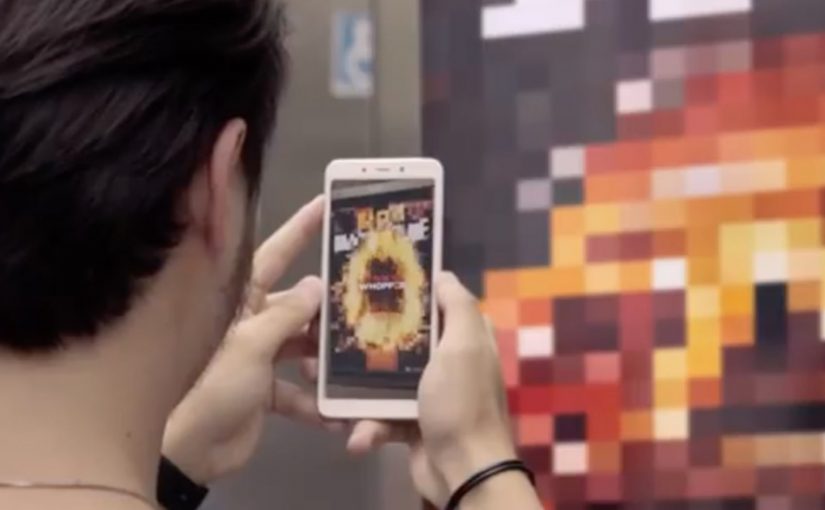
In Brazil, Burger King and ad agency David SP use augmented reality to “burn” competitors’ ads through consumers’ mobile phones. The reward is simple and immediate. Participate, and you earn a free Whopper.

Burger King expects to give away 500,000 Whoppers through the promotion, pushing more people to use Burger King Express, the service that lets customers pre-order food for pickup.

How “Burn that Ad” works

The mechanic turns rival advertising into a trigger. Here, the mechanic is one simple action that immediately returns a coupon reward. You point your phone at a competitor’s ad, the experience “burns” it in AR, and the payoff is a Whopper coupon. It is a direct, product-first incentive tied to a single action.

In quick-service restaurants, where choice is made in seconds, immediate incentives can shift behaviour faster than storytelling.

Why the reward is the strategy

This is not a brand-film play. It is a behavioural exchange. The AR effect is decoration. The engine is the immediate product reward tied to one action. The real question is whether your mechanic creates an immediate, low-friction exchange that makes a new behaviour worth trying. Because the reward is immediate and tied to one action, the AR burn becomes a conversion trigger rather than a gimmick. The customer does something specific in the moment, and Burger King pays them back with something they value immediately. That makes participation scalable beyond the novelty of AR.

Extractable takeaway: If you want people to adopt a new operational path, design a one-step exchange where the reward is immediate, tangible, and triggered by a single action.

The operational goal: Burger King Express

The giveaway is not only about footfall. It is designed to drive adoption of pre-order pickup via Burger King Express. The campaign builds a reason to try the service, not just the product.

What to steal

  • Make competitors the trigger: Turn a competitor’s presence into your acquisition trigger, without relying on complicated steps.
  • Keep it low-friction: Keep the action simple and the reward tangible.
  • Scale an operational behaviour: Link the incentive to an operational behaviour you want to scale, such as pickup pre-order adoption.

A few fast answers before you act

What is “Burn that Ad”?

A Burger King Brazil promotion that uses augmented reality to “burn” competitors’ ads on mobile phones and reward participants with a free Whopper.

What is the incentive?

A free Whopper, delivered via the promotion’s reward mechanic.

How many Whoppers does Burger King plan to give away?

500,000.

What is Burger King Express?

A Burger King service that lets customers pre-order food for pickup.

What business behaviour does it push beyond the giveaway?

Using Burger King Express to pre-order food for pickup.
Burger King Truckvertising

Burger King Truckvertising

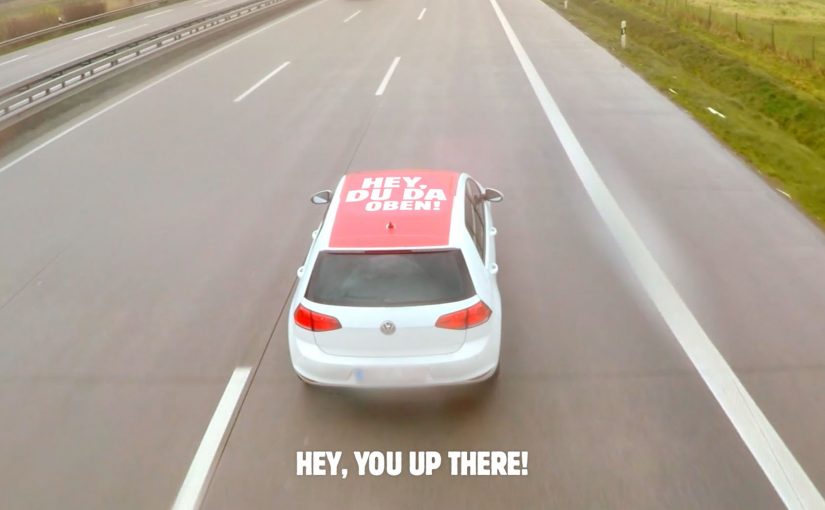
Due to strict laws, reportedly around 13,000km of the German motorway network is ad-free. So to convince truckers in Germany to buy freshly grilled Whoppers, Burger King and agency Grabarz & Partner create ads that only truckers can see. The ads sit on the roof of multiple cars that take turns overtaking trucks.

The cars do not just show an ad. They run a sequence of messages that feels like a conversation from the road:

  • “Hey, you up there!”
  • “You look hungry!”
  • “Why don’t you try out the Whopper?”
  • “Fresh and flame grilled”

Once the first few cars get the truckers’ attention, the remainder guides them to the next Burger King, turning the motorway into a moving funnel:

  • “If yes, then wink”
  • “Follow me to Burger King”

As a result, many truckers give in to temptation and follow the cars to the next XXL Burger King Drive-In.

The constraint that forces the creativity

The starting point is the limitation. Large parts of the German motorway network are ad-free, so the classic roadside billboard play is unavailable at scale.

The execution is “roof media” plus choreography

Here, “roof media” means ads mounted on the roofs of overtaking cars so truck drivers can read them clearly from above.

Burger King turns overtaking cars into a media surface and a delivery system. Roof placements ensure the message is visible from the truck cab. A rotating set of cars keeps the sequence going long enough to land.

The craft is the choreography. It is not one clever line. It is a paced interaction that escalates from attention, to appetite, to direction.

Why this works as shopper marketing in motion

The strength of this idea is that it turns media, message, and route into one conversion system. It works because the format, the sequence, and the physical route all point to the same next action: pull in at the next drive-in.

Extractable takeaway: When the audience is already moving toward a purchasable moment, the strongest creative system is the one that removes the need to interpret the ad and simply guides the next step.

In roadside retail and travel-heavy categories, the scalable advantage often comes from linking visibility, direction, and store access in one uninterrupted journey.

The real question is not how to make drivers notice the message, but how to turn that moment of notice into a low-friction detour.

The business aim is immediate drive-in visits from truckers who are already on the road and close to a Burger King location.

It also respects context. Truckers are not asked to scan, click, or search. They are asked to notice, react, then follow.

What to steal from Truckvertising

  • Turn constraints into the brief: Start with a hard constraint and treat it as a design brief, not a blocker.
  • Match the format to the moment: Use a format the audience cannot ignore in their context, in this case overhead visibility from a cab.
  • Design a behaviour sequence: Build a sequence that moves from attention to action, not a single punchline.

A few fast answers before you act

What is “Truckvertising” in one line?

Car-roof ads overtake trucks on ad-free motorways, deliver messages to truckers, then guide them to the next Burger King drive-in.

Why put the ad on the roof?

The roof is the placement truck drivers can reliably read from the higher truck cab as cars overtake them.

What is the conversion mechanic?

A staged sequence of overtaking cars gets attention, builds appetite, then provides directions to the next Burger King.

Why does the sequencing matter?

The idea is not one static message. Repeated overtakes let the campaign move from attention, to appetite, to direction.

What is the underlying business aim?

The goal is immediate local store visits and Whopper purchase intent from a high-propensity audience already in transit.

Burger King: The Whopper Lust Challenge

Burger King: The Whopper Lust Challenge

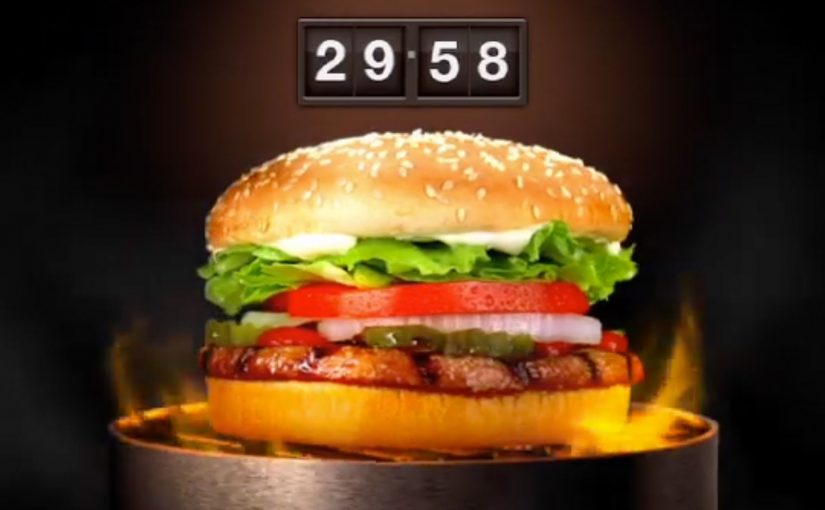
Stare at a picture of a Whopper long enough and you win one. That’s the premise of an interactive TV campaign from Burger King. What looks like a never-ending ad is actually a dedicated TV channel on DirecTV channel 111, built around a spinning flame-grilled burger and a timer.

To win, you tune in and activate the Whopper Lust challenge. A five-minute countdown starts, and you have to keep watching the rotating Whopper for the full duration. Make it to five minutes and you earn one free burger. Keep going for another ten and you earn two. Keep going and the rewards scale. The longer you last, the more you unlock.

The catch is that the channel occasionally prompts you to hit buttons on your remote. Miss one and the clock resets, so you lose the reward you were building toward. Complete the challenge and you can claim the free burger directly on the TV.

How the mechanic turns attention into currency

This is “watch time” treated like a loyalty program. Here, “watch time” means the viewer’s sustained, verified attention, not just a channel left on in the background. The spinning Whopper is deliberately hypnotic, the timer makes the commitment explicit, and the remote prompts prevent passive cheating. It is simple, but it forces real engagement rather than background viewing.

That works because the timer defines the commitment, the remote prompts verify attention, and the visible progress makes the reward feel earned rather than handed out.

In US quick-service marketing, converting a passive channel into a participation loop can buy disproportionate attention without buying proportional media.

Why this lands

It works because it is a dare, not a discount. The reward feels earned, and the friction is oddly satisfying because it creates tension. Will you slip and reset. The interaction also turns a solitary act. Watching TV. Into a game you can talk about immediately.

Extractable takeaway: If you want people to stay with a message, make the “cost” a clear, timed commitment and add periodic interaction checks, so attention becomes an active choice rather than a passive exposure.

What Burger King is really optimizing

This is not just a giveaway. It is a retention play. The real question is how to turn passive media time into a branded challenge people willingly stay with. The channel trains repeat viewing, creates a habit loop, and attaches the brand to a measurable “I lasted” story. Reported campaign figures describe large volumes of burgers given away and large volumes of watch minutes generated over the week.

What to steal from attention-for-reward mechanics

  • Make the rule instantly legible. “Watch X minutes. Win Y.” is frictionless to understand.
  • Prevent passive participation. Add simple interaction prompts to keep it honest.
  • Let rewards compound. Escalation keeps people in the loop longer than a single prize.
  • Turn viewing into a game. A timer and resets create stakes without complex tech.

A few fast answers before you act

What is the Whopper Lust Challenge?

It’s an interactive TV activation where viewers watch a dedicated Burger King channel and earn free Whoppers based on how long they stay engaged.

How do you win a free Whopper?

You activate the challenge, watch the spinning Whopper for five minutes, and respond correctly to occasional remote-control prompts so the timer does not reset.

Why add remote button prompts?

To ensure people are actually watching and interacting, not leaving the channel on in the background.

What makes this different from a normal TV ad?

The ad is the channel, and the viewer is part of the mechanic. Time and interaction directly determine the reward.

What’s the main risk with this format?

If the interaction prompts feel unfair, too frequent, or glitchy, frustration overwhelms the fun and people drop out.