
GOL Airlines: Mobile Check-in banner you fly

Here is a pretty innovative banner ad from AlmapBBDO in Brazil for GOL Airlines. The banner challenges you to imagine what it would be like to “fly” on your mobile phone.

You submit your mobile number into the banner. Seconds later you get a live call with flight instructions. At the same time the page transforms into a flying game controlled directly from your phone keypad.

You then fly a virtual plane across a major Brazilian travel site while destination deals appear underneath the route you choose. Flying is simple. Touch numbers to change direction and trigger special manoeuvres. The ad finishes by reminding you that flying is easier when you check in via your mobile phone.

In travel categories where products feel interchangeable, interactive creative wins when it turns a service benefit into a felt experience in seconds.

A banner that calls you back

The key move is not the game. It is the phone call. The call instantly makes the experience feel “live” and personal, and it bridges the banner and the handset into one connected moment. Once the call happens, the user is no longer passively viewing an ad. They are inside a two-device interaction.

The real question is whether your creative can make the service benefit happen inside the unit, rather than only claiming it.

This is a classic example of making the handset part of the unit. The mobile phone becomes the interface, which proves the check-in promise instead of describing it.

The mechanic: second-screen control without an app

Most second-screen ideas fail because they ask people to download something or switch contexts. This one uses what every phone already has. The keypad. In other words, the phone becomes a simple remote control for what happens on the page. That choice removes onboarding friction and makes the interaction feel surprisingly accessible for a banner unit.

It also creates a clean narrative arc. Number entered. Call received. Instructions delivered. Game begins. Deals appear. The brand claim lands as the closing line rather than the opening pitch.

In consumer travel marketing, where attention is scarce and booking friction is high, this kind of second-screen viewer control turns “convenience” into something you can feel.

Why the “flying game” format fits the job

The game is not meant to be deep. It is meant to create one sensation. Control. When you steer the plane with your own phone while destination deals appear under your route, the ad links that felt control to the check-in promise.

Extractable takeaway: If your benefit is “ease,” build a small interaction that gives the viewer control and a useful reward in the same moment. In a “message as mechanism” execution, the claim is delivered through the interaction itself, not a line of copy.

Steal this from GOL’s mobile check-in banner

  • Use a real-world channel as the trigger. A live call is stronger than a visual prompt because it changes the user’s state immediately.
  • Make the phone the interface. If you are selling a mobile service, let the mobile device do the work inside the experience.
  • Keep controls primitive and universal. Keypad inputs beat complex gestures when you need instant comprehension.
  • Reward the interaction with utility. Deals, destinations, availability, or next steps should appear as part of play, not after it.
  • End with the service tie-back. Let the experience earn the claim, then state it plainly.

A few fast answers before you act

What is the core idea of the GOL mobile-controlled banner?

You enter your phone number into a banner, receive a live call with “flight” instructions, and then control an on-page flying game using your phone keypad while travel deals appear as you fly.

Why does a phone call change the effectiveness of a banner ad?

It makes the experience feel immediate and real, and it creates a bridge from passive viewing to active participation without asking the user to install anything.

What category situations benefit most from this pattern?

Categories where the product is hard to differentiate visually and the benefit is “convenience” or “ease.” Airlines, ticketing, banking, utilities, and service platforms.

What is the biggest execution risk?

Operational friction. If the call is delayed, fails, or feels spammy, the experience collapses. Timing, consent clarity, and reliability are everything.

How would you modernise the mechanic without changing the concept?

Keep the phone as controller, but use a consent-forward trigger and fast connection method. For example, a one-tap call prompt or a verified in-browser handoff that still preserves the “live instructions” feeling.
Claro: Ringtowns

Turning coverage into something people can carry

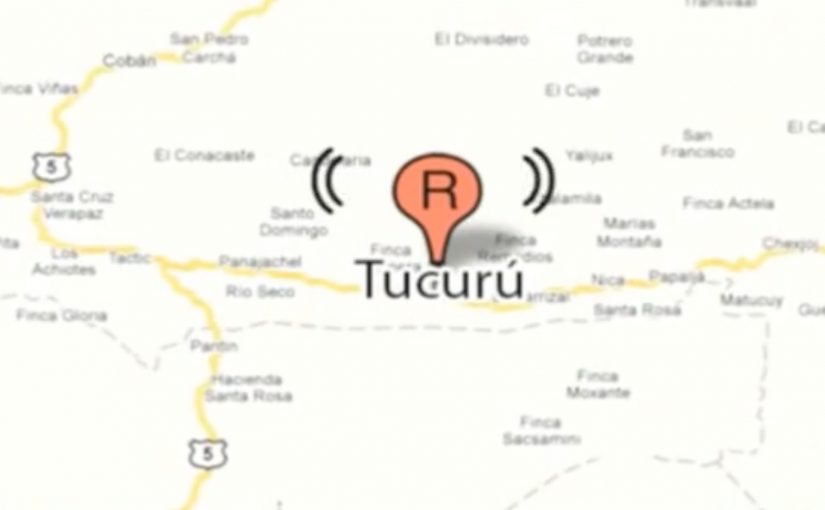
Claro is one of the leading telecommunications companies in Guatemala and it faces a constant struggle to combat negative perceptions of their network coverage. So Ogilvy Guatemala created a campaign to counter these perceptions and communicate the wide coverage of Claro by involving consumers through their cellphones.

Imitating the sound of the traditional ringtones they communicated the names of towns and remote communities in the country. The campaign “Ringtowns” was based on local realities in Guatemala to create a strong sense of identity and pride, while communicating the wide coverage of Claro in an innovative manner. In the campaign, each “Ringtown” is a downloadable ringtone that encodes a town or community name into the audio, so the place name itself becomes the message.

The mechanic: make a town name sound like a ringtone

The product here is not a poster or a banner. It is a piece of audio people choose to install. Each ringtone is designed to sound like a familiar phone ring while “saying” a place name, so the coverage claim becomes something you hear repeatedly in daily life.

A “Ringtown” is a downloadable ringtone that encodes a specific town or community name into the audio, so the location itself becomes the message.

In telecom categories where coverage is questioned, making the proof travel through personal devices can outperform traditional persuasion because it shows up in real social moments.

In emerging-market telecom markets, coverage trust is shaped as much by social stories as by technical maps.

Why it lands: social proof disguised as personalization

The real question is whether you can make a skeptical coverage claim feel like a personal identity choice, not corporate reassurance. This works because it turns a skeptical claim, “We cover remote places,” into a personalized choice. If I download a ringtone that represents my town, then every time my phone rings in public, it signals both identity and reach. That shift turns the coverage narrative from a corporate statement into a consumer-owned artifact that other people hear.

Extractable takeaway: When an attribute is distrusted, package the proof as a personalized utility people choose, keep, and replay in public.

What Claro is really buying with this format

This is an awareness campaign that behaves like distribution. Downloads create repeat exposures. Call events create additional impressions. Sharing extends reach without extra media spend. An opt-in utility is a stronger lever than another coverage-map ad because repetition is user-chosen and public.

Most importantly, it reframes “coverage” from a technical map into a cultural map. Names and pride replace bars and statistics.

Design moves that make proof portable

  • Make the message a utility. If people can use it daily, frequency is built in.
  • Use identity as the opt-in. People adopt things that say something about where they are from.
  • Design for public replay. Ringtones happen around other people, which makes the message audible and social.
  • Keep distribution simple. Website download and text message fulfillment reduce barriers.

A few fast answers before you act

What is Claro’s Ringtowns campaign?

It is a mobile campaign that turns town and community names into ringtone-style audio. People download the ringtones, and every incoming call becomes a small, repeated reminder of Claro’s coverage.

How does it communicate network coverage without showing a map?

It uses place names as the proof. By turning remote locations into ringtones, the campaign suggests breadth of coverage through cultural recognition rather than technical claims.

Why is the ringtone format powerful for marketing?

A ringtone is repeated, public, and chosen by the user. That combination creates high frequency exposure with built-in social visibility.

What is the key participation mechanic?

Users download one of the “Ringtowns” from the Claro website or request it by text message. Installation is the commitment step that creates ongoing exposure.

What is the biggest risk if you copy this idea?

If the audio is annoying or the payoff feels unclear, people will not keep it installed. The artifact has to be genuinely usable, not just clever once.

The North Face: Red Flags in China

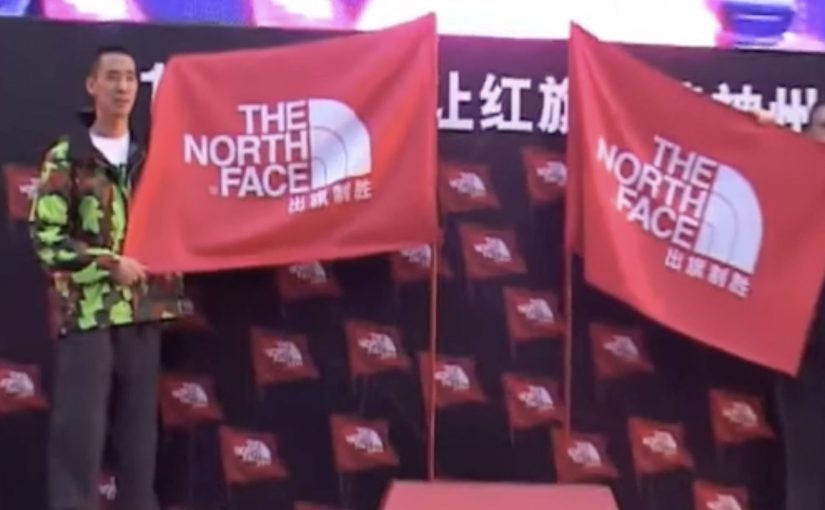
The North Face in China turns a simple outdoor ritual into a phone-powered race. You “plant” a virtual red flag to claim a location. You get the bragging rights of being first. Then you try to out-plant everyone else.

A modern take on the oldest explorer move in the book

Planting a flag is a universally understood symbol. It’s the shorthand for “I was here first.” This campaign borrows that instinct and digitizes it, so the only equipment you need is a mobile phone.

The mechanic: claim a place, then defend your status

At the heart of the idea is a competitive map. Participants place virtual red flags on locations they discover, and the campaign keeps score so “firsts” become collectible. It’s a light-touch way to make exploration feel like a game you can win, not just a virtue you should aspire to.

In fast-growing outdoor markets where many people are still taking their first steps into hiking culture, this kind of social competition is an effective on-ramp.

Why it lands: it converts curiosity into a scoreboard

Outdoor positioning often sounds lofty. “Explore more.” “Get outside.” The problem is that those ideas are hard to act on today, especially in cities where “nature” is not a default habit.

Extractable takeaway: If you want behavior change, give people a visible “progress signal” they can earn quickly. A simple status marker (first, top 10, streak, champion) turns vague aspiration into a repeatable loop.

Red flags work because they’re instantly legible. You don’t need instructions to understand what it means to claim something, and you don’t need a long explanation to feel the urge to beat someone else to the next spot.

The real question is how do you turn exploration from a brand line into a repeatable action people want to perform?

The business intent: make “Never Stop Exploring” measurable

This is a smart brand move because it makes “Never Stop Exploring” visible as behavior instead of leaving it as a slogan.

Case-study write-ups describe this as an integrated push that blends mobile participation with on-ground visibility and retail activation. The core goal is to move the brand from “admired” to “acted on”, by making exploration something people can start immediately, then repeat.

What brand teams can steal from Red Flags

  • Use a symbol people already understand: flags, stamps, passports, badges. Familiar metaphors reduce friction.
  • Turn progress into a public artifact: a claimed location or visible marker is more motivating than a private point total.
  • Design for repeat loops: one action should naturally suggest the next one.
  • Make competition optional but obvious: the scoreboard should be there for people who want it, without blocking casual participation.
  • Reward “first steps”: the earliest wins matter most when you’re trying to create a new habit.

A few fast answers before you act

What is the Red Flags idea in one sentence?

The Red Flags idea is a mobile competition where people plant virtual red flags to claim places and earn status for being first, encouraging more exploration through a simple scoreboard.

Why does “claiming a location” work so well?

Claiming a location works because it makes exploration feel personal and scarce. Once a place is “yours”, you feel ownership, and ownership increases repeat behavior.

Is this gamification or location-based marketing?

Red Flags is both gamification and location-based marketing. The location is the proof of action, and the game layer, claims, status, and competition, supplies motivation and repeatability.

What’s the main risk in copying this mechanic?

The main risk in copying this mechanic is overcomplicating it. If placing the first marker takes too long or requires too many steps, you lose the impulse that makes the idea work.

What’s a modern equivalent if you don’t want maps?

A modern equivalent without maps is any “claimable” unit: completing a route, checking in at partner venues, finishing a micro-challenge, or earning a time-bound “first” in a shared feed.