
Norte Beer: Photoblocker

After their successful campaigns for Andes Beer in Argentina, Del Campo Nazca Saatchi & Saatchi is back with another beer campaign. This time it is a TV ad that highlights another Argentine beer-related invention.

A beer cooler that fights the camera flash

The invention is described as the Norte “Photoblocker”. A functional beer cooler fitted with sensors that detect camera flashes. When a flash goes off nearby, it fires back its own burst of light to overexpose the photo and make faces hard to recognize.

In nightlife culture and bar marketing, protecting privacy in public spaces is a relatable tension that spreads fast through word-of-mouth.

Why it lands

The idea works because it turns an everyday annoyance into a “brand-powered solution”. Being tagged in a messy night-out photo is a modern fear, and the Photoblocker is a simple, visual punchline that makes the benefit obvious without explanation. It also sets up a clean contrast. With Photoblocker versus without Photoblocker. That before-and-after logic is perfect for TV, but it also hints at a real-world stunt, which is where the campaign earns extra talk value.

Extractable takeaway: If you can productize a social pain point into a physical prop that demonstrates itself in one second, you get both a clear story and a repeatable proof moment people will retell.

What the brand is really doing

This is less about claiming a taste difference and more about claiming a role in the night. The real question is how a beer brand can become useful in the exact social moment where embarrassment starts. Norte positions itself as “on your side” in the club. The brand becomes the enabler of freedom, mischief, and plausible deniability, with a device that dramatizes that promise.

What to borrow from this nightlife privacy stunt

  • Start from a real behavioral pain. Here it is social photo-tagging anxiety.
  • Build a prop that shows the benefit instantly. One flash. One ruined photo. No explanation needed.
  • Use an obvious contrast format. “With / without” is easy to remember and easy to share.
  • Make the stunt feel usable. Even if it is promotional, it should look like something you would want in real life.
  • Keep the brand role credible. The solution must feel like it belongs in the product’s world.

A few fast answers before you act

What is the Photoblocker, in one sentence?

A beer cooler that detects camera flashes and fires back light to spoil photos taken nearby.

Why is this a “beer campaign” and not just a gadget gag?

Because it connects directly to a drinking occasion and positions the brand as a protector of nightlife freedom, not just a beverage.

What makes the mechanic so shareable?

It is visual, instantaneous, and easy to explain. People understand the benefit the moment they see a flash ruin a photo.

What is the biggest credibility risk?

If the audience thinks it is impossible or staged, the “solution” stops being funny and becomes just an ad trick. The execution has to look functional.

How can other brands apply this pattern without copying it?

Identify a socially painful moment in your category, then build a simple, physical demonstration that resolves it in a way anyone can understand at a glance.
Norte: The Best Excuse Ever

A night out with the boys usually needs an excuse, at least as the joke goes. Norte, a beer brand associated with northern Argentina, decides to turn that familiar line into a socially useful premise.

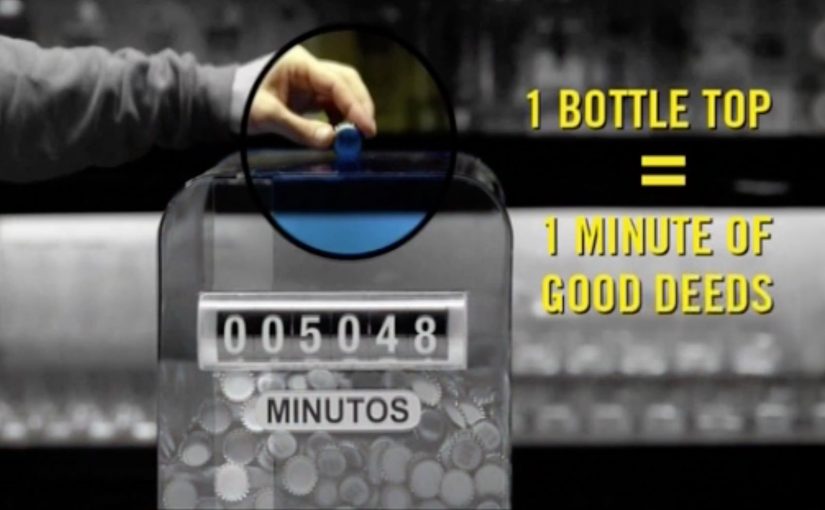
The idea is deliberately simple. For every Norte beer consumed at a bar, the brand donates one minute of time to practical community work, including fixing houses, maintaining parks, and repairing schools. Followers can monitor the donated minutes and the progress made through a dedicated website, which turns “we went for a beer” into a measurable counter of good deeds.

How the “minutes” mechanic works

The mechanic converts consumption into a visible unit of contribution. One beer equals one minute, then the brand performs the work and publishes progress so the audience can see the tally move. The counter is the proof, and the proof is the story people repeat.

In FMCG marketing, especially in categories tied to social rituals, converting a purchase into a transparent, trackable unit of public benefit can reframe indulgence as participation.

Why it lands

It removes the defensiveness from the behavior by giving it a credible upside. The campaign is not asking people to stop going out. It is redirecting the narrative from “pointless drinking” to “we contributed minutes.” The tracking layer matters because it reduces cynicism, since the audience can follow a concrete output rather than a vague promise.

Extractable takeaway: If your category has a guilt narrative, turn the core behavior into a quantifiable unit of visible impact, then publish progress often enough that people can use it as social proof.

What the brand is really trying to win

This is reputation as much as reach. Norte is positioning itself as the beer you can choose without needing to defend the choice later. The community work is the legitimacy, and the “best excuse” line is the social wrapper that helps the story travel.

The real question is whether a beer brand can turn a familiar excuse into a credible, repeatable proof of usefulness.

What to borrow from Norte’s minute logic

  • Make the unit understandable. A minute is easier to grasp than a donation percentage.
  • Design the proof before the film. A public counter and visible work outputs keep the idea credible.
  • Let the audience retell it in one sentence. “Every beer adds a minute” is built for word-of-mouth.
  • Guard the integrity. Transparency and follow-through matter more here than polish.

A few fast answers before you act

What is “The Best Excuse Ever” in one line?

A beer campaign where each Norte beer consumed converts into one minute of real community work, tracked publicly so people can see progress.

Why does the minute-based unit help?

It is concrete and easy to visualize. It also makes progress feel additive, so participation scales naturally with social occasions.

What makes this more credible than typical cause marketing?

The proof mechanism. A visible counter plus documented work outputs reduces the “donation fog” that often makes audiences skeptical.

What is the biggest risk with this approach?

If the brand cannot consistently deliver the promised work, the counter becomes a liability and the campaign reads as opportunism.

When does this model work best?

When consumption is already social and habitual, and the brand can operationally execute real-world outputs at the pace the campaign generates demand.