
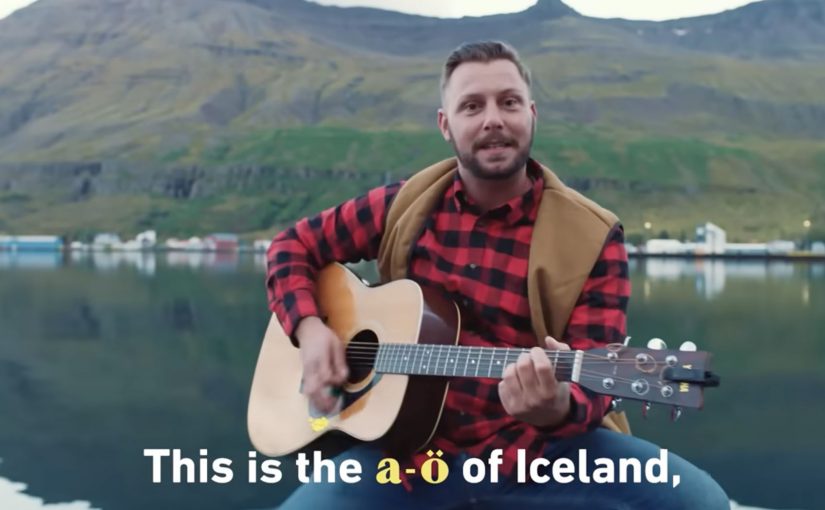
The hardest karaoke song in the world

Iceland launches a tourism campaign that turns its “notoriously difficult-to-learn” language into a challenge you can sing. The hook is a catchy karaoke track called “The A-Ö of Iceland”, designed to help tourists get to grips with Icelandic by working through the 32 letters of the Icelandic alphabet and pairing them with common words and phrases.

Performed by Icelandic comedian Steindi Jr, the song leans into the joy of trying. It plays with the difference between a torfbær (turf house) and a bílaleigubíll (hire car). It also makes you remember to pack your sundskýla (trunks) for the sundlaugar (swimming pool).

The Iceland tourist board then releases a companion video showing tourists attempting to sing along. The result is exactly what the campaign promises. A playful struggle that makes the language feel less intimidating and the destination feel more human.

The real question is how you turn a language barrier into something people want to try, loudly, in public.

Why this works as tourism marketing

Language is often positioned as a barrier. This flips it into a shared experience. You do not need perfect pronunciation to participate. You just need curiosity and a willingness to try.

Extractable takeaway: When you turn “difficulty” into a shared game, you lower the psychological stakes and make participation feel safe, which makes the destination more memorable.

Karaoke is the format. Participation is the strategy

Karaoke is not just entertainment here. It is a behaviour pattern people already understand. Follow the lyrics. Try to keep up. Laugh at yourself. Share the attempt. This is stronger than a standard “learn a few phrases” explainer because it replaces instruction with participation.

That makes the campaign naturally distributable. Here, “distributable” means the audience can repeat the format themselves, not just watch it once. Because karaoke bakes in imperfect attempts, it normalizes mispronunciation and lowers the intimidation factor, which is why the content travels.

In destination marketing, especially where visitors expect language friction, turning that friction into a low-stakes performance is a reliable way to increase participation.

The pattern to steal

If you want to make a cultural “friction point” feel inviting, the structure is replicable:

  • Choose a real friction point. Pick one authentic challenge the audience expects.
  • Package it as a game. Turn it into a lightweight challenge with a clear beginning and end.
  • Let attempts be the proof. Let the audience generate the proof of participation through their attempts, not through brand claims.

A few fast answers before you act

What is “The A-Ö of Iceland”?

A tourism karaoke song that walks through the 32 letters of the Icelandic alphabet and teaches common words and phrases.

Who performs the song?

Icelandic comedian Steindi Jr.

What is the campaign asking tourists to do?

Try to sing along and, in the process, get more comfortable with Icelandic.

Why include a companion video of tourists trying?

It shows that participation is the point and invites viewers to imagine themselves attempting the song.

What is the core marketing idea?

Turn language difficulty into an enjoyable participation challenge so the destination feels accessible, memorable, and shareable.
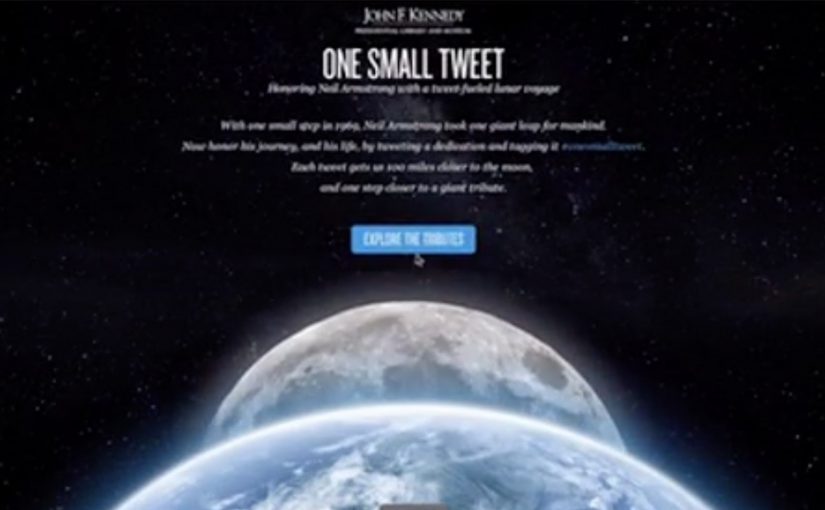
One Small Tweet: A Virtual Voyage to the Moon

A tribute that turns participation into progress

Neil Armstrong was the astronaut who took one small step for man and one giant leap for mankind. He was also the man who delivered on John F. Kennedy’s promise to be first to the lunar surface.

Neil passed away in August 2012. To honor his life, The Martin Agency created “One Small Tweet”. A roughly 238,900-mile virtual voyage to the moon powered by tweets written by admirers around the world.

Click here to watch the case video on the AdsSpot website.

How One Small Tweet works

People posted tributes tagged with #onesmalltweet. Those tweets were aggregated on www.onesmalltweet.com and used as “fuel” for the trip. Each tweet advanced the voyage by 100 miles, so the memorial was something you could watch move forward, one contribution at a time.

In cultural-institution storytelling, social participation becomes meaningful when individual contributions stack into a visible collective outcome.

Why it lands

The idea avoids the usual problem with online tributes. They are heartfelt but static. Here, the tribute has motion and a shared goal, which gives people a reason to join even if they do not know what to say at length. The real question is how to make remembrance feel collective instead of archival. This is a stronger tribute format than a static condolence wall. This works because every tweet visibly moves the same journey, turning private tribute into shared momentum. That progress mechanic, a visible journey meter that advances with each tweet, also makes the scale of remembrance legible. You can see the crowd forming, not just assume it exists.

Extractable takeaway: When you need mass participation, give people a simple action and attach it to a public progress measure. The progress becomes the story people return to and share.

What it teaches about social mechanics

  • Make the unit of contribution small. A tweet is low effort, so participation friction stays low.
  • Make accumulation visible. A journey meter turns separate tributes into one collective narrative.
  • Anchor the mechanic in meaning. The moon distance is not random. It is the symbolism that makes “100 miles per tweet” feel earned.
  • Design for global inclusion. Hashtags travel across borders faster than platform-specific formats.

A few fast answers before you act

What is “One Small Tweet”?

It is a tribute campaign that used tweets tagged #onesmalltweet to power a virtual journey to the moon, turning individual messages into visible collective progress.

How did tweets move the voyage forward?

Each tweet was treated as fuel. The mechanic advanced the trip by 100 miles per tweet, creating a progress narrative people could follow.

Why does a progress mechanic help participation?

It makes contributions feel consequential and connected. People can see their action add to something larger than a single post.

What’s the transferable pattern for other campaigns?

Use a small, easy action. Aggregate it in one place. Show cumulative progress in a way that reinforces the campaign meaning.

What is the main risk with this approach?

If the progress representation is unclear or updates feel unreliable, participation drops. The experience has to feel responsive and real.