AXA: Crazy Driver

A market-day shock that makes the point instantly

In European insurance marketing, the fastest way to explain risk is to make people feel the cost of it. AXA’s stunt is a clean example of that principle.

To raise people’s awareness and make them realize that nobody wants to pay for bad drivers, AXA decided to play a trick on people with the help of a little old lady.

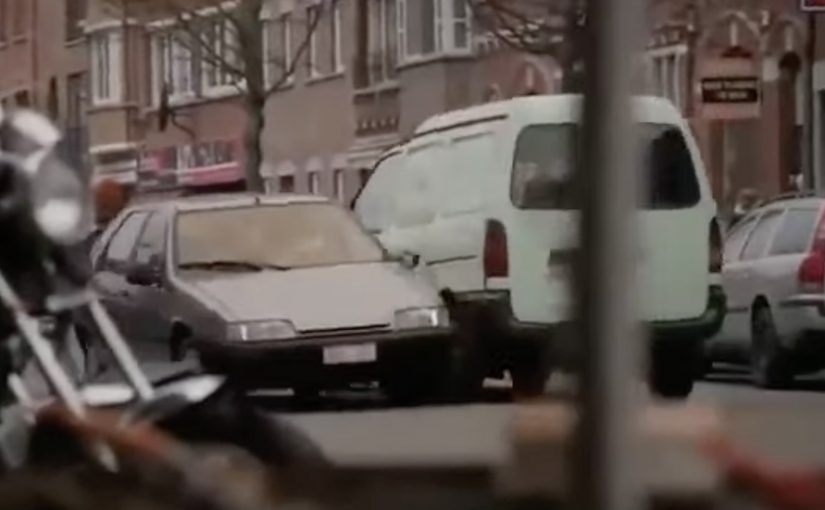
On an ordinary market day in a small, tranquil French town, an old lady was seen getting out of her parking space. In the process she knocked almost everything in her way before crashing into a line of market stalls. With the reveal being.

How the “bad driver” setup delivers the message

The mechanism is staged reality in a real environment.

AXA uses a familiar public setting and a believable trigger. A driver leaving a parking space. Then it escalates into visible damage that bystanders can immediately judge as “this is what we do not want on the road.” The trick creates attention first, then makes space for the reveal and the point.

Why it lands in the moment

It works because it activates two instincts at once. Concern and fairness.

Concern, because nobody wants to see people hurt or property damaged. Fairness, because once people witness reckless behavior, the idea of everyone else paying for it feels wrong. That emotional sequence makes the message stick without needing a long explanation.

The business intent behind the stunt

The intent is to turn an abstract insurance argument into a shared social judgment.

Bad driving creates costs. The campaign pushes viewers and bystanders toward the same conclusion. Pricing and consequences should reflect behavior. By making that conclusion feel obvious, AXA strengthens its positioning around responsibility and risk.

What to steal for your next awareness activation

  • Start with a situation everyone understands. A simple parking maneuver needs no context.
  • Make the consequence visible. People react to outcomes they can see, not statistics they cannot.
  • Use escalation to earn attention. Build from normal to shocking so the message arrives when focus is highest.
  • Let the audience reach the conclusion. The most persuasive line is the one people say to themselves first.

A few fast answers before you act

What was AXA’s “Crazy Driver” trying to change?

It aimed to reduce risky driving by confronting drivers with an exaggerated version of their own behavior, making “normal” dangerous habits feel unacceptable.

What was the core mechanic?

Use a staged, high-salience demonstration that mirrors everyday driver shortcuts, so people recognize themselves and reassess their choices in the moment.

Why does this kind of activation work better than warnings?

It replaces abstract risk with a concrete social cue. People adjust faster when they feel observed and when the “line” of acceptable behavior is made visible.

What can brands steal from this approach?

Make the behavior the content. Build a simple, repeatable moment that triggers self-recognition, then let the social context do the persuasion.

Europcar: Crush Hour

A crushed-car prank with a very public punchline

Ogilvy Paris was entrusted to drive acquisition for Europcar’s Auto Liberte, a service that aims to have you rent cars instead of buying them. So, they devised a wicked prank in which they towed away unsuspecting people’s cars, while replacing them with crushed cube cars, and a number to call for help.

The phone number given was of a local radio station that was broadcasting live to everyone in Paris.

The mechanism: make “car ownership pain” impossible to ignore

The stunt works because it hijacks a real ownership fear. Your car is gone. Then it escalates the feeling by replacing it with a cube that looks final, and a phone number that turns the private panic into a public moment.

Instead of resolving the situation quietly, the call routes into live radio, so the story instantly becomes shareable content and social proof.

In urban mobility markets, moving people from ownership to access depends on reframing convenience, cost, and hassle in a way that feels personal and immediate.

Why it lands: it turns a product claim into lived experience

Auto Liberté is an alternative to owning a car. The prank makes “owning a car is a headache” feel visceral in seconds, without needing a brochure explanation.

It also flips the usual persuasion order. Emotion first. Rationalization second. Once the audience feels the pain, the rental alternative feels like relief.

The business intent behind the spectacle

This is acquisition marketing dressed as entertainment. The goal is to create talk value at street level, then convert that attention into brand consideration for a service that competes with a deeply ingrained habit.

By integrating radio, the campaign extends the moment beyond the people on the sidewalk to a city-scale audience, while keeping the message anchored to everyday reality.

What to steal for your next “behavior change” campaign

  • Attack the habit, not the competitor. The target here is ownership friction, not another rental brand.
  • Build a simple reveal. Missing car. Crushed cube. One number to call. Instant comprehension.
  • Make the amplification native. Live radio turns reactions into content without needing a separate distribution plan.
  • Design the story to travel in one sentence. “They crushed my car and put me live on radio” spreads fast.

A few fast answers before you act

What is Europcar’s “Crush Hour” campaign?

It is a street prank created for Auto Liberté where parked cars were towed away and replaced with crushed cube cars, pushing owners to call a number that connected them to live radio.

How does the live radio element change the impact?

It turns a private moment into a public story. The call becomes instant broadcast content, which amplifies reach and makes the message feel socially real, not just advertised.

What is the campaign trying to persuade people to do?

It positions Auto Liberté as an alternative to car ownership, using a high-drama metaphor to make ownership feel stressful and renting feel like the smarter default.

Heineken Italy Activation

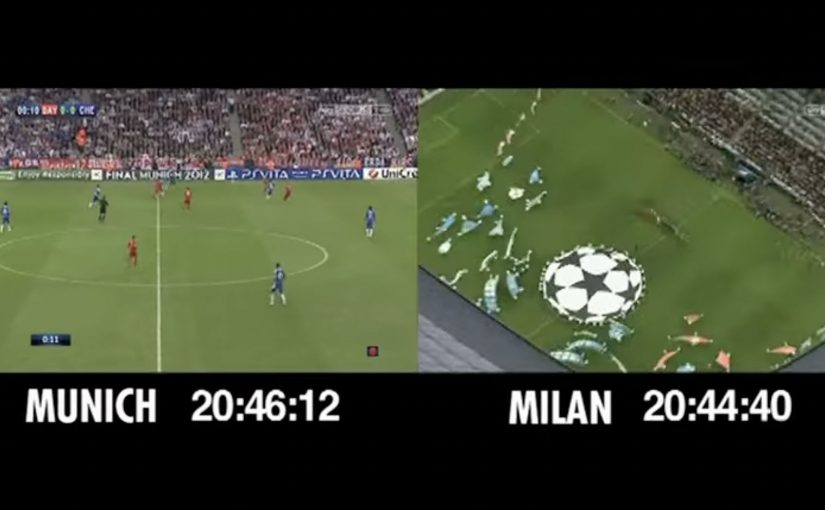
One of the most sacred moments for a lot of guys is watching football with friends. But as time goes by, that moment is increasingly at risk. So Heineken, with the help of ad agency JWT Italy, decided to remind their audience of what is at stake, right on the evening of a UEFA Champions League match: Real Madrid vs AC Milan.

A prank built around a real tension

The craft here is that Heineken does not try to “own football” with another sponsor message. It stages a situation that dramatizes the threat to the ritual, then resolves it in a way that feels like a reward for fans.

How the activation works

In simple terms, this is an activation. That is an in-person experience designed to trigger conversation, participation, and earned sharing, not just impressions.

The setup plays on a familiar dynamic. Partners and friends pull football fans away from the match with an alternative plan, then the brand flips the evening by revealing the game and turning the “loss” into a surprise watch party moment.

In European football culture, match nights are one of the last reliably shared rituals. Brands that win here do it by protecting the ritual, not interrupting it.

Why it lands

This works because it is built on empathy. It starts with a truth about modern life and competing plans, then turns the brand into the friend who restores the moment. It is entertainment with a clear social payoff, not entertainment for its own sake.

A useful way to phrase the mechanism is this. If you can make people feel you defended their time with their friends, they will remember you differently than a logo on a perimeter board.

Business intent: earn affinity, then earn retell

Heineken is not just chasing attention. It is buying a story that people want to retell the next day. That story carries the positioning in a way a standard spot cannot. Heineken. Made to entertain.

What to steal for your next ritual-based activation

  • Start with a threatened ritual. If the audience feels a real loss, the payoff lands harder.
  • Make the brand the rescuer, not the interrupter. The reveal should feel like relief, not a sales pitch.
  • Design for retelling. If a friend cannot explain it in 20 seconds, it will not travel.
  • Let the product stay in the background. The memory is the asset. The label is just the signature.

A few fast answers before you act

What is an “activation” in marketing terms?

An activation is a designed experience, often live or in the real world, that drives participation and sharing. Its output is conversation and earned media, not only paid reach.

Why do ritual-based activations work so well?

Because rituals are emotionally protected. If a brand can credibly defend a ritual, it earns affinity that is hard to replicate with standard advertising.

What is the core mechanism in this Heineken example?

Create a credible threat to a valued moment, then flip it into a surprise payoff where the brand is the enabler of the restored experience.

What needs to be true for a prank activation to feel positive?

The audience must feel safe and rewarded at the end. The reveal has to resolve the tension quickly, and the outcome must be better than what they expected.

How do you measure success for this kind of work?

Look for retell signals and intent signals. Volume and quality of organic sharing, press pickup, branded search lift, and post-exposure brand preference are often more meaningful than raw views.