
Europcar: Crush Hour

A crushed-car prank with a very public punchline

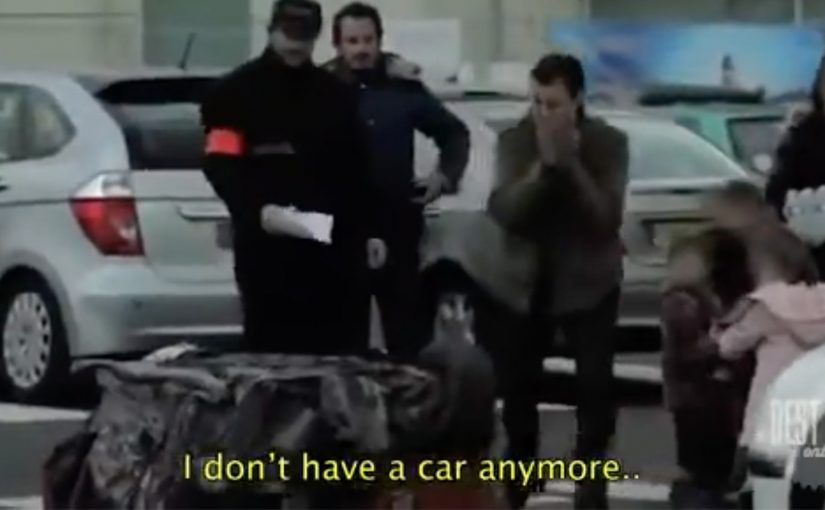
Ogilvy Paris was entrusted to drive acquisition for Europcar’s Auto Liberte, a service that aims to have you rent cars instead of buying them. So, they devised a wicked prank in which they towed away unsuspecting people’s cars, while replacing them with crushed cube cars, and a number to call for help.

The phone number given was of a local radio station that was broadcasting live to everyone in Paris.

The mechanism: make “car ownership pain” impossible to ignore

The stunt works because it hijacks a real ownership fear. Your car is gone. Then it escalates the feeling by replacing it with a cube that looks final, and a phone number that turns the private panic into a public moment. Here, “car ownership pain” means the sudden anxiety, time loss, and hassle that can come with owning and managing a car in a city.

Instead of resolving the situation quietly, the call routes into live radio, so the story instantly becomes shareable content and social proof.

In urban mobility markets, moving people from ownership to access depends on reframing convenience, cost, and hassle in a way that feels personal and immediate.

Why it lands: it turns a product claim into lived experience

Auto Liberté is an alternative to owning a car. The prank makes “owning a car is a headache” feel visceral in seconds, without needing a brochure explanation. It also flips the usual persuasion order. Emotion first. Rationalization second. Once the audience feels the pain, the rental alternative feels like relief.

Extractable takeaway: Make the old habit’s hidden costs felt in seconds, then let the alternative arrive as immediate relief.

The business intent behind the spectacle

This is acquisition marketing dressed as entertainment. The goal is to create talk value at street level, then convert that attention into brand consideration for a service that competes with a deeply ingrained habit.

The real question is whether you can make the old habit feel costly enough that the alternative feels like relief.

Prank marketing like this is worth doing only when the reveal is safe and the resolution is fast.

By integrating radio, the campaign extends the moment beyond the people on the sidewalk to a city-scale audience, while keeping the message anchored to everyday reality.

Four moves for ownership-to-access campaigns

  • Attack the habit, not the competitor. The target here is ownership friction, not another rental brand.
  • Build a simple reveal. Missing car. Crushed cube. One number to call. Instant comprehension.
  • Make the amplification native. Live radio turns reactions into content without needing a separate distribution plan.
  • Design the story to travel in one sentence. “They crushed my car and put me live on radio” spreads fast.

A few fast answers before you act

What is Europcar’s “Crush Hour” campaign?

It is a street prank created for Auto Liberté where parked cars were towed away and replaced with crushed cube cars, pushing owners to call a number for help.

How does the prank actually work, step by step?

Remove the real car. Replace it with a visually shocking “final” object. Add a single instruction. Call the number. Then route the call into a live broadcast so the reaction becomes the content.

Why use a crushed cube car instead of a simple “your car was towed” sign?

Because it escalates emotion instantly. It makes the loss feel irreversible and personal, so the audience experiences “ownership pain” before they ever hear the service pitch.

How does the live radio element change the impact?

It turns a private moment into a public story. The call becomes instant broadcast content, which amplifies reach and makes the message feel socially real, not just advertised.

What is the campaign trying to persuade people to do?

It positions Auto Liberté as an alternative to car ownership, using a high-drama metaphor to make ownership feel stressful and renting feel like relief.

What should brands be careful about with prank marketing?

Intensity and consent. If the “moment of truth” feels unsafe, humiliating, or too punitive, the brand can lose trust even if the stunt earns attention.

LG: My Wife Smashed My TV

A husband walks in the door, does what he always does, and reaches for the TV. This time, his wife beats him to it, smashing the set in front of him.

LG takes that familiar “couch potato” tension and turns it into a candid-camera series. Five households are set up with hidden cameras while the men are away at work. When they return, the TV gets destroyed, and the immediate reactions are captured on film. The footage becomes five viral videos that were reported to reach over 200,000 views on Flix, described as a leading video host in Israel.

The stunt mechanic

The mechanic is a controlled, in-home prank with a single, irreversible trigger. The TV is smashed in real time, the reaction is the content, and the series format multiplies the shareable moments across multiple “types” of husband responses.

In consumer electronics marketing, tapping into a real household ritual can make a product story travel further than feature claims because it feels like lived culture, not advertising.

Why it lands

The idea works because it is instantly legible. Everyone understands the setup in one second, and the shock produces unscripted emotion. The campaign also benefits from a simple moral frame. The TV is the symbol of the habit, so breaking it reads like breaking the routine. That makes each clip feel like a punchline people can retell without context.

Extractable takeaway: If your category is part of a daily habit, build the story around the habit itself, and let genuine reactions do the persuasion work that scripted messaging usually struggles to earn.

What LG is really buying

The real question is whether surprise can turn a familiar domestic ritual into a brand story people want to retell. LG is buying talkability here, not just views. It inserts LG into a domestic conversation about screen time and routines, then uses surprise and authenticity to earn distribution on platforms where polished product films are easy to ignore.

Takeaways from LG’s reaction-led stunt

  • Use a single clear trigger. One decisive moment creates an easy hook and a clean thumbnail narrative.
  • Design for repeatability. A series lets you capture variation, not just one lucky reaction.
  • Keep the framing simple. The fewer moving parts, the more credible the reactions feel.
  • Plan the ethical boundaries early. Surprise can work, but only if consent, safety, and aftercare are treated as part of the production, not an afterthought.

A few fast answers before you act

What is “My Wife Smashed My TV”?

A candid-camera series where wives smash their husbands’ TVs when they come home, capturing authentic reactions and packaging them as viral clips.

Why does the idea spread so easily?

Because the setup is universal and the payoff is immediate. The audience understands the relationship dynamic instantly, then watches the unscripted reaction.

What did the campaign claim as a result?

The legacy write-up reports over 200,000 views on Flix for the set of videos.

What is the main risk with prank-based advertising?

If it feels cruel, unsafe, or non-consensual, the attention flips into backlash and the brand becomes the villain of the story.

When is a reaction-led format a good fit?

When your message can be carried by a recognizable everyday situation, and the emotional response communicates the point better than exposition.

Heineken Italy Activation

One of the most sacred moments for a lot of guys is watching football with friends. But as time goes by, that moment is increasingly at risk. So Heineken, with the help of ad agency JWT Italy, decided to remind their audience of what is at stake, right on the evening of a UEFA Champions League match: Real Madrid vs AC Milan.

A prank built around a real tension

The craft here is that Heineken does not try to “own football” with another sponsor message. It stages a situation that dramatizes the threat to the ritual, then resolves it in a way that feels like a reward for fans.

How the activation works

In simple terms, this is an activation. That is an in-person experience designed to trigger conversation, participation, and earned sharing, not just impressions.

The setup plays on a familiar dynamic. Partners and friends pull football fans away from the match with an alternative plan, then the brand flips the evening by revealing the game and turning the “loss” into a surprise watch party moment.

In European football culture, match nights are one of the last reliably shared rituals. Brands that win here do it by protecting the ritual, not interrupting it.

Why it lands

This works because it is built on empathy. It starts with a truth about modern life and competing plans, then turns the brand into the friend who restores the moment. It is entertainment with a clear social payoff, not entertainment for its own sake. The real question is whether your brand can credibly protect the ritual instead of borrowing its attention.

Extractable takeaway: If you can turn a threatened shared moment into a felt relief, the brand earns a role people want to talk about, not just a logo people saw.

A useful way to phrase the mechanism is this. If you can make people feel you defended their time with their friends, they will remember you differently than a logo on a perimeter board.

Business intent: earn affinity, then earn retell

Heineken is not just chasing attention. It is buying a story that people want to retell the next day. That story carries the positioning in a way a standard spot cannot. Heineken. Made to entertain.

Steal this for ritual-protecting activations

  • Start with a threatened ritual. If the audience feels a real loss, the payoff lands harder.
  • Make the brand the rescuer, not the interrupter. The reveal should feel like relief, not a sales pitch.
  • Design for retelling. If a friend cannot explain it in 20 seconds, it will not travel.
  • Let the product stay in the background. The memory is the asset. The label is just the signature.

A few fast answers before you act

What is an “activation” in marketing terms?

An activation is a designed experience, often live or in the real world, that drives participation and sharing. Its output is conversation and earned media, not only paid reach.

Why do ritual-based activations work so well?

Because rituals are emotionally protected. If a brand can credibly defend a ritual, it earns affinity that is hard to replicate with standard advertising.

What is the core mechanism in this Heineken example?

Create a credible threat to a valued moment, then flip it into a surprise payoff where the brand is the enabler of the restored experience.

What needs to be true for a prank activation to feel positive?

The audience must feel safe and rewarded at the end. The reveal has to resolve the tension quickly, and the outcome must be better than what they expected.

How do you measure success for this kind of work?

Look for retell signals and intent signals. Retell signals are evidence people repeat the story to others. Intent signals are evidence people take a next step, like searching, visiting, or asking where to buy.