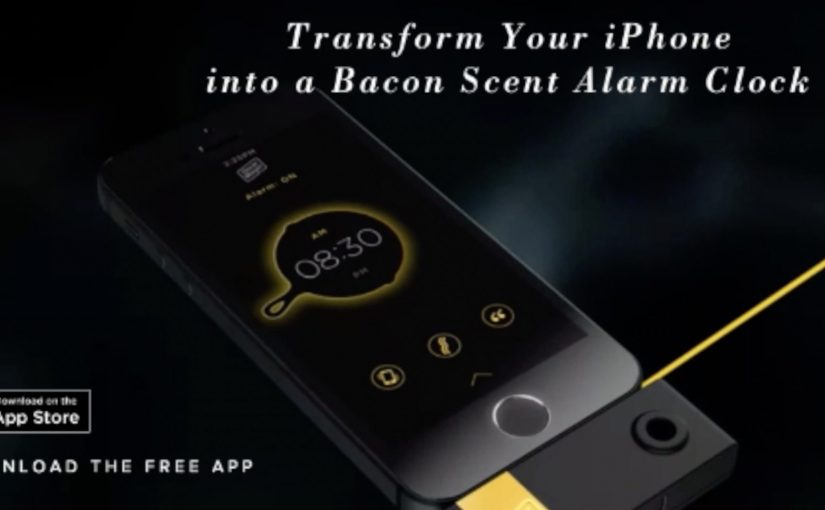
If you would like to wake up to the sound of sizzling bacon on the stove and its aroma drawing you out of bed, then head over to www.wakeupandsmellthebacon.com and answer three questions for a chance to win the special bacon-scented iPhone attachment.
The contest is being run by Oscar Mayer, and they are giving away 4700 bacon-scented iPhone attachments over the next month. Winners can then use a custom Oscar Mayer alarm app to automatically activate the iPhone attachment every morning.
How the stunt is engineered
The mechanism is a neat combination of utility and theatre: a giveaway device plus a dedicated alarm app. The theatre is the story-worthy prop that makes the idea easy to retell.
In FMCG marketing, a physical add-on that turns a brand promise into a daily ritual can outperform a one-off ad because it creates repetition without feeling like repetition.
The real question is whether you can turn a product cue into a repeatable moment people choose to replay.
This is a strong stunt because it earns replay inside an existing morning routine, not just in a one-time impression.
Why it lands
This works because the alarm app and scent attachment turn Oscar Mayer’s core cue into a repeatable, at-home sensory demo.
Extractable takeaway: Scent and sound work as marketing when they are attached to an existing habit. If the brand can own a repeatable moment in the day, the campaign shifts from impression to ritual.
It turns a product truth into a sensory demo. Oscar Mayer does not need to persuade you that bacon is appealing. It just recreates the cue that already does the persuading.
It makes the call-to-action playful. “Enter to win” is normally forgettable. Here it is a gateway to a story-worthy object, so the contest itself becomes shareable.
It upgrades branded content into branded utility. Branded utility here means a tool people use for their own sake. The alarm is not only entertainment. It is a behavior change, because the phone becomes part of a new wake-up routine.
Borrowable moves from the bacon alarm
- Pair a simple app with a tangible artifact. Physical wins feel rarer than digital, which increases talk value, meaning how likely people are to mention it unprompted.
- Design for daily replay. The strongest “stunts” are the ones that can be re-experienced without needing a second ad.
- Make the entry mechanic frictionless. Fewer questions, faster entry, and the prize does the marketing.
A few fast answers before you act
What is being promoted here?
A contest for a bacon-scented iPhone attachment, supported by an alarm app that triggers the attachment in the morning.
Why does this qualify as more than a gimmick?
Because it converts a brand promise into a repeatable experience. The “demo” happens in the user’s real life, not just on screen.
What is the main behavior change the campaign creates?
It pulls the brand into a daily wake-up habit, which creates repeated exposure without needing repeated media placements.
What makes it shareable?
The object is inherently story-worthy. People can describe it instantly, and the idea is unusual enough to travel as a headline.
What is the key risk?
Link rot and platform change. If the app link, device compatibility, or contest site stops working, the core mechanic collapses.