
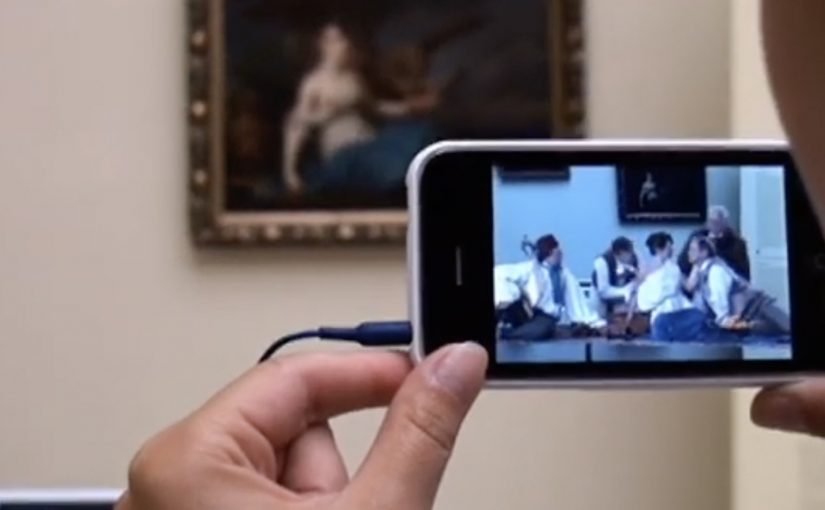
The Sukiennice Museum in Krakow is one of the oldest museums in Poland, and it is reopening after a complete renovation. The problem is not the building. The problem is attention. Young people do not automatically find 19th-century Polish art interesting.
Leo Burnett Warsaw gets the challenge to pull this audience back in, and answers it with an integrated campaign anchored by the New Sukiennice augmented reality app.
The mechanic: bring paintings to life with viewer control
The app turns the visit into an interactive layer. Point your phone at selected works and the paintings come alive, revealing their stories through short films and animated moments. Instead of reading a label first, you get pulled into a scene first, then you choose to go deeper. Here, viewer control means visitors choose when to trigger the story and whether to go deeper.
In European museums trying to win younger audiences, lightweight AR can translate static collections into short, shareable stories without rewriting the institution’s identity.
Why it lands: it swaps “art history” for narrative tension
This is not about making the museum more “digital”. It is about making the first minute feel rewarding. Young visitors do not need more information at the start. They need a reason to care. That works because short films give the paintings a hook, and the phone becomes a bridge between a familiar screen habit and an unfamiliar art period.
Extractable takeaway: If the barrier is “this feels irrelevant”, do not lead with education. Lead with story. Give people one fast, emotional moment they can experience, then let curiosity pull them into context and detail.
An integrated campaign that keeps the app from being a lonely download
The real question is how you make a heritage visit feel immediately worth a young person’s time without turning the art into a gimmick.
The app plays the central role, but it does not stand alone. The campaign also uses billboards, social media and e-cards to create buzz and point people toward the experience. The intent is clear. Get young people to show up, then let the AR layer turn “I visited” into “I discovered”.
The buzz generated by the campaign is described as attracting a significant share of Krakow’s population to the museum.
What to steal for your own cultural or heritage activation
- Start with one irresistible moment: pick a small set of works and make them unforgettable, rather than trying to animate everything.
- Put the story before the lesson: emotion first, interpretation second.
- Make it usable on-site: the experience should work in the gallery without long setup or instructions.
- Design for “showing a friend”: the best museum tech spreads when people can demonstrate it in seconds.
- Support it with media that explains the payoff: billboards and social should communicate the “why” of the visit, not just the existence of an app.
A few fast answers before you act
What is the New Sukiennice app?
It is an augmented reality museum app designed to bring selected paintings to life and reveal their stories through short film content during a gallery visit.
Why is AR a good fit for 19th-century painting?
Because the barrier is often distance. AR can add narrative entry points and context quickly, helping visitors connect emotionally before they engage intellectually.
What makes this more than a tech demo?
The app is positioned as the core of an integrated campaign. The surrounding billboards, social media and e-cards create the motivation to visit, and the on-site experience delivers the payoff.
What’s the biggest risk with museum AR?
Friction and distraction. If setup is slow, or the experience pulls attention away from the original work instead of back into it, the technology becomes the point and the art loses.
How should a museum measure success here?
Look at youth attendance lift, repeat visits, time spent in targeted rooms, and whether visitors progress from the AR moment into deeper engagement like reading labels, joining tours, or exploring more works.