
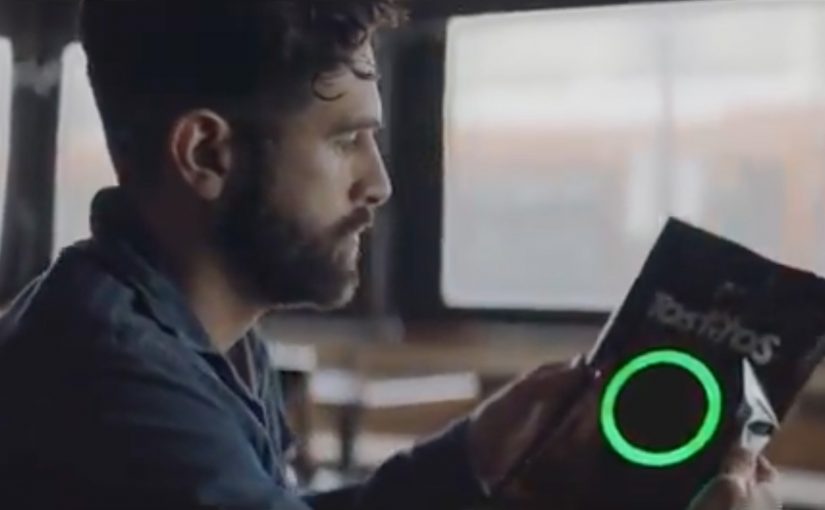
Tostitos Party Safe Bag

On Super Bowl Sunday 2017, Tostitos puts safety into the packaging. The limited-edition “Party Safe” bag can detect when you have been drinking, then helps you get home safely from the party.

How the Party Safe bag works

The trigger is built into the bag itself. The bag is created by Goodby Silverstein & Partners and comes equipped with a sensor connected to a microcontroller calibrated to detect traces of alcohol on a person’s breath. If alcohol is detected, the sensor turns red and forms the image of a steering wheel.

Then it turns that moment into action. The bag provides a $10 off Uber code along with a “Don’t drink and drive” message. If you have an NFC-enabled smartphone, you can also tap the bag to call an Uber.

In US mass-market brands, the smartest behaviour design often lives where the decision is made, not where the messaging lives.

Why Tostitos ties this to the Super Bowl

The campaign starts from a hard, uncomfortable statistic. According to the US National Highway Traffic Safety Administration, 45 people are killed in drunk-driving crashes on Super Bowl Sunday 2015, nearly half of all traffic fatalities that day.

Extractable takeaway: When risk peaks at a predictable moment, design the intervention to appear at that exact moment and make the safe choice the easiest next step.

So the “Party Safe” bag frames itself as a practical intervention on the one day when party behaviour and driving risk collide at scale.

This is IoT packaging with a clear behavioural goal

The packaging is not a gimmick for novelty’s sake. It is packaging that nudges a specific decision at the moment it matters most. Do not drive. Call a ride.

By IoT packaging, I mean packaging with sensing and a built-in trigger that can prompt an action without a separate app.

The real question is whether your connected experience can change one specific choice at the moment it is made.

This works because it is a behaviour-change intervention first, and a tech demo second.

The smart detail is the friction reduction. The message is immediate, the code is immediate, and the tap-to-request option removes even more steps. Because detection and the next action live on the bag, the distance from recognition to compliance is intentionally short.

The pattern worth stealing

If you work on connected experiences, the structure is reusable.

  • Put the sensor where the decision happens. Not in a separate app.
  • Translate detection into a single, obvious next action. Make the next step unmissable.
  • Pair the behavioural nudge with a concrete incentive. Give people a reason to comply faster.

A few fast answers before you act

What is the Tostitos Party Safe Bag?

A limited-edition Tostitos bag that detects alcohol on a person’s breath, then prompts a safer way to get home.

How does the bag detect drinking?

A sensor connected to a microcontroller is calibrated to detect traces of alcohol on the breath.

What happens when alcohol is detected?

The sensor turns red and forms a steering-wheel image. The bag provides a $10 off Uber code and a “Don’t drink and drive” message.

How does the Uber action work?

You can use the $10 off code, and NFC-enabled smartphones can tap the bag to call an Uber.
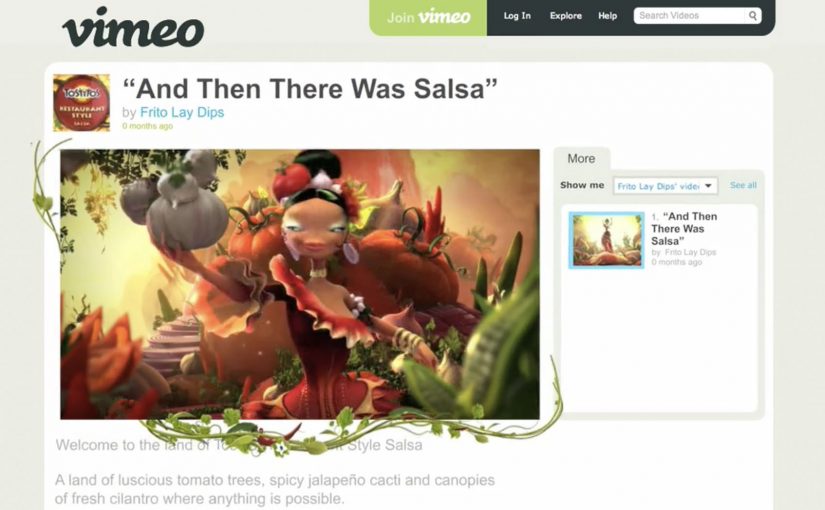
Tostitos: And Then There Was Salsa

Frito-Lay teamed up with online video sharing site Vimeo to create a new advertising campaign for their Tostitos Salsa. The video began with some beautiful CG which then quickly swallowed the viewer’s browser to become a full-screen experience.

When the player becomes the canvas

The execution starts like a normal hosted film. Then the interface itself becomes part of the performance, as the visuals expand beyond the frame and turn the browser window into the stage.

The takeover mechanic in plain terms

The mechanism is a deliberate break of expectation. Here, the takeover mechanic means the film expands beyond the player so the browser window itself feels absorbed into the ad. The film uses high-polish CG to earn trust, then escalates into a page takeover that makes the viewer feel like they have crossed a boundary from “watching” into “being inside” the world of the spot.

In digital brand experiences, fullscreen takeovers work when the format shift is the message, not just a louder container for the same footage.

Why this lands

It delivers a physical sensation in a purely digital space. That moment of “wait, my browser is gone” creates surprise and attention, and it also flatters the viewer by treating the screen as a cinematic environment rather than a box with controls.

Extractable takeaway: If you want immersion, do not only add detail inside the frame. Change the frame itself in a way that reinforces the story you are telling.

What Frito-Lay is buying with the Vimeo partnership

The intent is to make a salsa film feel like an event. A takeover turns a standard online view into a shareable “you have to see this” moment, and it associates the product with craft, spectacle, and a bit of controlled chaos.

The real question is how to make a salsa ad feel bigger than a pre-roll without losing the viewer in empty spectacle.

What to steal for your next immersive video

  • Earn attention first, then escalate. Start simple, then make the environment change once the viewer is already hooked.
  • Make the format shift meaningful. The jump to full-screen should feel like part of the narrative, not a gimmick.
  • Design one unforgettable beat. The takeover moment is the memory. Everything else supports that single peak.
  • Pick the right host for the idea. A platform partnership matters most when the platform’s norms are part of the contrast you are exploiting.

A few fast answers before you act

What is “And Then There Was Salsa”?

It is a Tostitos Salsa online film distributed via a Vimeo partnership, designed to shift from a normal player view into a full-screen browser takeover for a more immersive effect.

What is the core mechanic that makes it feel different?

The experience changes the viewing container. It starts as a standard video, then expands beyond the player and takes over the browser window, so the interface becomes part of the execution.

Why does the Vimeo partnership matter here?

It matters because the idea depends on contrast. A familiar hosted-player environment makes the takeover feel more dramatic when the film suddenly breaks out of it.

When is a fullscreen takeover a smart choice?

When the goal is to create a memorable moment rather than maximize completion rates. It is especially useful when craft and spectacle are part of the brand story.

What should you be careful about with this pattern?

Overuse and irrelevance. If the takeover does not reinforce the idea, viewers experience it as interruption. Performance and compatibility also matter because the format depends on smooth playback.