

Hyundai Canada: Worst Parking Job Ever

Hyundai Canada: Worst Parking Job Ever

A parked 2004 Hyundai Elantra gets crushed in a parking lot incident captured on security footage. The clip is framed as the “worst parking job ever,” and it quickly becomes the kind of viral story that spreads because the outcome is so brutally clear.

The footage is dated October 22, 2009 in Ontario, Canada, and it puts the owner, Todd Jamison, at the center of an internet pile-on he did not ask for.

Then Hyundai Canada steps into the story. Instead of treating it as someone else’s bad day, they decide to become the helpful brand in the comments section, in real life. On October 30, 2009, they surprise Jamison with a brand new 2010 Hyundai Elantra Touring and capture the handover on film.

How the brand response is engineered

The mechanism is fast, simple, and camera-friendly. A widely shared piece of user-discovered content creates attention. The brand responds with a real-world act that resolves the narrative tension, then publishes the “resolution” as a second video that is just as easy to share as the original. Because the second video closes the loop on the first, it spreads as payoff, not PR.

In automotive PR and brand storytelling, this is the cleanest form of earned media: a human problem, a timely intervention, and a documented payoff that feels generous rather than scripted.

In North American automotive marketing, these moments recur, so the only scalable advantage is showing up with a real fix fast.

The real question is whether you can resolve the tension with a meaningful action before the internet moves on.

Why it lands

Because it completes the story people were already watching. The first video triggers disbelief and sympathy. The second video rewards that emotion with a satisfying outcome. Hyundai does not try to outshout the internet. It aligns with what viewers already want to see happen next, then makes that ending real.

Extractable takeaway: When a viral moment creates an obvious “someone should help” impulse, the best brand move is to deliver a concrete fix fast, then tell the story as a continuation, not a campaign. The sequel is the strategy.

Steal the “unexpected hero” play

An “unexpected hero” play is when a brand solves a real problem for a real person in public, and lets the action carry the story.

  • Respond to the narrative, not the metrics. If the situation has a clear moral shape, your action will travel further than your media spend.
  • Make the intervention unambiguously useful. A replacement car is simple to understand. Complexity dilutes goodwill.
  • Publish the resolution, not the process. Viewers want the moment of surprise and relief, not a corporate explainer.
  • Keep the tone human. The brand should feel like it is helping a person, not exploiting an incident.

A few fast answers before you act

What is the core story arc here?

A widely shared security clip shows a parked car being crushed. Hyundai Canada follows up by replacing the car and filming the surprise, turning shock into closure.

Why is the follow-up video essential?

Because it converts attention into meaning. Without the sequel, the story is only misfortune. With it, the story becomes relief and brand goodwill.

What makes this feel authentic instead of opportunistic?

The action is tangible and directly benefits the person who suffered the loss. The brand is not adding commentary. It is changing the outcome.

How do you decide whether to engage at all?

Engage only if you can improve the outcome for the affected person in a way that is clear on first viewing. If you cannot deliver a meaningful fix, the safest move is to avoid turning someone else’s misfortune into content.

What is the biggest risk when brands copy this approach?

Performative help. If the intervention is small, conditional, or self-serving, the audience will treat it as exploitation of someone else’s bad day.
Vodafone NZ: 1000 phones, 53 ringtones, 1 song

Vodafone NZ: 1000 phones, 53 ringtones, 1 song

When “viral” requires real engineering

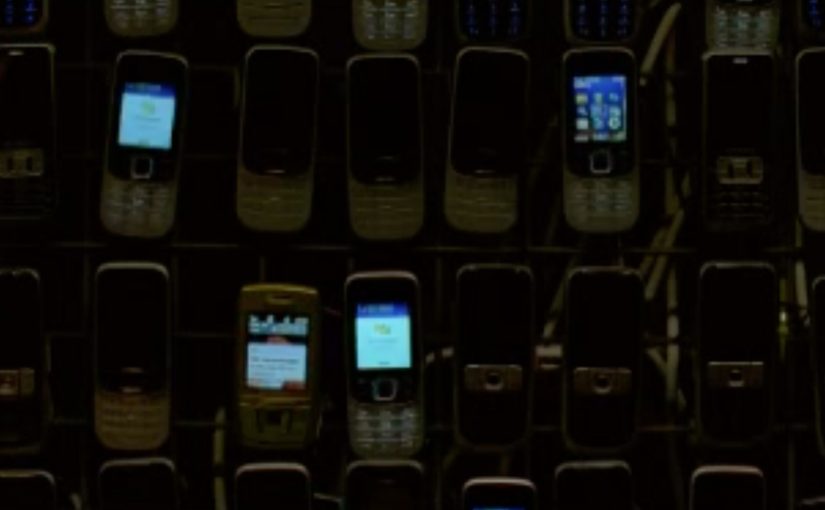
To create a viral video these days, you need to do something great and unique. Vodafone NZ hired a production team to orchestrate cellphones into “playing” Tchaikovsky’s 1812 Overture.

This was done using 1000 phones and 53 different ringtone alerts, synchronized to recreate the classical piece.

How 1000 phones became an orchestra

The mechanism was constraint-driven composition.

Instead of instruments, the “sound palette” was a fixed set of ringtone alerts. The team then arranged phones like sections in an orchestra and synchronized their playback so the combined output recreated the music.

What makes this work on camera is that you can see the system. Rows of devices. Repetition at scale. A human-built machine producing a familiar piece.

In global telecom marketing, the most shareable films often work because the effort is visible.

Why the idea lands with viewers

It lands because it is both absurd and precise, and the visible synchronization lets the viewer sense the complexity without needing the full production process.

Extractable takeaway: When the constraint is instantly legible and the build is visibly real, the craft becomes the hook that earns attention and sharing.

It also bridges cultures. Highbrow music meets everyday tech, creating an unexpected contrast that feels fresh instead of forced.

The business intent behind the ringtone orchestra

The intent was to associate Vodafone with coordination, scale, and modern connectivity, without having to say those words.

The real question is whether your “viral” idea would still be interesting if the camera had to capture a real system doing the work.

This is the right kind of brand film for a telco. It shows coordination and connectivity instead of claiming it.

Steal this pattern from the ringtone orchestra

  • Make effort visible. When the craft can be seen, viewers reward it with attention and sharing.
  • Use a constraint as the hook. “Only ringtones” creates a clear challenge people instantly understand.
  • Engineer a spectacle that reads in one frame. Scale should be obvious without explanation.
  • Let the metaphor do the branding. Show coordination and connectivity instead of claiming it.

If you like the resulting tune, you can download it to your computer, as well as the 53 ringtones used to create it, from www.vodafone.co.nz/symphonia.


A few fast answers before you act

What did Vodafone NZ create?

A film where 1000 mobile phones, using 53 different ringtone alerts, were synchronized to perform Tchaikovsky’s 1812 Overture.

What is the core mechanism?

Constraint-driven composition. A fixed set of ringtone sounds becomes the “instrument set”, and synchronization plus physical arrangement makes the system readable on camera.

Why does it work as shareable content?

The effort is visible. The scale reads instantly, and the contrast between classical music and ringtones creates a surprising but coherent hook.

What business goal does this support for a telco brand?

It turns “connectivity at scale” into a watchable metaphor. Many devices acting as one becomes an entertaining proof of coordination and network promise.

What is the most transferable takeaway?

If you can make the constraint and the craft legible in one frame, the build itself becomes the reason people share.

NOFF: Casting Tape

NOFF: Casting Tape

A trailer disguised as something you should not be watching

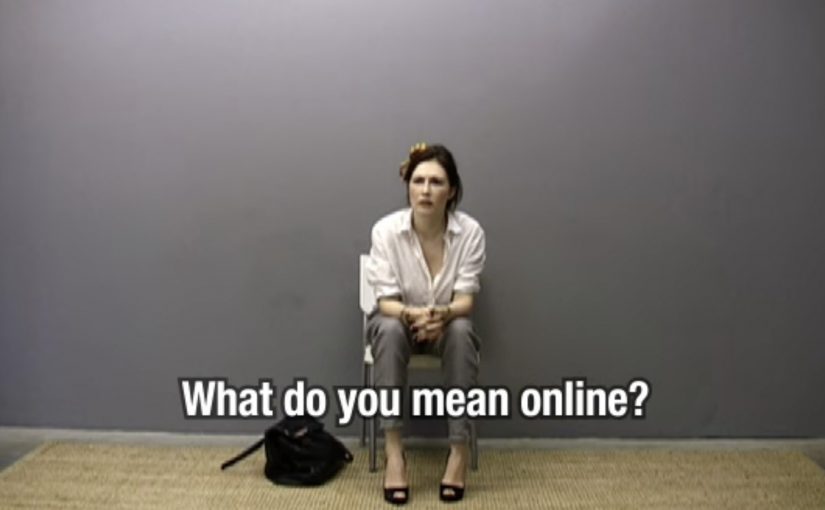
This video is presented as a “casting tape”. A raw, behind-the-scenes style clip featuring Carice van Houten that plays like a leak rather than a polished promo. The format does the heavy lifting, because it invites curiosity first and “what is this for” second.

How the mechanism pulls attention

Instead of explaining the festival with a standard trailer structure, the campaign uses a familiar industry artifact: the audition tape. It pushes it far enough into performance that viewers keep watching to see where it goes. Subtitles widen shareability across audiences who do not speak the original language, and the “found footage” tone lowers the viewer’s ad resistance.

In digital film and festival promotion, simulated behind-the-scenes footage can convert passive viewing into social forwarding because it feels like insider access.

Why it lands

It lands because it borrows the emotional contract of gossip. You are not “watching an ad”. You are watching something you might forward to someone else with a short message like “watch this”. That is the distribution advantage. The entertainment value sits in the format, not in a list of festival benefits. The real question is how to make a broad cultural offer feel like a must-watch artifact instead of a calendar listing. For a festival, this is a stronger opening move than a standard highlights reel because it sells intrigue before information.

Extractable takeaway: If your content offer is broad (a catalogue, a festival, a platform), lead with one irresistible artifact that feels like insider access. One artifact can outperform a perfectly edited overview.

What festival marketers can lift from this

  • Choose a format with built-in curiosity. Auditions, rehearsals, tests, and “first takes” invite completion.
  • Make it feel native to the category. A film festival using casting language is instantly credible.
  • Design for forwardability. A single clip people can share without explanation beats a multi-part explainer.
  • Use subtitles as reach infrastructure. They improve completion and sharing across borders.

A few fast answers before you act

What is this video promoting?

It is positioned as a promo asset for the Nederlands Online Film Festival, using a “casting tape” format to attract attention.

Why use a casting tape instead of a normal trailer?

Because casting tapes carry an “insider” feel. That makes people watch longer and share more readily than they would with an overt trailer.

What role do subtitles play here?

They make the clip understandable outside its native language and increase the odds that viewers will finish and forward it.

What makes this approach risky?

If the “leaked” framing feels deceptive rather than playful, the audience can reject it as manipulation.

How could a smaller festival apply the same idea?

Create one standout “artifact” clip (audition, rehearsal, jury-room moment) that feels like privileged access, then let it act as the entry point to your broader programme.