
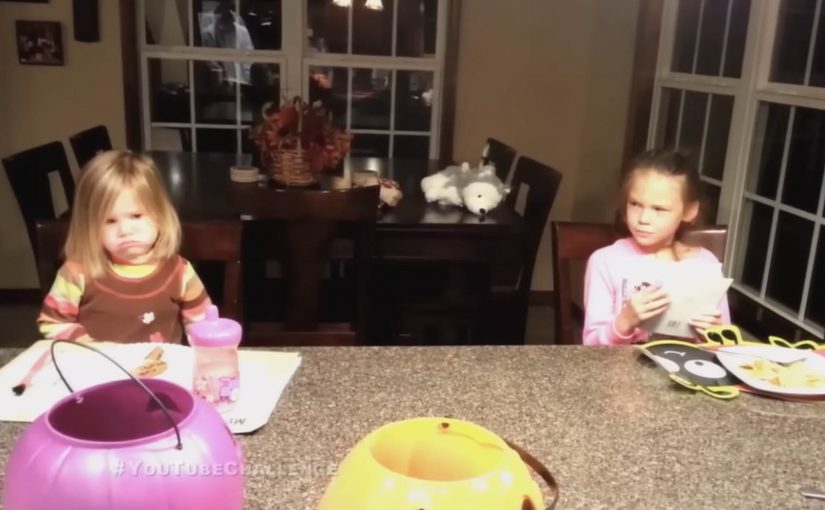
Jimmy Kimmel: Halloween Candy Prank 2013

Jimmy Kimmel: Halloween Candy Prank 2013

For the third consecutive year, talk show host Jimmy Kimmel challenges the parents of America to prank their kids and pretend that they ate all of their Halloween candy.

As always, parents oblige by the hundreds, and the results of this year’s Halloween Candy YouTube Challenge are compiled into a best-of reel.

A prank designed for mass participation

The mechanism is almost nothing. One line delivered at the worst possible moment, with a camera rolling. The show prompts the setup, parents run it at home, and YouTube becomes the route for collecting clips at scale.

That works because the prompt is so simple that families can recreate it instantly, while the show keeps editorial control by curating the best reactions into one polished reel.

In US pop-culture marketing, repeatable audience-participation formats win because they are easy to copy and still feel personal every time.

The real question is how a one-line prank becomes a yearly entertainment asset people keep recreating for free.

Why this lands

This is a smart participation format, not just a late-night gag. The emotions are instant and unedited. You get a mix of outrage, heartbreak, negotiation, and unexpected maturity, and that variety keeps the compilation watchable. It also feels like a yearly ritual, which helps the segment spread even among people who do not watch the show regularly.

Extractable takeaway: If you want repeatable virality, give people a one-sentence script, a clear capture instruction, and a predictable calendar moment, then let the audience supply infinite variation.

The previous challenge videos can be seen here: 2011 and 2012.

What repeatable participation marketers should steal

  • Make the prompt copyable. One sentence beats a complex brief.
  • Design for home production. If the content requires no special tools, submissions multiply.
  • Compile the chaos. A best-of edit turns scattered clips into a single shareable asset.
  • Repeat annually. Familiar format plus new reactions gives people a reason to come back each year.

A few fast answers before you act

What is the “I ate your Halloween candy” challenge?

Parents tell their kids they ate all the Halloween candy, film the reaction, and submit the clip for a compilation segment.

Why does this format keep working year after year?

The setup stays identical, but the reactions are endlessly different, which creates fresh entertainment without changing the mechanic.

What makes the compilation more shareable than single clips?

A best-of edit increases pace and variety, so viewers stay longer and are more likely to pass it on as a single link.

What is the core growth driver?

Low friction participation. One simple script, one simple recording, and a familiar upload behavior.

What should brands learn from this without copying the cruelty?

Use a repeatable prompt that invites audience variation, and build a clear “submit, then compile” distribution loop around it.
Carrie: Telekinetic Coffee Shop Surprise

Carrie: Telekinetic Coffee Shop Surprise

A coffee shop that turns into a horror scene

Carrie is an upcoming 2013 American supernatural horror film. It is the third film adaptation of Stephen King’s 1974 novel of the same name.

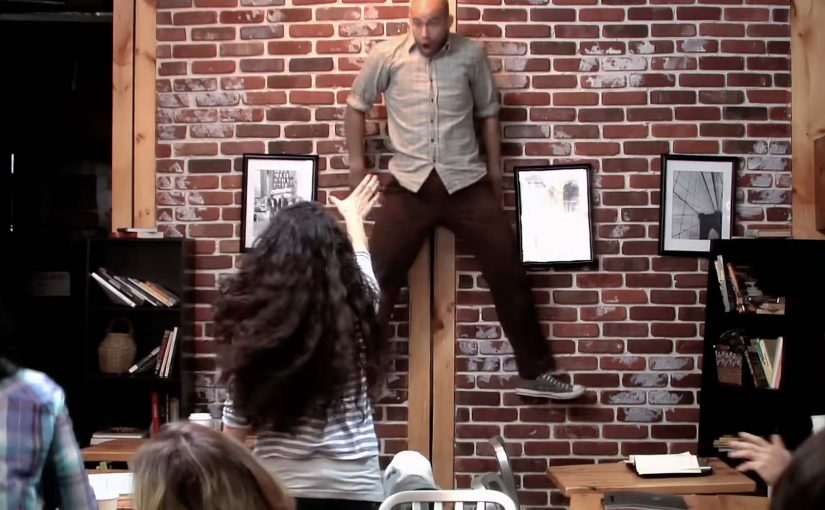
To promote the remake, Sony (with help from Thinkmodo) outfits a small coffee shop in New York with remote-controlled tables and chairs, a fake wall used to “levitate” a guy, and books that fly off the shelves by themselves. An actor takes on the role of Carrie and sets up innocent customers for a prankvertising experience they do not see coming. Here, prankvertising means a brand-built public stunt designed to capture genuine reactions on camera.

The mechanic: practical effects plus hidden cameras

The execution works because the effects are physical, not “post.” Furniture moves with real force. Books drop in real time. A wall gag sells the impossible moment. Hidden cameras then capture reactions that read as instinctive rather than performed, which is exactly what makes the video rewatchable and shareable.

In entertainment launches, engineered “you had to be there” moments are a reliable way to turn a theme into conversation without relying on a trailer.

Why it lands

The spot uses a tight emotional sequence. Normal. Confusion. Escalation. Relief. Then laughter. That arc matches how people actually experience a scare, and it gives viewers permission to share it because the payoff is reactions, not cruelty. It also maps cleanly onto the film’s core promise. Something supernatural breaks into an everyday setting, and nobody is ready for it. The real question is whether the stunt makes people feel Carrie before they watch Carrie.

Extractable takeaway: If you are selling a feeling (fear, awe, suspense), stage a believable real-world trigger that creates the feeling first, then let the audience’s reaction become your proof and your distribution.

What to steal from this horror launch

  • Make the premise legible in five seconds. Coffee shop. Spilled drink. Sudden shift. No explanation needed.
  • Use practical cues that cameras can’t fake. Real movement and real sound sell “impossible” faster than clever editing.
  • Keep the reveal product-aligned. The stunt matches the movie’s supernatural premise, so it feels like an extension of the story world.
  • Design for safe escalation. Intensity rises, but the scene resolves quickly enough that sharing feels fun, not disturbing.

A few fast answers before you act

What is the “Telekinetic Coffee Shop Surprise” for Carrie?

It is a staged hidden-camera stunt where a “Carrie” character appears to use telekinesis in a New York coffee shop, creating a real-world scare moment to promote the 2013 remake.

What is the core mechanic that makes it believable?

Practical effects in a real environment. Remote-controlled furniture, triggered props, and a wall gag create physical proof, and hidden cameras capture genuine reactions.

Why is this format effective for film marketing?

It demonstrates the film’s emotional promise in the real world, then turns audience reactions into shareable content that travels farther than a standard promo clip.

What makes prankvertising work without backlash?

When escalation is controlled, participants are not humiliated, and the payoff is relief and laughter. The moment should feel surprising, not harmful.

What’s the main transferable lesson?

Stage the feeling first. If you can reliably create the intended emotion in a real setting, the audience will do the storytelling for you.

Roman Atwood: The World’s Most Contagious Prank

Roman Atwood: The World’s Most Contagious Prank

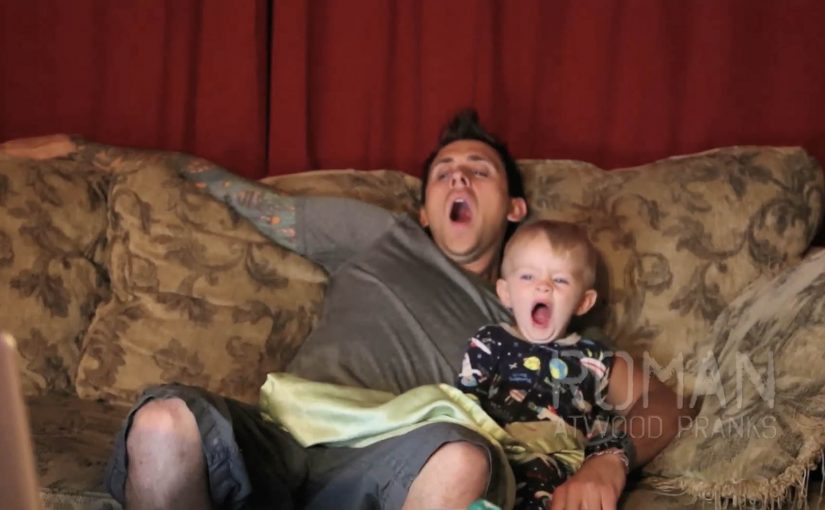
Here is an infectious yawning video created by YouTuber Roman Atwood. Try watching this nearly three minute clip of constant yawning without letting one loose yourself. I could not help but yawn while watching it.

The simplest mechanism in the world

The mechanism is pure mimicry and suggestion. You see a yawn. You anticipate a yawn. Then your body does the rest. The prank is not about shock. It is about stacking the same trigger again and again until your reflex gives in.

In social video, simple human reflexes and repeatable triggers can outperform high production because the viewer feels personally involved.

Why it lands

This works because it turns the viewer into the subject. The content is not only “watch someone yawn”. It is “can you resist”. That tiny competitive frame, a simple self-test with a clear pass-or-fail outcome, creates attention, and attention makes the reflex even harder to ignore. The real question is how you turn a passive viewer into an active participant with almost no friction. The smarter lesson for marketers is that participation can beat production value when the trigger is immediate and universal.

Extractable takeaway: If you can anchor a video around a universal, involuntary response and wrap it in a clear challenge, the audience participates while they watch. Participation is what makes the clip shareable.

How to build your own contagious challenge

  • Start with the reaction you want: pick a response that is immediate and universal, then build backwards.
  • Use repetition with purpose: one trigger is a gag. Many triggers become a challenge.
  • Make the premise explainable in one sentence: “watch this without yawning” is the whole pitch.
  • Let viewers test themselves: self-tests create comments, shares, and rematches.
  • Keep it short and focused: the tighter the loop, the stronger the contagion.

A few fast answers before you act

What is “The World’s Most Contagious Prank”?

It is a yawning prank video where the creator yawns repeatedly in public to see if bystanders and viewers “catch” the yawn reflex.

Why do people share videos like this?

Because the challenge frame is social. People want to test friends, compare reactions, and prove whether they can resist.

Is this a prank or a social experiment?

It sits in between. It uses a prank setup, but the entertainment comes from observing a predictable human reflex spread from person to person.

What is the key lesson for video marketing?

Design around a specific viewer response, then make the viewer feel like the outcome depends on them.

What is the main risk of copying this format?

If the trigger is not truly universal or the loop feels repetitive without payoff, people drop off quickly. The mechanic has to be instantly felt, not only understood.