Worst parking job ever!

Todd Jamison happens to be the unfortunate owner of the crushed 2004 Hyundai Elantra that played a starring role in a recent viral YouTube video.

Here is the security footage from October 22, 2009 in an Ontario, Canada parking lot. It highlights the worst parking job ever… 😆

Not so fast…the folks at Hyundai Canada seized the opportunity to be the heroes in this story, and surprised Jamison with a brand new 2010 Hyundai Elantra Touring on October 30, 2009.

They also captured the moment on film… 😎

Vodafone NZ: 1000 phones, 53 ringtones, 1 song

When “viral” requires real engineering

To create a viral video these days, you need to do something great and unique. Vodafone NZ hired a production team to orchestrate cellphones into “playing” Tchaikovsky’s 1812 Overture.

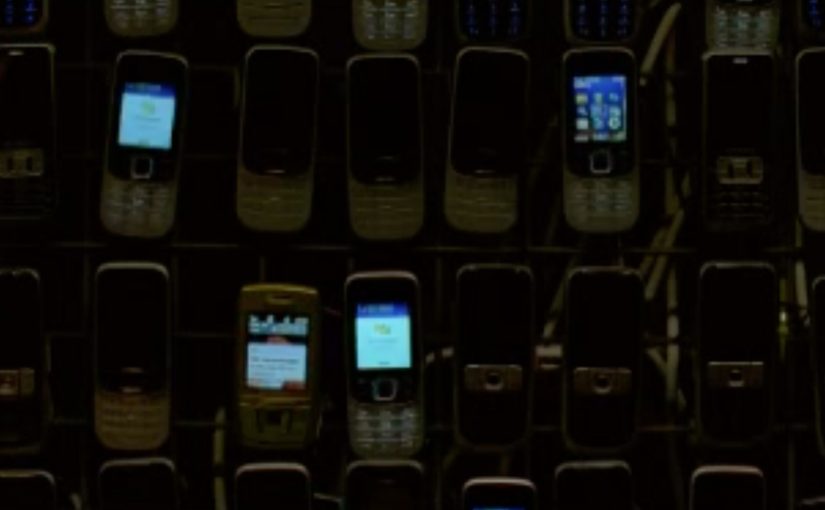
This was done using 1000 phones and 53 different ringtone alerts, synchronized to recreate the classical piece.

How 1000 phones became an orchestra

The mechanism was constraint-driven composition.

Instead of instruments, the “sound palette” was a fixed set of ringtone alerts. The team then arranged phones like sections in an orchestra and synchronized their playback so the combined output recreated the music.

What makes this work on camera is that you can see the system. Rows of devices. Repetition at scale. A human-built machine producing a familiar piece.

In global telecom marketing, the most shareable films often work because the effort is visible. Vodafone NZ’s Symphonia-style execution is a clean example of spectacle built from real craft.

Why the idea lands with viewers

It lands because it is both absurd and precise.

Absurd in the best way. A classical overture performed by ringtone alerts should not work. Precision is what makes it impressive. The viewer can sense the complexity without needing to understand the full production process.

It also bridges cultures. Highbrow music meets everyday tech, creating an unexpected contrast that feels fresh instead of forced.

The business intent behind the ringtone orchestra

The intent was to associate Vodafone with coordination, scale, and modern connectivity, without having to say those words.

Thousands of connected devices acting as one is a visual metaphor for a telco’s promise, and the film makes that metaphor entertaining rather than technical.

What to steal for your next “impossible” content idea

  • Make effort visible. When the craft can be seen, viewers reward it with attention and sharing.
  • Use a constraint as the hook. “Only ringtones” creates a clear challenge people instantly understand.
  • Engineer a spectacle that reads in one frame. Scale should be obvious without explanation.
  • Let the metaphor do the branding. Show coordination and connectivity instead of claiming it.

If you like the resulting tune, you can download it to your computer, as well as the 53 ringtones used to create it, from www.vodafone.co.nz/symphonia.


A few fast answers before you act

What did Vodafone NZ create?

A film where 1000 mobile phones, using 53 different ringtone alerts, were synchronized to perform Tchaikovsky’s 1812 Overture.

What is the core mechanism?

Constraint-driven composition. A fixed set of ringtone sounds becomes the “instrument set”, and synchronization plus physical arrangement makes the system readable on camera.

Why does it work as shareable content?

The effort is visible. The scale reads instantly, and the contrast between classical music and ringtones creates a surprising but coherent hook.

What business goal does this support for a telco brand?

It turns “connectivity at scale” into a watchable metaphor. Many devices acting as one becomes an entertaining proof of coordination and network promise.

What is the most transferable takeaway?

If you can make the constraint and the craft legible in one frame, the build itself becomes the reason people share.

Johnnie Walker: A Walk Through Brand History

A brand history told on foot, in one breath

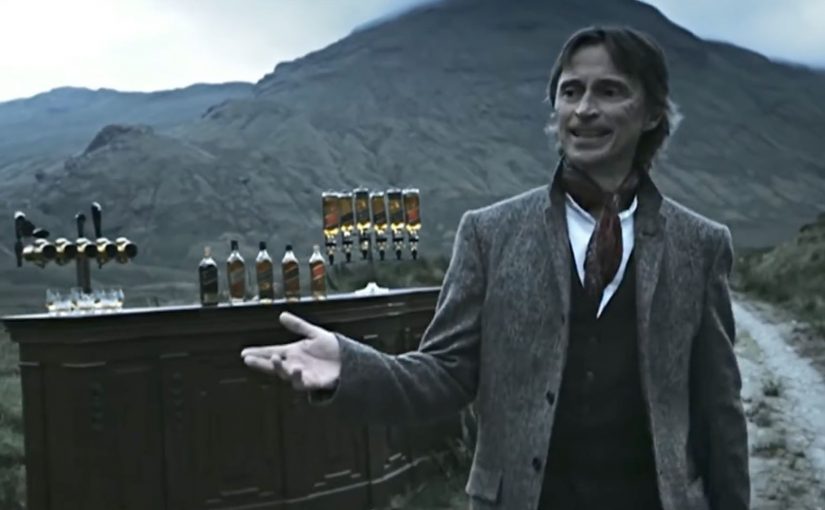
This is about as cool as it gets when telling the history behind your brand. Johnnie Walker and BBH London get Scottish actor Robert Carlisle to narrate the story while walking through the misty Scottish Highlands.

How the idea works once you look past the scenery

The format is disarmingly simple. A single, uninterrupted walking monologue where the scenery keeps moving and the story keeps building, with no hard cuts to “sell” the message.

In global FMCG marketing, long-form storytelling can earn attention when it treats the viewer like a participant in the journey rather than a target of a spot.

Why it lands: it refuses to behave like a commercial

This is not a commercial. At least not in the traditional sense. It never ran on TV. It never will. Probably because it is not a nice, short, and sweet 30 seconds long with a fancy logo and URL at the end.

That restraint is the point. The film feels like a confidence move. The brand is comfortable letting the message arrive through tone, pace, and presence, not through urgency or repetition.

The business intent: build equity in the “keep walking” idea

The walk is not just a setting. It is the brand metaphor made literal. Movement signals progress, ambition, and continuity, which aligns neatly with premium positioning and long-term brand memory.

What to steal without copying the Highlands

  • Pick a format that proves the point. Here, a continuous walk embodies persistence better than any tagline could.
  • Trade polish for presence. One voice, one take, real atmosphere. That authenticity carries further than over-produced montage.
  • Let the viewer do the “meaning-making”. The story invites interpretation instead of forcing claims.
  • Design for voluntary viewing. If it cannot survive outside TV, it is not built for modern attention.

A few fast answers before you act

What is the Johnnie Walker film concept here?

A long-form brand story delivered as a single walking monologue through the Scottish Highlands, narrated by Robert Carlisle.

How does the format work mechanically?

It relies on an uninterrupted take and a continuous narrative arc, using movement and pacing to keep attention without conventional ad cuts.

Why does it feel different from traditional advertising?

Because it does not compress into a 30-second claim-and-logo structure. It earns attention through storytelling, tone, and cinematic restraint.

What is the business goal of a piece like this?

To build premium brand equity and strengthen the “keep walking” association by making progress and momentum tangible and memorable.

What is the most transferable takeaway for other brands?

Choose a narrative format that embodies your proposition, then design it to be watched by choice. Not by interruption.