
Orbit: Clean It Up

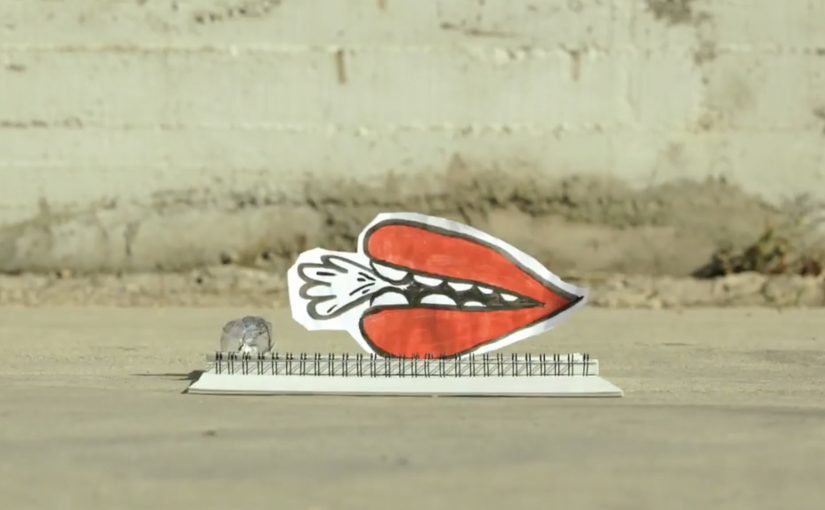
Orbit and its agency Evolution Bureau (EVB) launch an experimental video that leans hard into craft. A stop-motion film built from original drawings, animated into a world where mouths literally clean up what is dirty.

The story is designed to carry Orbit’s “clean” brand essence while nudging a broader idea about keeping the world cleaner too. It is not a product-demo spot. It is a mood piece, delivered through hand-made texture.

How the stop-motion idea is constructed

The mechanism is stop-motion animation created from original artwork by Goons, then assembled into a sequence of “cleaning” actions across a rundown environment. Campaign coverage describes the film as being built from hundreds of drawings, shot into motion over a short production window.

In global FMCG brand communications, craft-forward films like this work best when the technique is not decoration, but the proof that the brand promise is being taken seriously. Here, craft-forward means the production method is doing part of the persuasion, not just adding surface style.

Why this lands as an Orbit idea

“Clean” is usually communicated with polish. This flips it by starting in mess and showing transformation. The stop-motion texture makes the cleaning feel earned, not airbrushed, and the repeated mouth motif keeps it anchored to gum without needing a literal chewing scene.

Extractable takeaway: If your brand essence is a feeling, pick a production method that physically embodies that feeling. Then make the story a sequence of transformations, so the viewer can see the promise happening rather than being told about it.

What the film is really trying to achieve

The real question is how to make Orbit’s clean promise feel distinctive again without defaulting to a standard freshness demo.

The business intent is to refresh Orbit’s “good clean feeling” territory with something unexpected and art-led. Experimental craft signals modernity and confidence, and it gives the brand a shareable artifact that can travel beyond conventional media placements.

What to steal for your own brand storytelling

  • Let craft do the persuasion. When the technique is distinctive, it becomes the reason people watch.
  • Show transformation, not claims. “Before and after” storytelling carries benefit without needing product exposition.
  • Keep one repeating brand cue. Here, the mouth motif keeps the film on-brand even when the story goes abstract.
  • Make the film rewatchable. Dense detail rewards a second view, which is a practical lever for shareability.

A few fast answers before you act

What is the core idea of Clean It Up?

A stop-motion film where illustrated mouths clean up a dirty environment, translating Orbit’s “clean” promise into a literal transformation story.

Why use stop-motion and drawings instead of a normal shoot?

Because the handmade texture signals care and originality. It also makes “cleaning” feel physical and constructed, not just edited.

What does this communicate about the brand?

That Orbit is confident enough to express its benefit through art and transformation, not only through product usage shots or functional demos.

When does a craft-led approach like this work best?

It works best when the production technique is itself evidence of the brand promise. If the method only adds style, the film may be memorable without building the brand.

What is the main pitfall if you copy this approach?

If the craft is high but the brand cue is weak, the film becomes “a nice animation” that could belong to anyone. You need one unmistakable anchor inside the artistry.
Ikea’s Facebook Showroom

You see a photo of an Ikea showroom in a Facebook album. The caption is simple. Tag the product you want. If you are first to tag it with your name, you win the item. One photo turns into a race. One tag turns into a claim.

The challenge. Breaking through Facebook clutter

Facebook is getting cluttered with brands screaming about themselves. Forsman & Bodenfors from Sweden leans into the platform instead of fighting it. They turn a basic Facebook behavior. Photo tagging. Into the promotional mechanic. Here, the mechanic is the simple rule set that rewards the first tag.

The real question is how to turn a crowded feed into a game people choose to play, not just a message they scroll past.

When the platform already has a native action people do without thinking, build the promotion on that action instead of adding extra steps.

The setup. A manager profile as the campaign hub

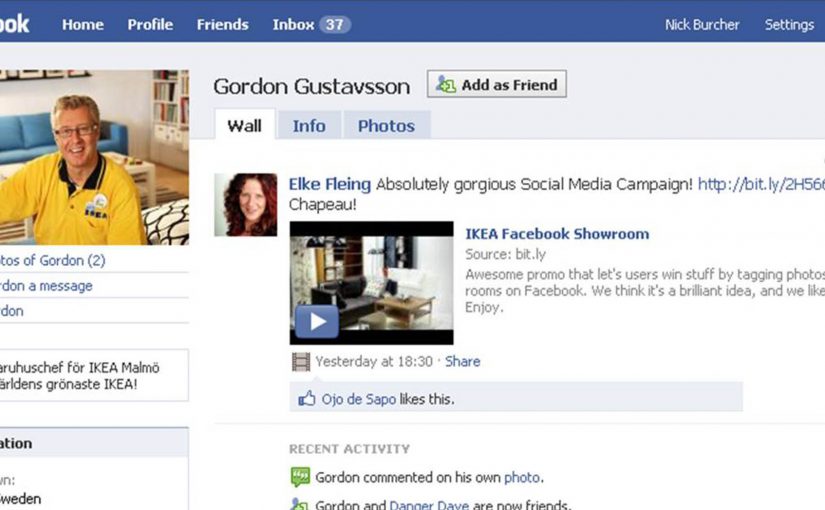
To promote the opening of Ikea’s new store in Malmö, Sweden, the campaign starts with a profile for the store’s manager, Gordon Gustavsson. With a small media budget, the experience is designed to spread through participation rather than paid impressions.

How it works. Tag to win

  • Gustavsson uploads pictures of the store’s showrooms into a Facebook photo album.
  • People browse the photos and tag the Ikea items they want with their own name.
  • The first person to tag a specific item wins it.

In European retail launches with tight media budgets, participation mechanics that travel through friends lists can do more work than another round of brand posts.

Why this works. Desire, speed, and public proof

The mechanic converts attention into action immediately. People do not just look at product photos. They interact with them. The tagging action creates public proof that others can see, and it naturally spreads Ikea products across networks without adding extra friction. Here, public proof means the visible tags on each item that signal demand and participation. Because tagging is instant and public, each claim doubles as distribution and social validation.

Extractable takeaway: If you can tie a desired outcome to a native platform action and make the action visible, you get behavior change and distribution in the same move.

Moves worth copying for your next launch

  • Use a native action as the CTA. Pick something the platform already trains people to do, then make that the whole interaction.
  • Make the action public by default. Visibility creates momentum and keeps the experience self-propagating.
  • Reward speed, not form-filling. The shorter the path from desire to action, the less drop-off you create.
  • Let one asset do double duty. A single photo should work as content, interface, and trigger for participation.

A few fast answers before you act

What is Ikea’s Facebook Showroom?

A Facebook campaign for Ikea’s Malmö store opening that uses photo tagging as a “tag first, win the item” mechanic.

What is the core user action?

Browse the showroom album and tag the product you want with your own name. The first person to tag a specific item wins it.

Who runs the profile and album?

The campaign centers on a profile for the store manager, Gordon Gustavsson, who uploads the showroom photos.

What makes it spread without heavy media?

Tagging is already a native Facebook behavior. Each tag is visible and shareable, so participation creates distribution.

What is the transferable pattern for brands?

Turn a native platform action into the promotional mechanic, then let participation create the distribution.

Lacta: Love at First Site

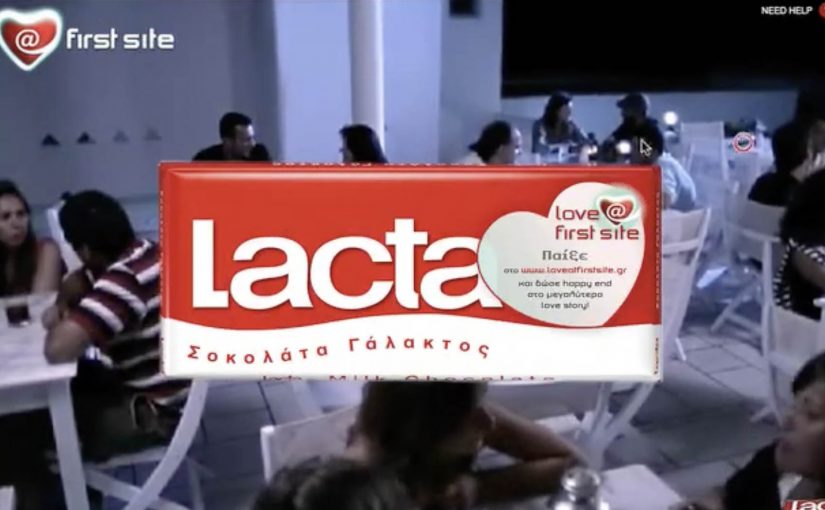
Last year Lacta Chocolates came up with a web based interactive love story called Love at first site.

The concept plays like a prequel to Lacta’s TV storytelling, but it moves the experience from “watching” to interactivity. Viewers influence how the romance unfolds on screen.

From spot to story world

The smartest move here is format, not flash. Instead of squeezing emotion into 30 seconds, the brand expands the narrative into a longer, web-native experience that rewards attention.

This is branded entertainment in the literal sense. The story is the product, and the chocolate brand is the reason it exists.

The mechanic: viewer choices, not passive viewing

The interactive layer is simple. The film presents moments where the viewer decides what happens next, and the story adapts accordingly.

In FMCG brands, lightweight interactivity can turn a familiar romantic story into a repeatable personal experience.

Why it lands: the audience earns the ending

Romance advertising often asks you to believe in a feeling. Interactivity does something more persuasive. It lets you participate in the feeling by making small decisions that shape the couple’s path.

Extractable takeaway: If your brand wants emotional recall, let the audience co-author a few key moments. Even limited choices can create a stronger sense of ownership than a perfectly produced linear film.

What the brand is really buying

This kind of execution buys time and attention, but it also buys intent. People who choose to play are signaling they want to stay with the story. That’s a different relationship than a forced impression in a TV break.

The real question is whether this marks the beginning of a new form of branded entertainment. Kudos to OgilvyOne Athens.

What to steal for your own interactive story

  • Start with a narrative hook: if the story is weak, interactivity will not save it.
  • Keep choices meaningful: fewer choices with clear consequences beat many shallow clicks.
  • Make the first interaction fast: reduce friction so curiosity turns into participation.
  • Design for replay: structure the story so a second run reveals something new.
  • Measure beyond views: completion rate, replay rate, and branch distribution tell you if the story actually works.

A few fast answers before you act

What is “Love at First Site” in one sentence?

It is a web-based interactive love story where viewers make choices that influence how the film’s story unfolds.

Why does interactivity matter for branded entertainment?

Because it turns attention into participation. Even small decisions create a feeling of ownership that improves recall and word-of-mouth.

How do you keep interactive films from feeling gimmicky?

Make the story strong without interactivity, then use choices at emotionally important moments where outcomes feel clearly different.

What should you measure to judge success?

Completion rate, average time spent, replay rate, and how many people explore multiple paths. Those metrics indicate engagement, not just reach.

What is the main risk with this format?

Friction. If the first interaction is slow or confusing, people drop out before the story earns their attention.